

Copper inventories on the major exchanges approached one million tonnes at the end of August, the highest since 2003, even as mine output slipped and spot treatment charges turned negative. China, which refines more than half the world's metal, is heading for its slowest refined-copper growth in at least twenty-five years. The headline glut and the smelter shortage are the same market talking past itself.
The commodity desk version of copper is simple: when warehouses fill, the market is loose. By that measure, late summer looked almost comfortable. Stocks registered on the major exchanges totaled roughly 998,000 tonnes at the end of August, the highest aggregate since 2003. Headlines wrote “glut.” Futures curves behaved as if someone, somewhere, could always deliver another cathode bundle against a warrant.
The smelter version is not simple. Mine production has been slipping. Spot concentrate treatment and refining charges — the fee miners pay smelters to turn ore into metal — have collapsed through zero and, in the spot market, turned negative. Smelters are effectively paying miners to take concentrate because the alternative is an empty furnace. That is not a market awash in raw material. It is a market awash in finished metal sitting where refiners cannot easily use it while the upstream pipeline thins.
China’s slow refinery year
China refines more copper than any other country. It is also the choke point for the contradiction. Reuters, citing industry forecasts, has Chinese refined output growth slowing to roughly 3–3.4% in 2026 after about 10.4% last year — the weakest pace in at least a quarter-century if those estimates hold.
The reasons are physical, not rhetorical. Smelters report trouble securing enough concentrate as mine disruptions and grade decline bite. Scrap — China’s flexible feedstock when concentrate tightens — is under pressure from a tax-enforcement campaign that pushes informal collectors out of the chain. Even sulphuric acid, a smelting by-product that can subsidize weak treatment charges, has seen its economics deteriorate, removing another cushion.
Slower Chinese refined growth does not automatically mean the world uses less copper. It means more of the adjustment happens through where metal is made, not whether grids, data centers, and vehicle wiring need the conductor. U.S. demand already repriced the metal above $13,000 on a different set of signals — industrial orders, import appetite, fear of shortage in the wrong place at the wrong time. The exchange inventory number and the Chinese smelter constraint can both be true. They are measuring different links in the chain.
Paper tonnes versus furnace tonnes
Exchange warehouses are a ledger, not a smelter yard. Metal parked under LME, SHFE, or COMEX warrants is fungible on a spreadsheet and often immobile in practice — tied up in financing trades, stuck behind tariffs, or simply far from the plant that needs feed this month. A million tonnes in warrant form tells you financing and logistics chose storage. It does not prove that the next tonne of concentrate will arrive at a Chinese flash furnace on schedule.
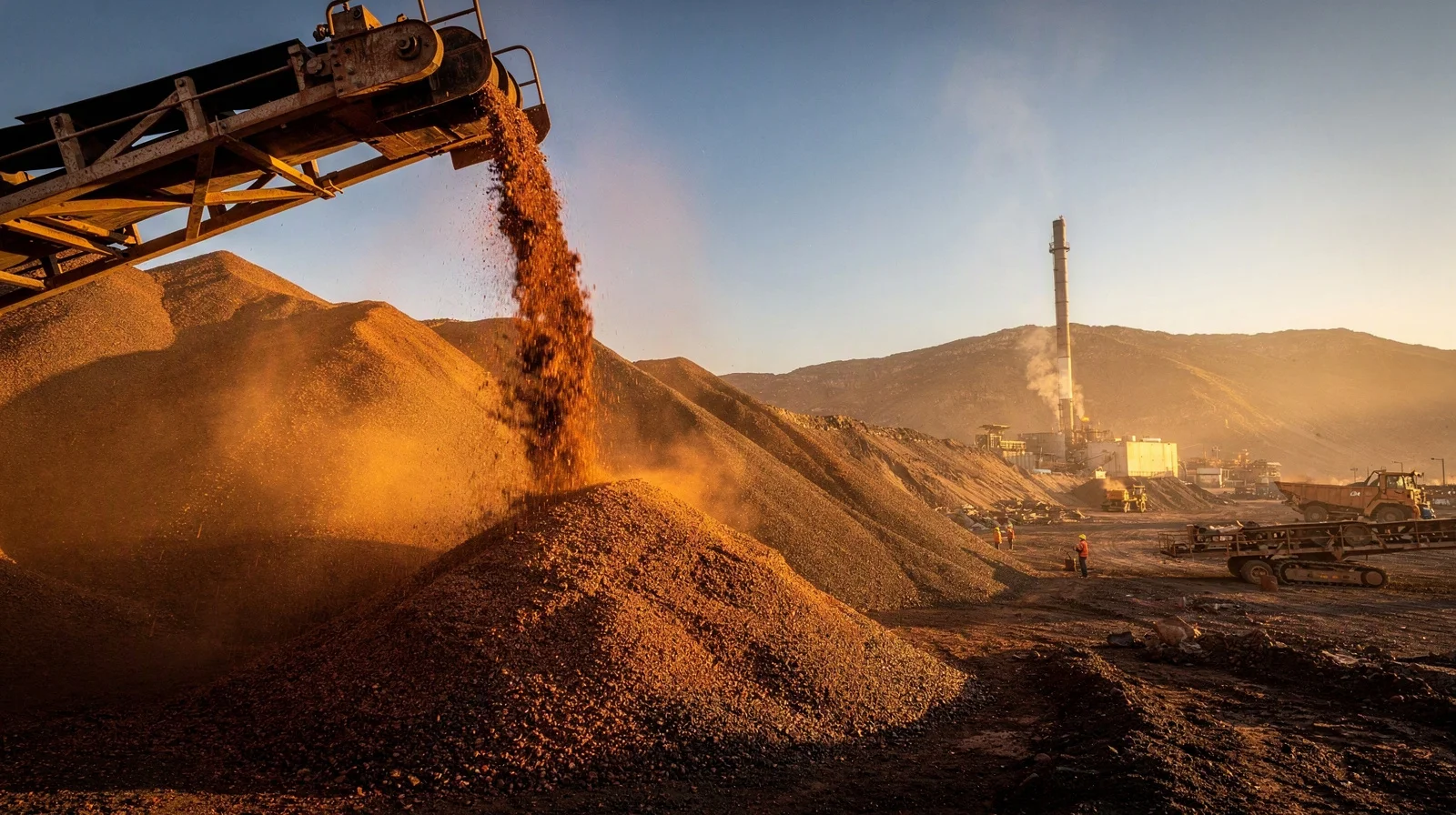
Negative spot treatment charges are the market’s blunt admission. When smelters compete for scarce concentrate, they bid away their margin. Miners with concentrate in hand hold the binding card. That dynamic coexists with high visible inventory because the inventory is largely refined cathode, while the shortage is in concentrate and scrap — different chemical states, different freight lanes, different customs treatments. Aggregate stock counts merge them. Physical planners cannot.
The glut is in the form traders can finance. The squeeze is in the form smelters must melt.
Trade policy sharpens the split. Tariffs and retaliatory duties reroute cathode and wire, not ore bodies. Metal that might have moved from Chile to China may sit in a third-country warehouse earning a carry while Chinese plants import more concentrate at punitive terms — or slow down. Scrap taxation does the same on the recycling side: less “urban mine” feed enters the formal sector, so smelters lean harder on concentrate that was already tight. None of that shows up as a single line item in exchange stock tables.
Second-order wires
Electrification narratives treat copper as one smooth demand curve: grids, EVs, wind, solar, storage. AI data centers add another step change in conductor intensity per megawatt. Those stories are directionally right and strategically incomplete. They assume refining capacity and scrap loops expand with demand. Right now Chinese refining is decelerating while warehouses swell — evidence that conversion capacity and feed availability can lag the PowerPoint slide.
Mine grade decline matters quietly. Lower grades mean more rock per tonne of metal, more concentrate volume to move, more acid to handle — and more friction before cathode ever reaches a warrantable bundle. Transformer lead times already showed how industrial metal queues propagate when fabrication cannot keep pace with announced buildouts. Copper’s version is earlier in the chain: ore, concentrate, smelter, then wire mill.
If you need a falsifier, watch treatment charges and Chinese refined output together, not LME stocks alone. A sustained return of positive spot TC/RC with rising Chinese production would mean concentrate loosened and smelters regained pricing power. Persistent negative charges with sub-trend Chinese refined growth while exchange inventories stay elevated would confirm the split market — paper plenty, physical friction.
What the headline misses
Calling copper “oversupplied” because exchange stocks are high is like calling a grocery store overfed because the freezer is full while the loading dock missed deliveries. The freezer inventory is real metal. It is also the wrong inventory for the kitchen running out of ingredients.
The interesting trade is not “copper up on AI.” It is whether location, form, and policy have become more important than the aggregate tonne count commodity indexes still summarize. Nearly a million tonnes in warehouse warrants is a fact. So is a refining industry paying to obtain concentrate. Until those two sentences describe the same object, the glut that isn’t will keep confusing anyone who reads only the top line.
Continue reading


Sources
Reuters reporting on Chinese refined-copper output growth slowing to roughly 3–3.4% in 2026 versus 10.4% in 2025; exchange warehouse stock totals near 998,000 tonnes at end-August 2025; spot concentrate treatment charges through zero; Canadian Mining Report and MarketScreener Canada trade press on the inventory-versus-concentrate contradiction; industry data on mine production and Chinese scrap taxation enforcement.


