

Bangladesh is being priced as a reform-or-stagnation case: the IMF's October World Economic Outlook cut FY2026–27 GDP growth to 3.2% while lifting inflation to 10.9%, private credit growth stays below 5%, and non-performing loans have reached 33.2%. Export resilience is real; the investment channel is not.
The October World Economic Outlook from the International Monetary Fund is not the only downgrade Bangladesh received this month—but it is the cleanest macro print. For FY2026–27 the IMF now projects 3.2% real GDP growth and 10.9% inflation, a combination that reads less like a soft landing than a stagflation trap with the external account still open.
The World Bank’s own October assessment does not share the IMF’s exact numbers—its forecast centers on 3.4% growth and 8.6% inflation—but the institution’s message aligns: financial, energy, and revenue reforms are urgent if growth is to recover. Treat the two forecasts as separate vintages, not a blended consensus. What they agree on is direction: the growth path has been marked down while prices stay hot.
External Cash, Domestic Freeze
Bangladesh’s garment export machine and worker remittances still bring dollars in. That is why the country can look stable in the headlines—current-account resilience is not a myth.
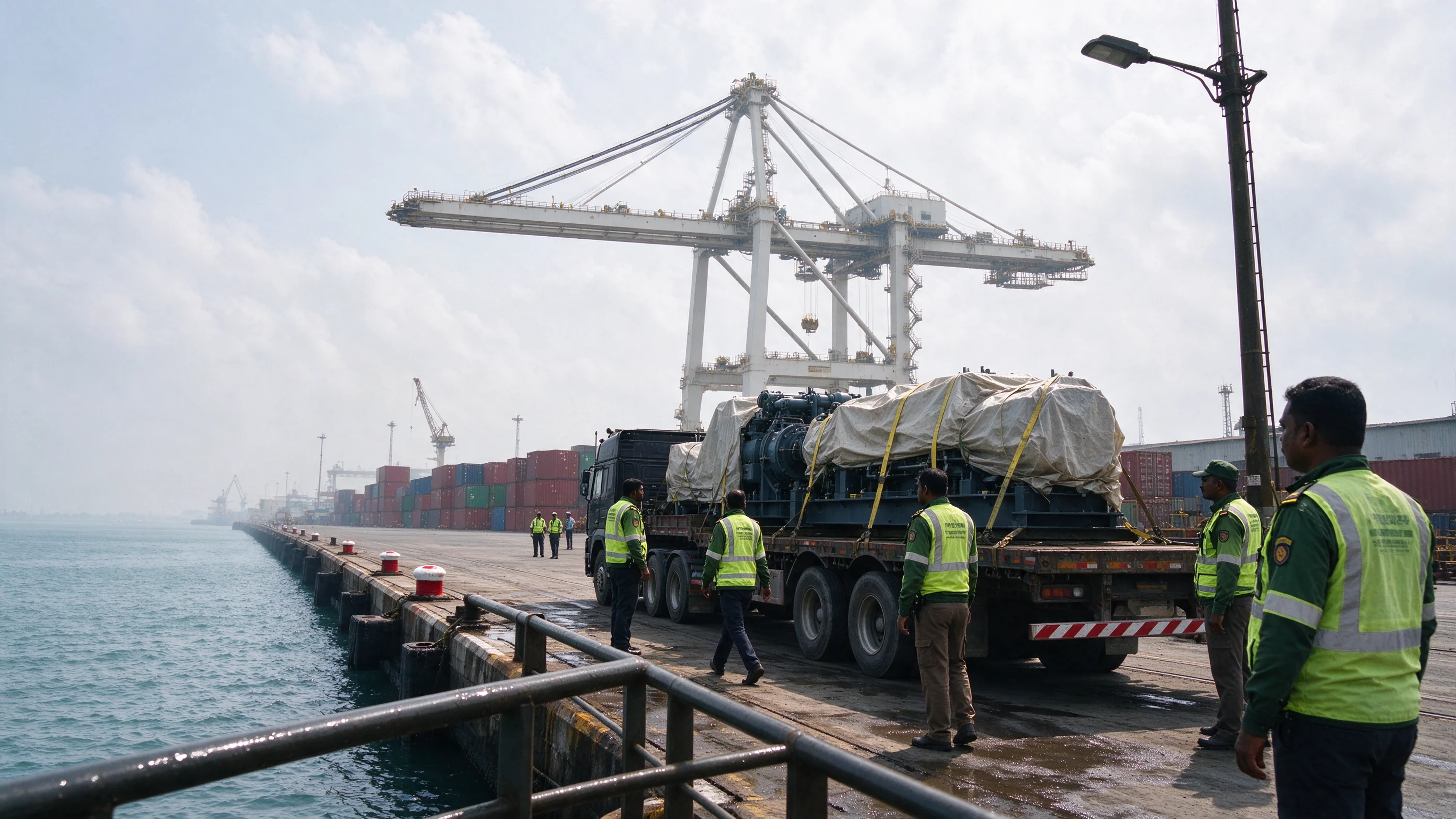
The investment mechanism behind those headlines is another story. Reporting on the banking system puts the non-performing loan ratio at 33.2%, while private-sector credit growth remains below 5%—far too weak to fund a capital-deepening recovery. Machinery imports are sliding and public development spending is easing, which is how a banking problem becomes a growth problem: firms that cannot roll working capital or term loans do not order equipment, and ports see fewer industrial cargoes even when apparel shipments hold.
Remittances clear the window. They do not rebuild a balance sheet.
The parallel to South Asia’s other inflation bind is instructive but not identical. India’s RBI is hiking into oil and monsoon shocks because supply hits print in CPI with a still-growing economy. Bangladesh is fighting persistent double-digit inflation on the IMF’s measure while growth is pinned near 3%—a different policy geometry, closer to cleaning up a credit stock than fine-tuning demand.
Why the Banking Stock Matters Now
A 33.2% NPL ratio is not a cyclical blip; it is a claim on future lending capacity. Banks weighed down by bad assets ration credit to the safest borrowers, which shows up as sub-5% private credit growth even when policy rates might otherwise encourage expansion. The mechanism rhymes with global private-credit opacity and covenant weakness—illiquid problems stored on balance sheets until the real economy stops receiving new money—but Bangladesh’s version is onshore, in the regulated banking system, and visible in import data.
Energy tariffs, revenue collection, and financial-sector governance sit in the World Bank’s reform list for a reason. Without credible cleanup, capital does not return to long-duration projects; without power and tax architecture that matches costs, even cleared credit cannot sustain investment. Korea’s chip-led growth upgrade shows what happens when a credible sector meets willing finance. Bangladesh’s garment hub is still competitive, but the domestic bank channel is not transmitting that competitiveness into machinery, power, or logistics at scale.
Reading the Headline Versus the Mechanism
The reader payoff is a simple split. External stability—garments, remittances, reserve optics—can coexist with domestic stagnation when banks cannot intermediate and the state cannot credibly commit to energy and revenue repair.
The falsifier is equally clear: sustained private credit growth above the high single digits, a falling NPL ratio with audited recognition rather than forbearance, and machinery imports that re-accelerate alongside public investment would signal the investment channel has reopened. Until those series move together, Bangladesh is best read as a reform-or-stagnation case—not a cyclical emerging-market wobble masked by export headlines.
Continue reading


Sources
IMF October 2026 World Economic Outlook (FY2026–27 GDP 3.2%, inflation 10.9%, via Financial Express reporting); World Bank press release Oct. 6, 2026 (3.4% growth, 8.6% inflation, reform call); bdnews24 and local reporting on 33.2% NPL ratio and sub-5% private-credit growth.


