

Meta's June filing puts maximum exposure on a non-consolidated Louisiana data-center venture at $46.03 billion. Oracle discloses $288 billion in mostly data-center leases not yet commenced. September AI debt issuance was about $23 billion. The story is not hidden debt; it is who bears loss when a lease, power feed or tenant fails.
September’s reported $23 billion in global AI debt issuance is a useful calendar peg. It is not the thesis. The financing market is still open for investment-grade hyperscalers; what is changing is which claim investors will buy. Capital is sorting structures—leases, special-purpose vehicles, residual-value guarantees, customer-funded hardware—faster than it is sorting brand names.
Meta’s June 2026 SEC filing makes that split concrete. A Louisiana data-center venture carries roughly $27 billion of development costs, a $12.31 billion initial lease commitment and residual-value guarantees with an aggregate threshold near $28 billion. Meta states maximum exposure to loss of $46.03 billion and does not consolidate the venture. That figure combines equity, lease commitments, future funding commitments and the guarantee threshold. It is not expected loss, and it is not conventional long-term debt on Meta’s own balance sheet.
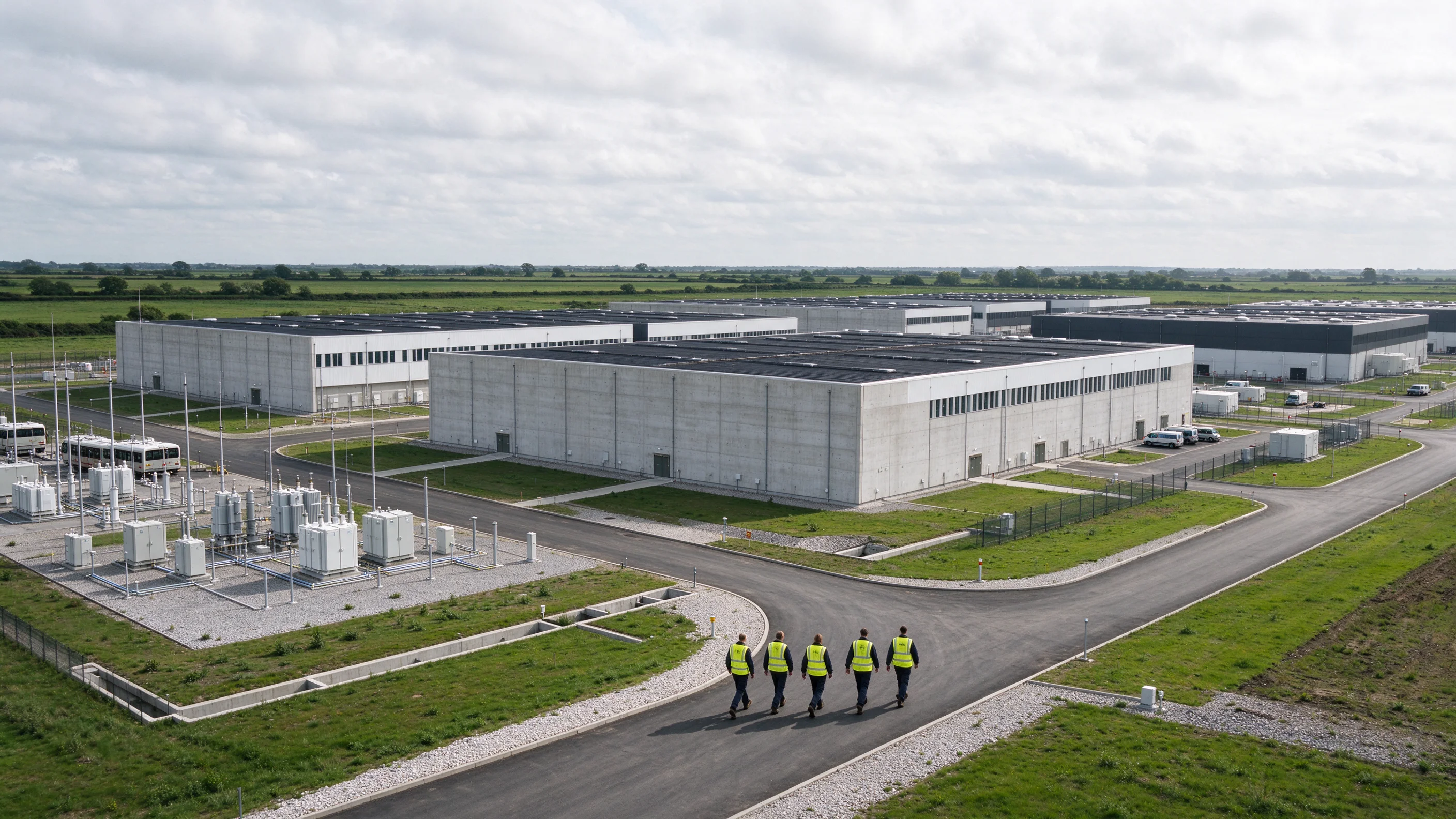
Oracle’s August filing supplies a different instrument with similar opacity for headline scanners. It reports $288 billion in additional, mostly data-center-related lease commitments that had not yet commenced, generally for 15 to 19 years. Separately, a June financing disclosure says customers prepaid or supplied $75 billion of hardware under large AI contracts, reducing the capital Oracle itself had to raise. Uncommenced operating leases and customer-funded gear are not interchangeable with bonds. Treating them as “hidden debt” flattens distinctions the credit market is pricing with care.
One chain, five counterparties
Trace a single project. A landlord or project vehicle owns the shell and often the long-dated lease economics. A hyperscaler or AI tenant signs for capacity. Lenders fund construction against those cash flows. An equipment supplier may finance or deliver prepaid accelerators. A residual-value or completion guarantee may sit with the tenant or a related entity. When power arrives late, construction slips or the tenant’s termination rights bite, loss does not land in one neat corporate bond indenture. It lands in whichever contract absorbs that specific failure.
A plain hyperscaler senior bond is different. Investors underwrite the consolidated credit of Alphabet, Amazon, Meta, Microsoft or Oracle and get a claim on the corporate cash-flow stack. Project leases and SPVs ask a narrower question: is this lease strong, is amortization matched to useful life, who carries construction and casualty risk, and can the building or compute be redeployed if the first tenant leaves? Amazon’s reported GPU vehicle and the broader AI bond-market crowding story sit on the same continuum—ownership and obligation migrate even when the compute keeps running under a familiar logo.
Selection, not shutdown
Capital Group’s October assessment reads like underwriting criteria, not a technology call. It says it evaluates bespoke AI vehicles case by case, focusing on lease strength, amortization, construction and casualty risk, and tenant termination provisions. It also flags infrastructure fungibility—the ability to redeploy an asset to another use or customer—as a credit input. That language matters because September reporting also described secured assets as a meaningful share of AI-related debt, with spreads driven by construction, power and lease risk rather than issuer name alone.
Hyperscaler and other AI-related spreads can widen even when broad U.S. investment-grade spreads do not move. That is selection. Real-rate pressure on AI capex already raised the cost of funding the physical stack; structure is now the second screen. Two instruments tied to the same AI boom can clear at very different terms because they allocate delay, power shortfall, tenant walk-away and residual value to different pockets.
The next financing gate is therefore not whether AI can raise another bond. It is whether investors can identify who bears the loss when a data center is delayed, power is unavailable, a tenant exits or compute demand shifts. Meta’s $46.03 billion maximum exposure and Oracle’s $288 billion of uncommenced leases are not proof of imminent default. They are primary-document evidence that reported corporate debt alone no longer describes the distribution of AI infrastructure risk—and that credit desks are already reading the fine print.
Continue reading


Sources
Meta June 2026 SEC filing on Louisiana data-center venture (development costs, lease commitment, residual-value guarantees, $46.03B maximum exposure to loss, non-consolidation); Oracle August 2026 filing on $288B additional mostly data-center lease commitments not yet commenced (15–19 years) and June financing disclosure on $75B customer-prepaid or customer-supplied AI-contract hardware; Financial Times / related reporting on ~$23B September global AI debt issuance and secured-asset share; Capital Group October assessment on AI-related spread widening and SPV underwriting criteria.


