

PIMCO President Christian Stracke says AI infrastructure demand is lifting real rates by competing for capital, labor, power and equipment. If that thesis holds, the cost of money will increasingly reflect hyperscaler build budgets as well as inflation, Treasury supply and Federal Reserve policy.
The Federal Reserve and inflation are still the first explanations investors reach for when the 10-year Treasury yield rises. Christian Stracke wants to add another one: the companies building artificial intelligence may be competing for capital on a scale large enough to lift the real cost of money. The PIMCO president made that case in a Bloomberg TV interview reported October 2, separating his thesis from a conventional inflation scare.
The distinction matters. Inflation compensation tells bondholders what they expect dollars to buy. A real rate is the return they demand after that inflation expectation is stripped away. If real rates rise because the world wants more productive investment than available savings can finance cheaply, a cooling CPI print does not automatically solve the problem.
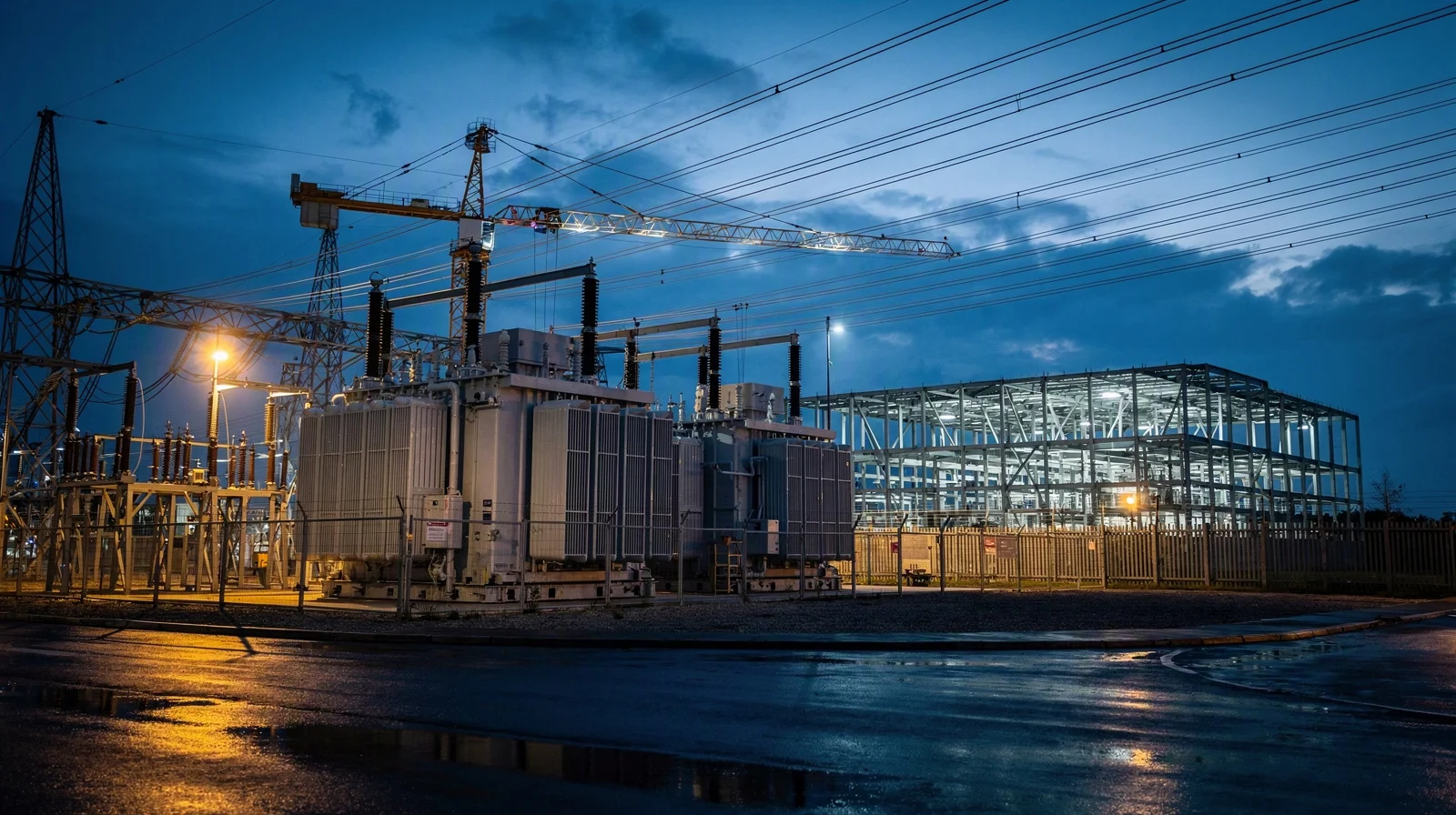
The AI buildout is demanding more than chips
Stracke’s argument is not that a server rack directly reprices a Treasury note. It is that the buildout draws on the same finite pool of funds and real inputs used by every other borrower. Data centers require land, generators, transmission access, cooling systems, networking equipment, construction crews and debt capacity. The GPU is merely the most visible line item.
That is why the number attached to the buildout matters. The report cited estimates of roughly $690 billion in hyperscaler capital expenditure for 2026, rising toward $870 billion in 2027; earlier expectations had been closer to $480 billion. Those are forecasts rather than settled outcomes, but their revisions are the point. A rapidly rising capital call changes financing plans before a facility opens.
The physical queue makes the financial one credible. AI’s bottleneck has already migrated into turbine castings, where industrial lead times cannot be compressed by ordering another batch of accelerators. If the equipment, power and labor are scarce, the bidders for them are also bidding for the financing that mobilizes them.
Credit supply is the transmission channel
The immediate bond-market channel is issuance. According to the report, hyperscaler debt issuance in 2026 had already exceeded 2025’s full-year total, while consensus estimates looked for about $500 billion of additional AI-related credit supply over the following twelve months. More supply does not mechanically mean higher yields—buyers, growth expectations and central-bank policy still matter—but it can require a higher clearing yield when demand does not expand as quickly.
This is a more useful frame than declaring that “AI causes higher rates.” The relevant question is whether investment demand is outrunning the global savings pool at the margin. Treasury deficits remain material. So do inflation expectations, growth data and the Fed’s balance sheet. Stracke’s claim is narrower: AI capex has become large enough to join that list rather than sit beneath it as a technology-sector detail.
The data-center boom can support future productivity while making present-tense capital more expensive.
That duality is easy to miss. Productivity gains could eventually expand the economy’s capacity and validate the investment. During construction, however, builders must finance a concentrated claim on steel, electricity, equipment and labor. Capital allocation is already splitting between physical robotics and AI; this is the rates version of the same competition.
Borrowers, not just tech investors, carry the consequence
The 10-year Treasury yield was reported near 4.75%, at the high end of its recent range. Mortgage rates, corporate refinancing costs and valuation models all take signals from that benchmark. The first borrowers to feel a sustained rise in real rates are not necessarily the hyperscalers with large cash flows. They are weaker credits whose refinancing calendars offer little room for a higher coupon.
The falsifier is straightforward. If projected AI spending recedes, issuance is absorbed easily, or productivity expectations meaningfully lift prospective savings and growth, the pressure argument weakens. If capex and credit forecasts continue to rise while real yields remain elevated despite benign inflation data, the thesis gains force.
PIMCO’s point is not that the Federal Reserve has become irrelevant. It is that the bond market may now be pricing a second industrial buildout inside the digital one. Investors tracking the AI trade should watch construction budgets and credit calendars alongside model launches. The marginal price of capital may increasingly be set beside a substation, not only at a policy meeting.
Continue reading


Sources
Crypto Briefing's account of Christian Stracke's October 2 Bloomberg TV comments; PIMCO commentary cited therein on AI investment and real yields.


