

On October 10, 2026, two historic racing centers three thousand miles apart host grade-one cards that matter less for Saturday purses than for what they signal about future bloodstock prices. At Newmarket's Dubai Future Champions Festival, Godolphin's Desert Castle meets Aidan O'Brien's Darkness Falls in the £500,000 Darley Dewhurst Stakes—a market referendum on next spring's Classic colts. At Keeneland, an 11-horse Queen Elizabeth II Challenge Cup field includes French invader Braida and Chad Brown's Deep Learning in a $750,000 test of three-year-old fillies whose racing records can later translate into broodmare value. The overlap is not calendar coincidence; it is one international market pricing tomorrow's stallions and mares.
Keeneland and Newmarket are not paired because two prestigious races share a date. They are paired because each card prices a different leg of the same supply chain—the international market for genes.
On Saturday, October 10, the American establishment gathers in Lexington for the 43rd Queen Elizabeth II Challenge Cup: $750,000 over 1⅛ miles on turf for three-year-old fillies, invitation-only, with winners from four countries in the entry book. Canadian King’s Plate heroine Luster (Gainesway Stable and Andrew Rosen) shares the gate with Chad Brown’s Deep Learning, Irish import Kensington Lane, and Braida (FR)—the Mehmas filly Francis-Henri Graffard shipped from France after a Longchamp stakes score, with Mickael Barzalona aboard from post 6. European runners are routine in the race; transatlantic shipping is part of the product, not a novelty subplot.
Six hours earlier by the clock—but the same betting day in bloodstock terms—Newmarket’s Rowley Mile hosts the Darley Dewhurst Stakes: £500,000 guaranteed, seven furlongs for two-year-old colts, the juvenile championship that has listed Frankel, Churchill, and St Mark’s Basilica among its alumni. The 2026 field is deliberately small and loud: Desert Castle, the unbeaten Frankel colt from Charlie Appleby’s Godolphin barn and ante-post favorite for the 2027 2,000 Guineas, against Darkness Falls, Ryan Moore aboard for Aidan O’Brien’s Coolmore operation after winning the Golden Fleece at Leopardstown. Appleby and O’Brien each enter two; Andrew Balding’s Gentle Hurricane completes the five-horse lineup the Racing Post framed as a Godolphin–Coolmore headliner.
Newmarket is auditioning tomorrow’s stallion prospects. Keeneland is stress-testing tomorrow’s broodmare résumés. Neither outcome is guaranteed; both meetings move mark-to-market quotes in the yearling ring.
Why wealthy owners tolerate the balance sheet
Prize money alone rarely clears the cost of a top-class campaign. A commercial yearling purchase, training fees, veterinary care, insurance, transport, and entry fees can consume six figures annually before the horse earns a check. The economics only begin to work when racing success unlocks breeding revenue—stud fees for colts, broodmare appreciation for fillies—or a resale to a syndicate willing to pay for unexposed pedigree.
That is why the largest operations—Godolphin, Coolmore, Gainesway, and the major American barns clustered in the QEII—treat Saturday as marketing for the asset that follows the horse. A Dewhurst winner can recoup his cost in a single book season if Classic hopes survive the winter. A Grade 1-winning filly like those in the QEII field can enter the broodmare market with a price tag that dwarfs the $750,000 purse, because her foals inherit both page and performance.
The activity is therefore closer to venture capital with a trophy case than to a bond: mostly consumption and status, occasionally a home-run exit. Most runners never reach that exit. The weekend’s elites are the thin tail the industry uses to subsidize the narrative for everyone else.
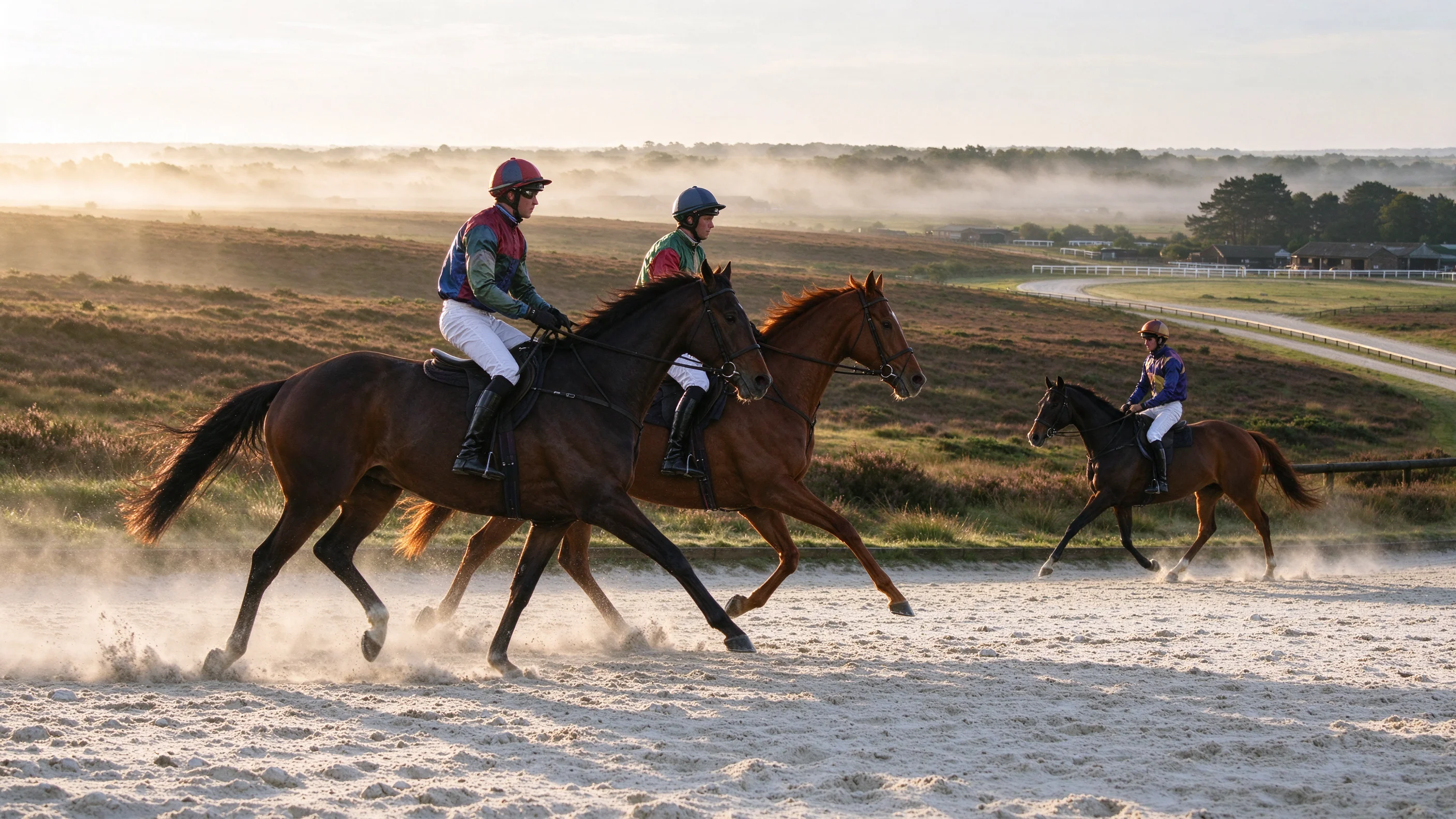
Follow the horses, not a celebrity guest list
The people worth naming are on the official entries, not an unverified paddock rumor mill. Graffard’s team arrived at Keeneland straight from Arc weekend form; Braida’s owner Alain Jathiere and breeder Khalifa Mohammed Al Attiyah are on the program. Brown’s Deep Learning represents the East Coast premium on turf fillies. At Newmarket, William Buick’s takeover on Desert Castle from Billy Loughnane signals how seriously Godolphin treats the Classic trail.
What to watch after the wire:
Braida’s trip and distance. She stretches to nine furlongs for the first time against North American depth. A strong showing exports European form into the American mare market; a fade does the opposite.
Desert Castle versus Darkness Falls. The Dewhurst is as much a power-structure contest as a form puzzle—Appleby against O’Brien, with the winner carrying commercial weight into winter sales narratives.
QEII depth beyond the favorite. Eleven fillies mean value can move through the placegetters even when the winner is obvious on the page; broodmare buyers watch the whole order of finish.
One market, two time zones
Keeneland’s limestone paddocks and Newmarket’s heath gallops look nothing alike. The clearing price for blood does not care. Shippers, syndicates, and stallion stations already treat Kentucky September, Newmarket October, and the Dubai winter circuit as linked liquidity events. Saturday simply runs two stress tests at once.
The autumn classics are not billionaire attendance parties unless the entries say so. They are price discovery for an asset class that wears silk instead of a ticker—and this weekend, both continents are open for quotes.
Continue reading


Sources
Keeneland media on QEII field and Braida; Racing Post on Dewhurst runners; Jockey Club Newmarket on Dubai Future Champions Festival; Eventmasters preview on prize money.


