

Anthropic's Nasdaq debut under ticker ANT opened at $111.50 and closed its first session at $97.17 on November 19, 2026, a premium to the $83 offer price that still could not lift the S&P 500, which fell roughly 2 percent for a sixth consecutive day and left the index down about 8.2 percent from October's record as Goldman Sachs trading notes described poor liquidity and net selling of macro products, so CAPITAL's diversification bid around frontier AI issuance failed to offset the unwind in megacap semiconductors and leveraged AI-beta vehicles that own the index weight.
The wire consensus Thursday night was that a frontier lab going public would "re-anchor" the **AI** trade. Friday morning in Asia said otherwise—and **New York** had already logged the answer in the index, not the **ANT** line. Culled's [Fable–Mythos access split](/articles/anthropic-fable-mythos-two-lane-frontier-nov-19/) previewed the governance tension; the tape punished beta anyway.
New York, Nov. 20 — Public markets delivered the cruelest kind of divergence: a record frontier listing and a record losing streak on the same close.
Anthropic finished its first Nasdaq session at $97.17, up 17 percent from the $83 offer price after opening at $111.50, per CNBC’s live listing tracker. For allocators who treat a successful AI IPO as a sentiment reset, the print looked like proof that enterprise buyers still underwrite model labs. For anyone who owns the S&P 500, the print was irrelevant: the benchmark fell about 2 percent for a sixth straight session, its longest skid since April 2024, and now sits roughly 8.2 percent below October’s peak, AP reported.
Thursday’s narrative died in the breadth numbers. Nvidia extended a multi-day decline; Oracle and AMD were among the first AI proxies to fade after early strength. CAPITAL was not debating whether Blackwell demand exists—it was debating whether any single earnings beat or ANT green line could offset positioning, liquidity, and a Fed path that markets increasingly price as hawkish after hawkish minutes and a delayed jobs calendar.
Liquidity as the binding constraint
Desk notes circulating Friday morning quoted Goldman Sachs strategists describing a session where asset managers and hedge funds net-sold macro products while nibbling consumer and financials, with liquidity “poor” enough to amplify moves. That is the mechanism Culled flagged in crowded AI trades: when everyone leans the same direction, exits become sequential, not simultaneous—and IPO windows do not provide a market-maker-of-last-resort for $3 trillion of mega-cap beta.
Anthropic is a PLATFORM story about who gets frontier weights and at what token price. The index is a CAPITAL story about who must mark NVDA, MSFT, and leveraged semiconductor vehicles when real yields stay firm and December policy odds shift. Thursday proved the second story dominates at the index level even when the first story wins on the ANT tape.
A premium close above the offer is a success for the underwriters. It is not a bailout for every holder of AI-factor ETFs still unwinding six months of one-way flows.
What still worked—and why it matters
Dispersion did not vanish. Palo Alto Networks rallied on a $4.5 billion all-stock deal for Applied Compute and a beat-and-raise quarter, per company press materials. NetApp drew upgrades after fiscal Q1 2027 revenue rose nearly 30 percent year over year on AI storage demand. ServiceNow and Salesforce carried AI contract-value milestones in their own earnings cycle. Those prints say enterprise software monetization is compounding even when semiconductor equity sells the export-and-capex fear book.
That split is why allocators should resist a single “AI bubble” headline. CAPITAL is repricing duration and geopolitical risk in chips; it is not uniformly exiting every line item that mentions models. The S&P still fell because the weight is in the names getting marked down, not the mid-cap winners catching upgrade cycles.
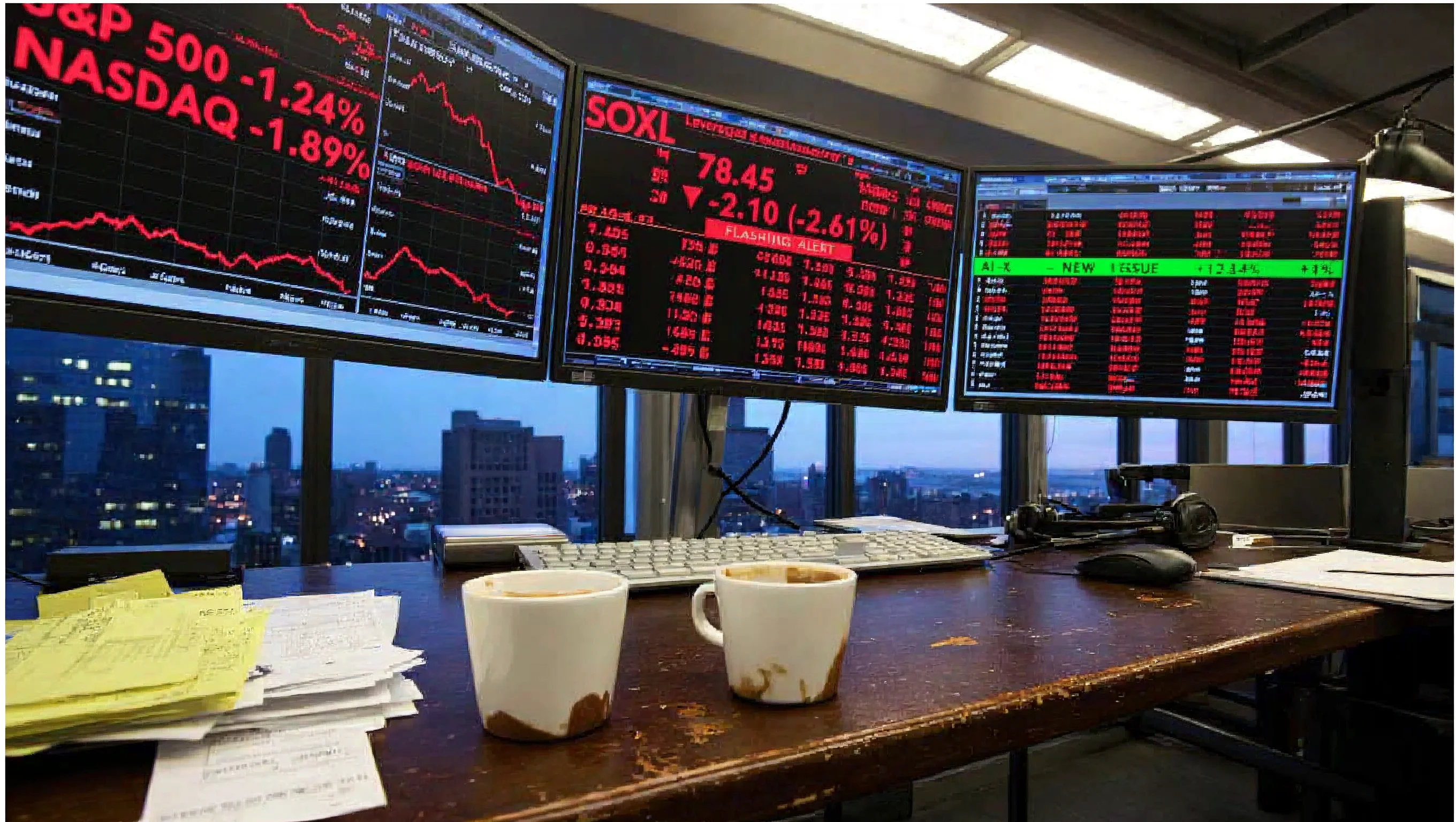
Friday’s follow-through
U.S. equity futures pointed lower into the Nov. 20 session while Asia logged its worst week since 2020, Reuters reported—details Culled tracks in Asia’s liquidation leg. ANT itself traded down nearly 6 percent in early U.S. premarket, a reminder that debut premiums can mean-revert faster than index positions unwind.
For 401(k) holders, the residual is procedural, not philosophical: the sixth loss is CAPITAL de-grossing, not a verdict that Claude lost product-market fit. Until liquidity improves or Fed odds pivot, treat blockbuster listings as single-stock events. They are not index-level shock absorbers—and Thursday’s tape finally priced that distinction at the close.
Continue reading


Sources
CNBC and Investing.com ANT listing coverage; AP and ABC market wraps; Reuters Asia and Europe follow-through; Goldman Sachs trading note cited in vendor wraps; Culled FMP digest Nov. 20; prior Fed and Nvidia coverage.


