

Markets on November 13 are not shouting that artificial intelligence failed—they are arguing about who gets paid to build it and who must prove cash before the next capex wave: Nvidia closed down 4.34 percent after Jensen Huang's exit while the VanEck Semiconductor ETF held firmer, Taiwan's Taiex fell 2.63 percent on TSMC correlation, and Seoul and Tokyo diverged on memory versus yen—Culled reads the cross-border reaction as the opening frame for a longer shift from narrative multiples on GPUs and power yards toward balance-sheet durability, investment-grade issuance, and pick-and-shovel names that live or die on utilization, not sentiment alone.
If you bought the AI theme as one ticker and woke up to Huang headlines, the world desk on Friday is less useful than a calendar: who still guides capex up, who tightened credit last week, and which shovel suppliers bill customers monthly while bond syndicates ask for cash-flow covenants. Culled anchors that map in Thursday's regional closes, then walks through what changes for portfolios from here to next year when the binding allocator is CAPITAL measuring oxygen, not PLATFORM selling the dream.
New York, Nov. 13 — Thursday looked like the week the Nvidia tragedy stopped being a chat-room meme and became a cross-border risk calendar. In Washington, NVDA opened on Jensen Huang’s resignation and Megaspeed-linked headlines, then closed down 4.34 percent—a fraction of the opening gap—while the VanEck Semiconductor ETF and swaths of the AI complex held greener than the flagship symbol. Culled’s export-choke dispatch treated that divergence as evidence: STATE is repricing jurisdictional access to GPUs, not yet declaring a capex winter.
Across the Pacific, the same headline landed earlier and harder. Taiwan’s Taiex fell 2.63 percent; TSMC slid 2.3 percent on sympathy with a designer whose roadmaps the foundry prints—our Taipei brief separated correlation from fundamentals: $56 billion of prospective foundry capex and tight CoWoS into 2027 did not evaporate overnight, but foreign holders still use the island index as a fast hedge when Santa Clara governance breaks.
Friday added the usual regional translation layer. Seoul leaned on memory leadership, then faded as books took profits. Tokyo found support in a weaker yen narrative. Shanghai chip names leaned substitution stories. Hong Kong tech lagged, pricing the remote-access perimeter Washington is drafting beside December congressional dates. Taiwan sat between stabilization futures and the same export politics—hit first on Huang, rebounding on liquidity, still one earthquake away from the world’s most concentrated advanced node.
None of that is a verdict that the AI build-out is over. It is the market’s first synchronized pass at a harder question: who in the stack can keep spending when one governance node cracks, and who must show cash—not just backlog—to survive the next innings?
First inning versus second
The first inning of the AI trade rewarded anything physically or contractually tied to training scale: GPUs, HBM, merchant power, neocloud landlords, open-lot data-center pads. Momentum and scarcity did the explaining. Revenue could trail capex; multiples could expand on TAM slides.
The second inning—where Culled thinks allocators moved after the October drawdown, the midterm ballot shock, and this week’s Huang exit—rewards durability: free cash flow after brutal capex, covenants credit investors accept, and shovel suppliers whose customers actually plug in racks rather than option land and walk away when politics bite.
The inning change is not philosophical. It is how CAPITAL behaves when IMF researchers note hyperscalers approaching one-tenth of global investment-grade issuance while free cash flow thins, and when syndicate desks tighten AI debt even on guaranteed neocloud paper. Equity can cheer NetApp and ServiceNow guiding AI attach rates higher while NVDA absorbs a governance haircut. Credit and equity are scoring different games on the same field.
Why free cash flow is the scoreboard now
Free cash flow is operating cash minus the capital spending required to stay competitive—not adjusted EBITDA with the bad parts renamed. In a supercycle, everyone quotes backlog; in a second inning, everyone asks whether backlog converts to cash before the next bond maturity wall.
Three forces make that question binding into 2027:
Capex gravity. Hyperscalers and sovereign-adjacent operators still guide train-sized spend on clusters, power, and packaging. The cash leaves first; monetization from inference and enterprise seats arrives on a lag. Names without a parent balance sheet live in the gap.
Financing friction. Banks do not have unlimited appetite for windowless real estate full of transformers. When loan investors widen spreads and pause deals, the marginal dollar is not equity ROE math—it is whether a treasurer can issue A-rated paper at a spread the board will sign.
Governance and export duration. Huang’s exit and remote-access rule drafts extend political half-life. Discount rates on distant cash flows rise even when this quarter’s GPU shipments hold. That hits long-duration shovel equities harder than profitable software that bills monthly.
For readers nursing Nvidia losses, the operational translation is blunt: the GPU story can remain intact while the equity carry weakens if the market demands higher proof of cash conversion and lower key-person risk. SoftBank’s choice to liquidate its entire stake and fund OpenAI calls is allocator behavior in the second inning—monetize the listing, keep the ecosystem bet on private terms.
Pick-and-shovel map—and where it breaks
“Pick and shovel” is not one trade. It is a stack, and each layer fails differently.
Silicon and memory sell into a rationed market—sold-out HBM, allocation fights—but still carry cycle risk when handset and PC end markets cough. They are shovels with fabs attached; they need utilization, not just AI narrative.
Foundry and packaging (TSMC, substrates, test) are platform monopolies with earthquake, water, and export politics in the P&L. A 2.3 percent sympathy dip is not a demand signal; it is concentration risk repriced in one session.
Power, cooling, and construction tie revenue to interconnection queues and county moratoriums. They are the truest “shovel” plays—and the most exposed when ballots slow megawatt maps or when UBS-style analysts mark 2028 capacity at risk.
Neoclouds and GPU landlords sit between hyperscaler credit and retail AI hope. When desks hesitate on AI-backed loans, equity volatility arrives before quarterly prints.
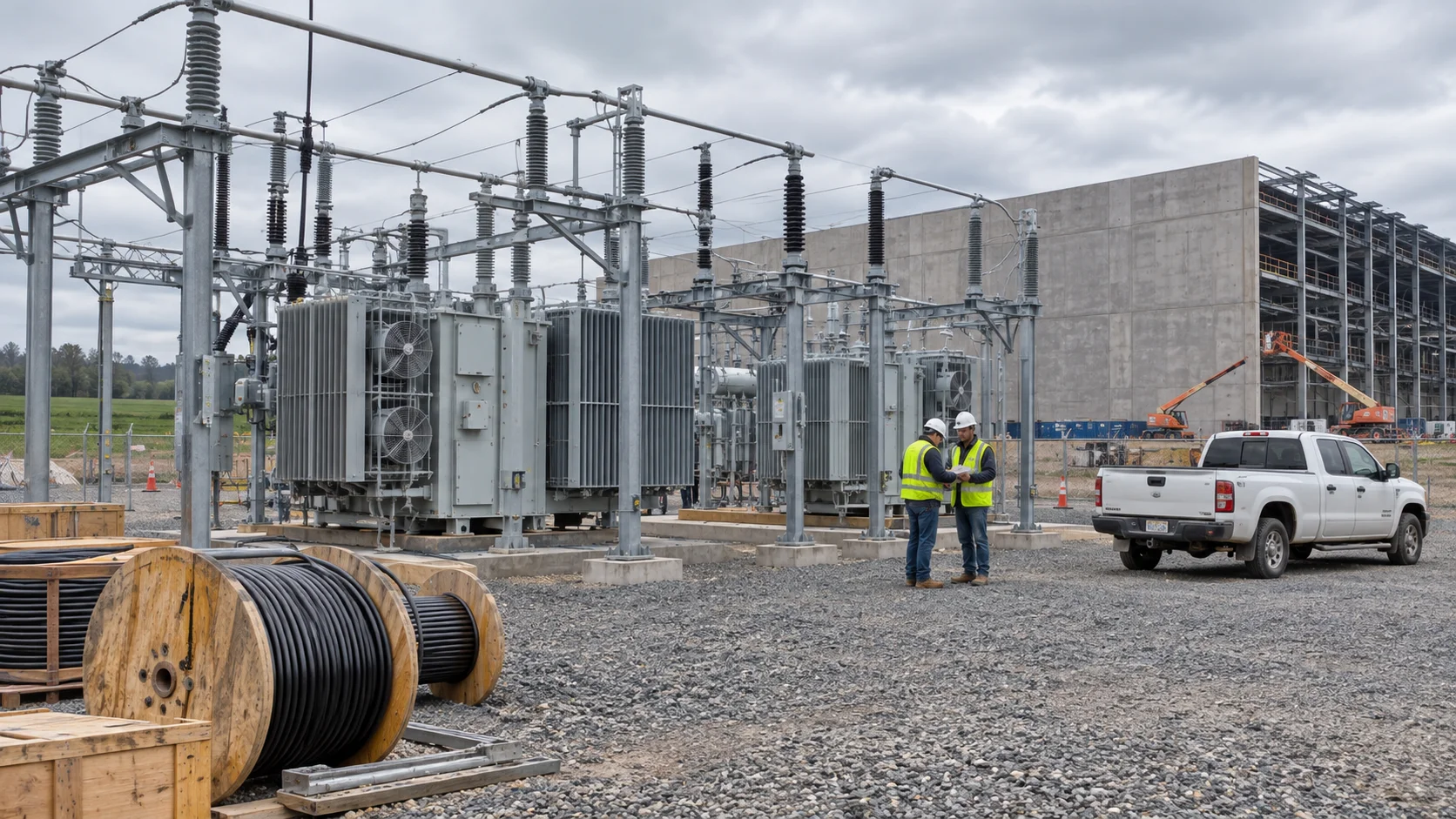
Second-inning winners in the shovel bucket tend to share traits: contracted revenue or take-or-pay elements, investment-grade parents or customers, and assets already energized—not greenfield dreams awaiting a permit hearing after the midterms.
Losers look like October’s crowded basket: high operating leverage, funding need inside twelve months, and a story that only works if NVDA multiples expand forever.
Why the giants sell bonds instead of shares
When Microsoft, Alphabet, Amazon, or Meta fund the build-out, treasurers run a simple hierarchy.
Bonds first when ratings and windows cooperate. Investment-grade issuers tap markets at spreads that, even widened fifty basis points year to date, often cost less than equity in dilution and signaling terms. A $30 billion shelf does not rewrite the EPS divide on every GPU rack; a $30 billion follow-on equity offer tells the world the board prefers to socialize capex risk at today’s price.
Bonds also match liability structure. Data centers and fiber are long-lived assets; debt aligns duration if covenants stay loose. Equity is perpetual and leaves no maturity—fine for optionality, expensive when the stock is the sector’s emotional thermometer and NVDA just printed a governance shock.
When equity still appears, it is usually at nodes where debt cannot reach—loss-making labs, circular deals that require strategic equity, or jurisdictions where bond markets shut. The IMF’s warning on circular AI financing is the shadow side: paired equity, debt, and revenue commitments that knit hyperscalers, model developers, and cloud spend into one wrong-way book.
Retail investors rarely see the syndicate deck, but they can read the proxy: rising net debt at the five largest operators while buybacks slow, plus bond headlines clustered in the same week as GPU export politics. That pattern says CAPITAL still funds the supercycle—it just refuses to fund it entirely through tickers at peak sentiment.
A desk framework for year-end through early 2027
Culled is not a portfolio manager; this is an evidence checklist for the months after Nov. 13, not a buy list.
Separate symbol risk from stack risk. If SMH holds while NVDA slides, your problem is concentration in one governance node, not necessarily AI capex. Index and factor exposure matter more than debating whether transformers are “still the future.”
Stack positions by cash source. Bucket one: operating cash that covers capex without new equity (profitable software, some hyperscaler cloud lines). Bucket two: investment-grade balance sheets that can bond-fund the gap. Bucket three: shovel names that need customer funding every quarter to stay solvent. In inning two, shrink bucket three unless the price embeds a financing failure that earnings disprove.
Watch credit before equity for the turn. When neocloud bonds stabilize and hyperscaler new-issue spreads tighten, shovel equities often get a second chance before retail notices. When syndicates stay shut, equity bounces are trades, not trends.
Map politics to cash timing, not just multiples. Remote-access rules, Taiwan short-sale curbs, and Berlin’s EU tariff push do not cancel training—they delay revenue recognition on specific hosts. Model revenue slippage into 2027 when weighing shovel names tied to land and electrons.
Size for governance tails. Congressional testimony calendars now overlap earnings. A position sized for flawless execution on one CEO is not sized for STATE plus PLATFORM overlap. That is the lesson of a 4.34 percent close that could have been much worse at the open.
What would change the inning again
A return to pure momentum—shovels ripping while credit widens—would mean either a Fed-assisted liquidity surge or a demonstration that AI revenue scaled faster than capex with audited cash proof. NVDA stabilizing under Colette Kress, delayed export rules, and TSMC guide raises on Nov. 17 would mark Nov. 13 as correlation, not regime change.
The bearish second-inning confirmation is the mirror: persistent IG spread widening, shelved AI-backed loans, and hyperscaler guides that postpone megawatts while shovel names cut guidance on interconnection slips. That is when free cash flow stops being a accounting footnote and becomes the only line investors trust.
The tragedy in Nvidia this week is not that AI failed—it is that markets finally asked who gets paid in cash for the next warehouse of transformers, and who was only paid in story.
Until that question is answered company by company, the world tape on Friday is a weather report. The season is second inning: fewer home runs on narrative, more runs manufactured through treasuries, bond syndicates, and the unglamorous discipline of cash that survives politics.
Continue reading


Sources
Culled Nov. 13 coverage of NVDA and Taiex; prior pieces on credit pullback, IMF circular financing, SoftBank exit, and infrastructure clearing; session color on SMH and regional Asia wraps; NetApp and ServiceNow earnings week commentary cited in export-choke piece.


