

Taiwan's Taiex index fell 2.63 percent Thursday as Taiwan Semiconductor Manufacturing Co. shares dropped 2.3 percent, extending a week in which Nvidia board turmoil crossed the Pacific before US markets had fully priced Jensen Huang's resignation; Quanta, Wiwynn, and other AI supply-chain names sold off in tandem even as night-session futures pointed to a 1.3 percent rebound, because when one foundry concentrates more than ninety percent of leading-edge capacity, a governance shock at the GPU designer becomes a liquidity event in Taipei regardless of TSMC's own fundamentals.
Taipei cannot diversify its equity market away from a single PLATFORM bottleneck any faster than Washington can diversify training away from Taiwan photolithography. Thursday's dip was a correlation trade on Nvidia governance; the structural question is whether stabilization rules and foreign flows can cushion shocks without masking concentration risk.
Taipei, Nov. 13 — Taiwan Semiconductor Manufacturing Co. fell 2.3 percent Thursday as the Taiex benchmark dropped 2.63 percent, the local punctuation mark on a week that began with Jensen Huang resigning from Nvidia and ended with Asia debating whether the move was a supply-chain break or a governance markdown on the other side of the Pacific. Chip Dispatch tied server assemblers Quanta and Wiwynn to the same sell program, while UDN reported night futures up about 1.3 percent into Friday—a familiar Taiwan pattern of violent beta on headlines and mechanical rebounds on liquidity.
Why TSMC moves when NVDA governance breaks
TSMC is not a proxy for Nvidia earnings, but it is the physical constraint behind every Blackwell and Rubin roadmap Huang spent months reinforcing in Hsinchu. When the designer’s CEO exits under Megaspeed and export-control scrutiny, Taipei traders hedge the entire AI complex: foundry, substrate, chassis, and power.
The PLATFORM locus binds here. Culled’s TSMC earnings coverage noted $56 billion of prospective 2026 capex and management commentary that AI supply stays tight through 2027—fundamentals that did not change overnight. What changed is the perceived duration of US political risk at the node that sells wafers to every hyperscaler. A 2.3 percent dip is correlation, not a demand reversal.
Foreign investors still dominate Taiex flows. Culled documented record foreign selling into the October drawdown that triggered the National Stabilization Fund’s tenth activation. Thursday’s session extended that vulnerability: CAPITAL exits on Nvidia headlines become STATE problems when household wealth and strategic fabs share one island index.
Stabilization without diversification
Taipei’s policy response remains market-facing, not industrial. The Financial Supervisory Commission tightened intraday securities lending for short sales to 3 percent of thirty-day average volume effective Nov. 9—a curb designed to slow bear raids after sharp declines. That toolkit cushions price discovery; it does not create a second leading-edge foundry.
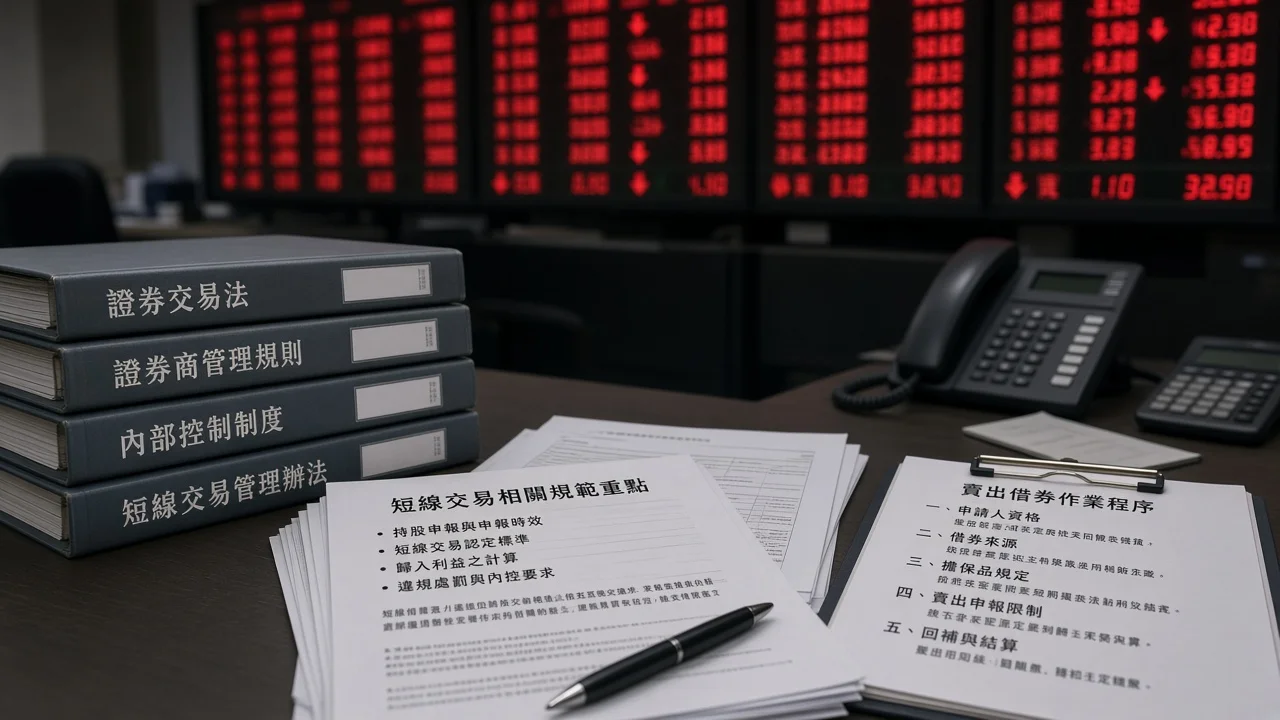
STATE actors can smooth the tape; they cannot replicate TSMC’s process node in a policy quarter. China’s fifteenth five-year plan bets on domestic silicon, and custom ASIC shifts dilute GPU share at the margin, but advanced packaging concentration in Hsinchu and Tainan remains the choke for US AI capex. Nvidia’s Nov. 17 results now arrive with interim CEO Colette Kress explaining demand while Taipei watches whether governance discount or revenue guide dominates.
Asia’s split rebound
Regional Friday trade illustrated the separation Culled mapped in Washington’s remote-access piece. Seoul opened sharply higher on memory leadership before fading; Tokyo gained on a weaker yen narrative; Shanghai chip names leaned on substitution stories per Nikkei Asia. Taiwan sat in the middle—hit first on Huang, stabilizing on futures, still exposed to whatever US export drafts do to offshore GPU hosting.
Hong Kong tech lagged, pricing remote-access risk beside December congressional dates. For TSMC, the read-through is customer concentration: hyperscalers may keep ordering wafers even if NVDA’s multiple compresses, but any rule that slows Nvidia shipments eventually shows up in CoWoS loadings and revenue mix.
A two-percent foundry move is not a verdict on AI spending. It is the equity market’s reflex when ninety percent of advanced nodes live on an earthquake-prone island and the GPU brand that markets them loses its founder CEO in a national-security headline.
What would falsify the frame
Sustained foreign buying, a stabilized Nvidia succession, and TSMC guide raises on Nov. 17 would mark Thursday as a one-day correlation trade. Conversely, renewed Taiex bear-market triggers, sharper export-license retaliation, or evidence that US customers are pulling forward orders away from Taiwan would prove concentration risk is repricing—not just sympathy selling.
Until then, TSMC’s modest fall is a reminder: the AI supercycle’s most brittle map coordinate is not Santa Clara—it is the foundry campus whose substations keep the lights on for every model launch timed to Huang’s old keynote calendar.
Continue reading


Sources
Chip Dispatch and Asia market wraps on Taiex and TSMC moves; Culled Taiwan NSF coverage; TSMC capex guidance article; Nvidia CEO transition releases; FSC short-sale rule reporting.


