

President Donald Trump told the UN General Assembly that eighteen U.S. munitions plants are under construction, some nearly complete, to make missiles and ammunition for American stockpiles and allied supply. The residual is whether a war-era shortage is hardening into permanent defense industrial policy.
President Donald Trump told the United Nations General Assembly on Tuesday that eighteen U.S. munitions plants are under construction, that some are nearly complete, and that they will produce missiles and ammunition to replenish American stockpiles and raise the rate at which the United States can supply allies. Buried in a speech otherwise skimmed for Iran threats and AI nicknames, that sentence is the concrete one. It converts a known shortage into a construction schedule.
The residual is permanence. If war-era drawdowns from Ukraine and the Iran fight are answered with a national factory program, is this a surge — or industrial policy that outlasts the next ceasefire? Other outlets may leave the count halfway through a speech recap. Searchers will look for the plants.
From Stockpile Crisis to Concrete
The shortage was never abstract. Artillery shells, interceptors, and propellant charges ran thin as Patriot rationing exposed how fast allied magazines empty. Army modernization and contractor capex followed: General Dynamics metal-parts lines in Texas and Arkansas, Lockheed Martin’s multi-billion-dollar footprint across more than twenty U.S. sites for THAAD, PAC-3, and Precision Strike, L3Harris rocket-motor capacity, Hanwha’s $2.2 billion munitions campus lease at Pine Bluff Arsenal announced the same week as the speech. Trump’s “eighteen” is a presidential aggregation of that map — a number meant to travel.
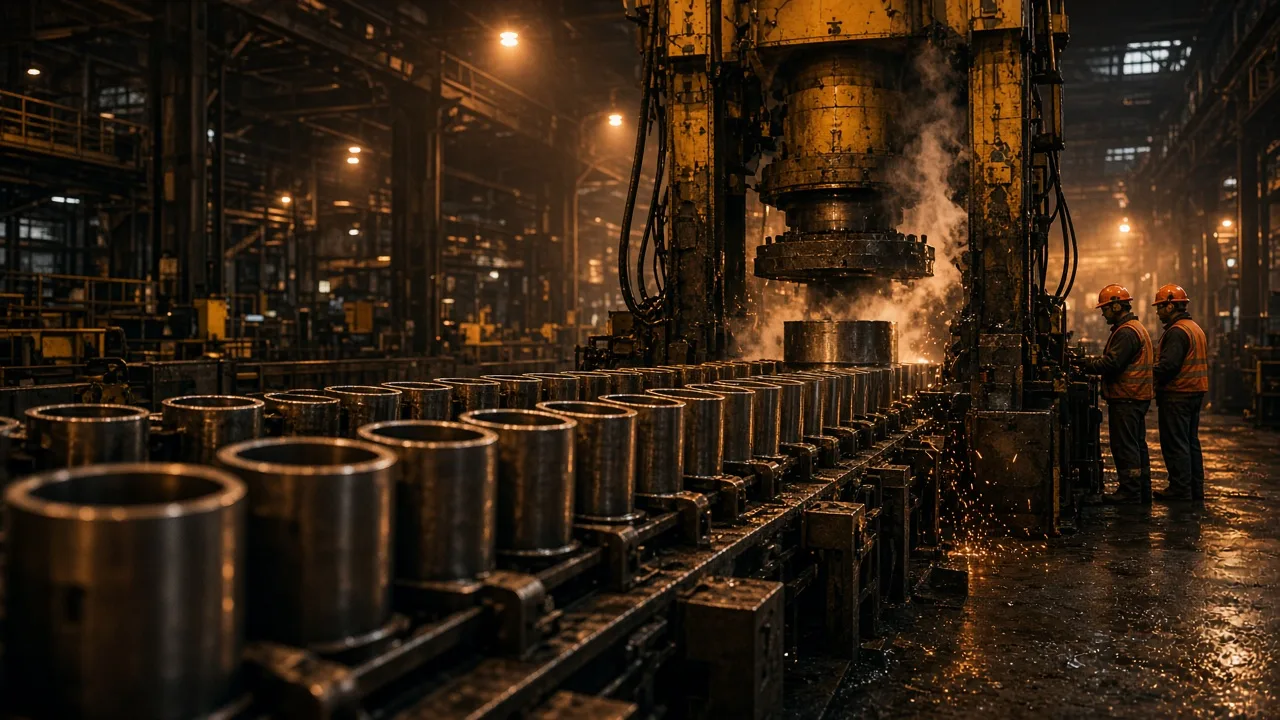
What matters for policy is not the branding. It is that replenishment and allied throughput are now stated as reasons to pour foundations, not only to write supplemental bills. Capital follows that signal: primes expand floorspace when they believe demand is multi-year. The magnet choke that still sits under NATO actuators remains a separate constraint — plants without guidance magnets are warehouses.
Industrial Policy by Another Name
STATE sets the order book and the public count. CAPITAL builds the presses. On the same UN week Culled previewed as Hormuz diplomacy competing with podium theater, the munitions line is the part that changes payrolls in Troy, Camden, Mesquite, and Pine Bluff. Markets already reprice defense margins when the ramp looks durable rather than episodic — the same tension Culled tracked when Northrop’s margin story met demand optimism.
Eighteen plants under construction is how a temporary ammunition crisis becomes a standing industrial base — if the contracts and workforce stick.
Test the claim three ways. Watch whether Pentagon and contractor releases converge on eighteen sites or a different tally. Watch whether multiyear procurement locks in after any Ukraine or Iran pause. Watch whether allied transfer rates rise as the nearly complete plants come online — or whether magazines refill only for U.S. contingency stocks. A speech number can be theater. Concrete and shift schedules are harder to walk back.
Continue reading


Sources
Trump UNGA address Sept. 22, 2026: 18 munitions plants under construction, some nearly complete; missiles and ammunition; replenish U.S. stockpiles and increase allied supply rate; Ukraine/Iran drawdowns; Lockheed Martin $8–9B munitions footprint / 20+ U.S. facility builds (Troy THAAD, Camden PAC-3); GD OTS Mesquite/Camden 155mm lines; Hanwha Defense USA $2.2B Pine Bluff Arsenal munitions campus (Sept. 22); Army ammunition modernization; Culled interceptor crisis, rearmament magnets, UNGA open, Northrop margin repricing coverage


