

Albertans rejected beginning a constitutional path toward a future binding separation vote by roughly three to one in unofficial results on October 20, 2026, with more than 1.5 million ballots counted. The mandate is clear; the motives are not. The durable story is how provincial grievance, Canadian identity and the economics of nationhood converged when voters priced the risk of dismantling shared markets.
Unofficial results on October 20, 2026 showed roughly 76% of Albertans voting to remain in Canada and about 24% choosing to begin a separation process, with more than 1.5 million votes counted, according to AP and Elections Alberta. The question was procedural: whether to start a constitutional path toward a future binding breakup vote — not independence itself. That distinction matters for anyone trying to read patriotism into the margin.
Prime Minister Mark Carney framed the campaign around trade diversification, infrastructure and national energy ambitions while U.S. tariff pressure and annexation rhetoric hung over the race. The interesting interpretation is not that Alberta rediscovered maple-leaf sentiment overnight. It is that provincial identity and Canadian sovereignty looked compatible to most voters once the ballot asked them to accept real transition risk — currency, debt, pensions, borders and negotiations with both Ottawa and Washington.
Four Stories in One Result
Canadian nationalism may be changing shape. For decades, Canadian identity often meant contrast with the United States: public healthcare, multicultural institutions, a different political culture. Trade wars add a sharper layer: what is the strategic value of remaining one country when your largest customer is also your loudest critic?
Grievance did not vanish. Disputes over energy policy, equalization and federal authority predate this referendum. Voting down a separation process does not imply enthusiasm for Ottawa’s current menu. An Angus Reid Institute survey published October 16 found that among Albertans who wanted a future binding referendum, 60% said their main goal was to send Ottawa a message, while 37% said they primarily wanted separation. The protest vote and the secessionist vote share a ballot line but not the same end state.
Independence got more expensive on paper. Ipsos polling reported earlier in 2026 showed support for outright independence falling from 28% in January to 18% in late May and early June, according to Global News. As voters move from symbolic frustration to institutional questions — Who issues the currency? Who backstops the banks? — the abstract appeal of control meets arithmetic.
The divide was not a simple left–right split. Former premiers Jason Kenney and Rachel Notley, opponents in normal times, appeared together to argue for staying in Canada, a rare cross-party tableau in a polarized province, as The Guardian reported. The strongest read is not that Alberta abandoned provincial nationalism. It is that a large majority treated federation as the default risk-management device.
The Balance Sheet Alberta Did Not Take
A September 2026 study from the University of Calgary’s School of Public Policy, commissioned by Alberta’s government, modeled independence under cooperative and difficult negotiation paths. Global News summarized the ranges: estimated five-year transition costs between roughly C$50 billion and C$170 billion, not a single forecast but a spread across scenarios.
| Scenario (five years vs. remain) | GDP | Employment |
|---|---|---|
| Cooperative separation | about −2.2% | about −0.7% |
| Difficult separation | about −10.1% | about −10% |
The cooperative case even allows longer-run gains in some model paths through policy flexibility. The difficult case implies prolonged damage. The width of the band is the point: independence would expose households and firms to outcomes decided in rooms Alberta does not control alone — debt allocation with Ottawa, pipeline treaties, deposit insurance, CPP assets, internal trade rules and sovereign borrowing spreads.
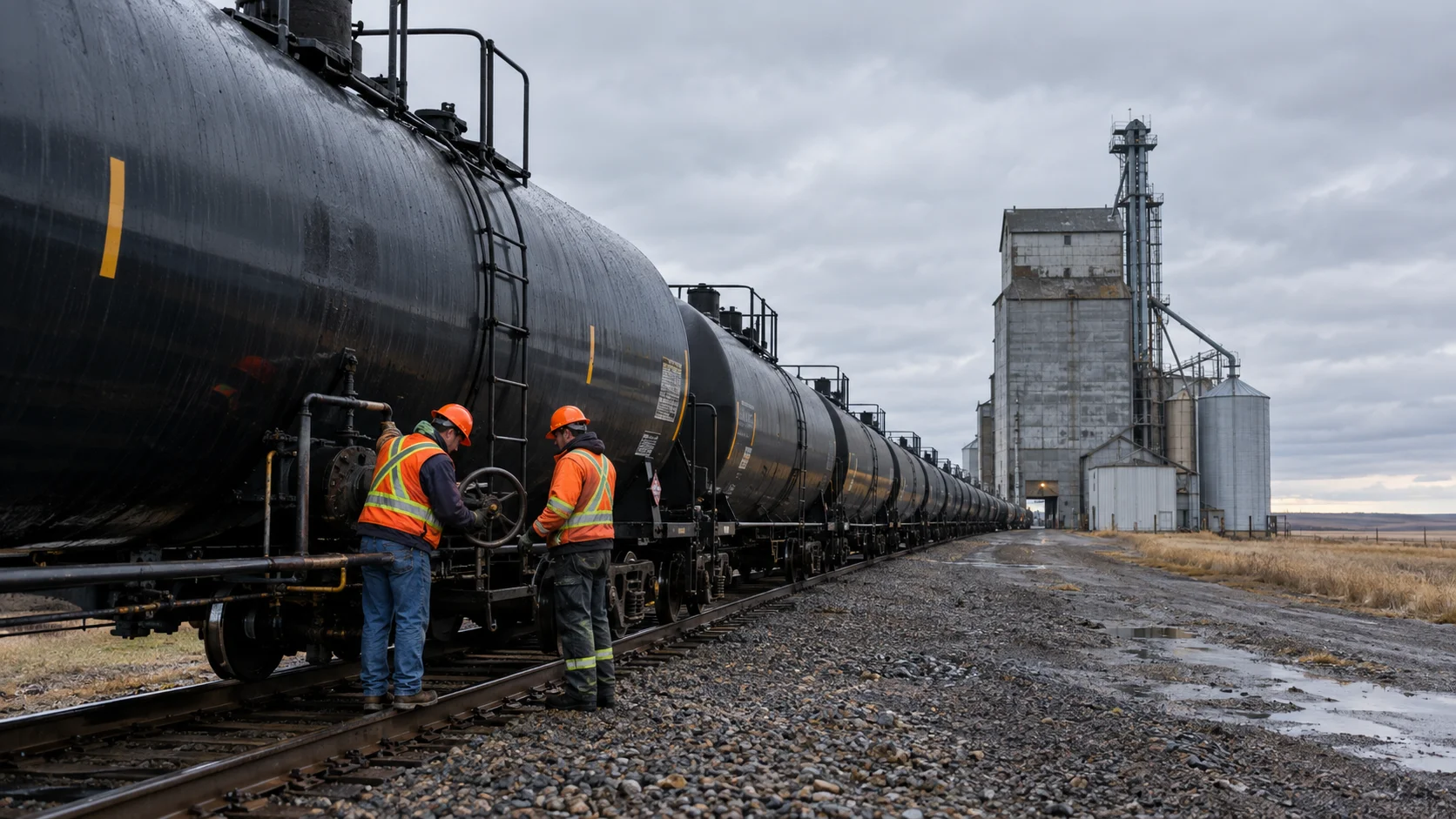
Alberta is not a generic province in Canada’s energy ledger. The Canada Energy Regulator puts Alberta’s share of national crude oil production at 83.8% in 2025. Leaving would not make the oil vanish; it would relocate fiscal, regulatory and geopolitical control. In 2024, the United States bought about 93% of Canada’s crude exports. A landlocked producer negotiating alone does not automatically gain leverage against that buyer — especially when export routes run through Canadian and American territory.
Sovereignty Without Economic Independence
Separation advocates often promise autonomy over taxes, resources and foreign economic ties. Political independence, however, does not create economic independence by default. Alberta would still need access to capital markets, clearing banks, rail and pipe corridors, and stable trade rules while investors priced political risk.
That produces a paradox worth carrying beyond Canada: could leaving a larger federation to gain sovereignty actually reduce practical bargaining power? It is not predetermined — cooperative treaties could ease the path — but the University of Calgary scenarios show why market access and institutional continuity dominate the financial outcome.
The timing intersects with Ottawa’s wider project. Carney’s government is trying to diversify away from U.S. concentration — including deeper ties with Europe, as Culled covered in Europe’s invented associate membership for Canada. Alberta’s vote rejected a process that would have layered constitutional uncertainty onto that effort, even as U.S.–Canada trade friction continues to redefine what “neighbor” means.
What the Constitution Still Owes
Even a clear yes on beginning separation would not have made Alberta a country on Monday morning. The Supreme Court of Canada’s Reference re Secession of Quebec held that a clear vote triggers a duty to negotiate, not an automatic right to leave. Talks would cover federal assets and liabilities, minority rights, borders and — critically — Indigenous title and jurisdiction. Land, infrastructure and resource development do not transfer by provincial declaration alone. Financially, that means the separation price tag is not a spreadsheet Edmonton prints unilaterally.
Compare Quebec 1995, when voters faced sovereignty directly and the No side won narrowly. Alberta’s 2026 question was earlier in the chain, and the margin was far wider — but the histories differ. Quebec’s movement grew from language, culture and constitutional rupture; Alberta’s has been tied more tightly to resource economics and federal–provincial fights. Both still ask what binds a federation when regions feel under-represented in the capital.
Angus Reid also reported that 62% of Albertans believed the separatist debate would never end, even before ballots were cast. Monday’s result may close one door without settling federalism. Roughly one in four voters still chose to start the separation road — a constituency large enough to keep pressure on Ottawa and Edmonton.
Nationhood is not only a flag. It is currency, clearing, pensions, pipes and the size of the table when Washington sets terms.
The hypothesis worth testing over the next year — not declaring today — is whether Canadian identity is strengthening because of shared values or because fragmentation looks strategically expensive in a world of tariff wars and great-power rivalry. Scotland, Catalonia and every customs union facing populist breakup politics are watching the same math.
For primary sources, the University of Calgary independence scenarios and Angus Reid’s October referendum polling are the anchors. The referendum answered one question. The enduring story is what Canadians are buying when they choose to stay together — and what it would cost to unwind the purchase.
Continue reading


Sources
AP and Elections Alberta unofficial Oct. 20, 2026 referendum tallies; Angus Reid Institute Oct. 16, 2026 Alberta referendum polling; Ipsos/Global News May–June 2026 independence tracking; University of Calgary School of Public Policy Sept. 2026 independence scenarios (commissioned by Alberta government); Canada Energy Regulator crude production and export data; SCC Reference re Secession of Quebec (1998); Guardian on Kenney–Notley unity appearance.


