

Iran's Central Bank is offering up to $2 billion in foreign-currency banknotes through selected banks, with citizens able to buy as much as $10,000 each on national ID. The program began with a $1 billion first tranche as the open-market dollar kept setting records above 2.6 million rials. Meanwhile the Statistical Center reported September point-to-point inflation of 89.8 percent, and TEDPIX finished near 7.79 million points on 19 October after retail liquidity briefly pushed the benchmark above 8.2 million. The arithmetic is blunt: dollar sales can smooth volatility; they do not unwind war budgets, sanctions, or the equity market's role as an inflation hedge.
The Central Bank of Iran began selling foreign-currency banknotes in late September under a program capped at $2 billion, with an initial $1 billion tranche routed through Mellat, Tejarat, Saderat, and Saman branches and affiliated exchange offices, according to Iran Daily’s IRNA summary. Any citizen over 18 may purchase up to $10,000 on a national ID card — a retail channel meant to pull demand off the parallel market, where the dollar had already crossed 2.55 million rials on the day sales opened and continued toward 2.69 million by early October on trackers cited by Arab News.
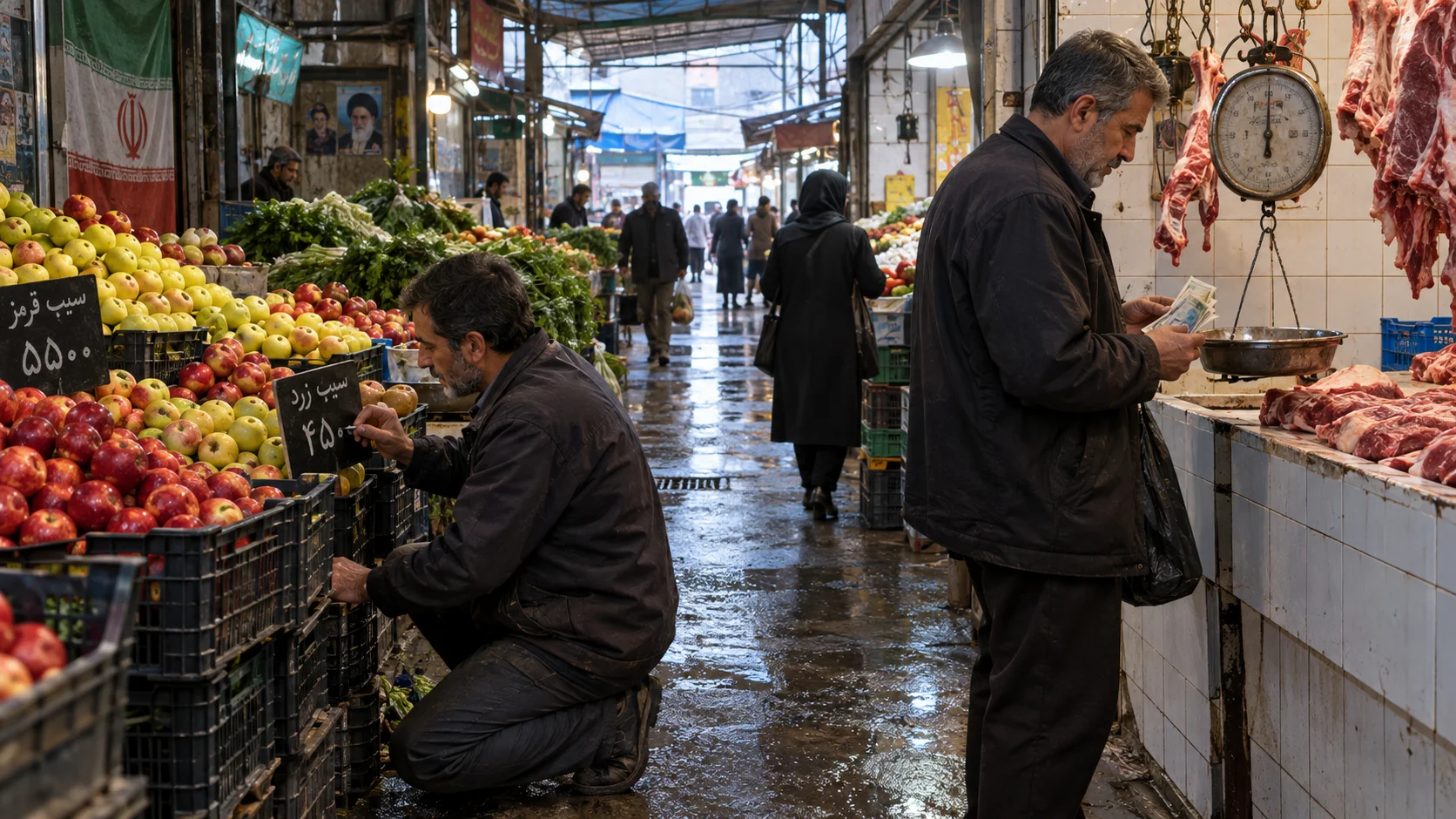
The same week, the Statistical Center reported annual inflation of 73.6 percent and point-to-point inflation of 89.8 percent for September — food, beverages, and tobacco up 108.8 percent year on year. Governor Abdolnaser Hemmati had argued the pace was slowing after fifteen months; the center’s print moved 0.8 percentage point higher than his public estimate, a reminder that Tehran publishes two inflation ledgers that do not always agree. Culled has tracked how corridor diplomacy and Hormuz risk sit on a separate calendar from grocery bills.
Selling $2 billion in cash can narrow the bid-ask on fear; it cannot shrink a price level that has nearly doubled in twelve months.
Cash Window, Parallel Tape
Mehdi Darabi, the central bank’s assistant for foreign-exchange affairs, told state television that false predictions of economic collapse were feeding the rial’s slide — and that the intervention was temporary management, not an admission of exhaustion. Former governor Valiollah Seif told IRNA that $2 billion is modest globally but material for an economy under sanctions and maritime pressure, a framing Rudaw echoed as Washington warned foreign banks of immediate sanctions for Iran dealings.
Darabi’s later comments to domestic press, summarized by Iran Broker, stress a different operational detail: since Dey 1404 (roughly late December 2025), the bank has been a net seller in the commercial FX market on many days, sometimes buying exporters’ dollars when supply exceeded demand and releasing them when the market tightened — including through the war period. Sales near 262,000 tomans per dollar were meant to track the open market, he said, not to floor the rate; traders briefly pushed quotes below that level afterward. The policy succeeds at volatility if volumes clear; it fails the inflation arithmetic if rials printed to fund the budget still outrun wages.
Official NIMA rates remain far below street quotes — Daily Baku’s October 3 report put the central bank’s posted dollar near 1.75 million rials while the parallel market traded near 2.63 million — so even legal cash purchases are a partial hedge, not a reset of purchasing power.
Equities as the Other Hedge
On 19 October, TEDPIX closed near 7.79 million points, up 0.09 percent, after an intraday push above 8.2 million, according to GMT Eight’s session flash — a tape that moved while Gulf and Asian risk assets leaned defensive. That is the same investor base the FX program tries to calm with dollars: households and retail accounts that cannot easily move offshore. Culled’s Monday desk read the board as trapped liquidity, not a growth re-rating; this article adds the policy layer — when the central bank sells greenbacks at the counter, industrials on the Tehran Stock Exchange still absorb tomans that lose value every month CPI prints near 90 percent point to point.
The IMF still projects a 7.6 percent GDP contraction in 2026. Petrochemical, mining, and bank lines offer liquid tickets inside a closed capital account; $10,000 in cash offers a hard-currency slice with a cap. Neither channel fixes fiscal deficits financed by money creation or oil export disruption; both are rational responses to STATE-imposed fences on where savings may sit.
What Would Change the Math
Watch three prints: weekly parallel-dollar closes versus CBI sale volumes; monthly Statistical Center inflation against Hemmati’s parallel estimates; and TEDPIX flow data after large down days — Friday’s press had reported eight trillion tomans of retail outflows on a 1.91 percent slide, the kind of reversal that shows the equity hedge is flow-driven. A sustained narrowing of the NIMA–street gap without fresh OFAC warnings would validate the cash program as more than a headline. Sustained dollar records plus equity inflows would confirm the arithmetic: inflation and sanctions are pricing faster than $2 billion in banknotes can absorb.
Diplomatic pauses that ease oil and MOU markets may trim tail risk; they do not by themselves deliver the household relief September’s 89.8 percent print says is still missing. Until money-supply growth slows in data, not speeches, Tehran will keep operating two valves — dollars at the window, shares on the board — and investors will keep testing which one leaks slower.
Continue reading


Sources
Iran Daily / IRNA on CBI $2B cash program and September CPI; Arab News and Reuters on parallel-market dollar rates; Iran International and GMT Eight on 19 October TEDPIX; Iran Broker on Mehdi Darabi FX interview; prior Culled on corridor diplomacy and closed capital market


