

Planet Money asked who gets paid when an AI model trains on a catalog. The sharper labor question is who still gets hired to make the next one. Producers fear sameness more than replacement. The people losing hours are junior engineers, lighting techs, and festival crews — the middle that trained the stars.
The argument that travels is cinematic. A model sings. A pop star is finished. A teenager prompts a club track and the ghost producer evaporates. That is the story people share because it has a famous face in it. It is also the story the people who actually run sessions are not telling.
In November 2025, Sonarworks and Sound On Sound surveyed 1,194 working creators — seventy-one percent with more than a decade in. Loss of originality led their fears at 77 percent. Job displacement landed fourth, at 42 percent. The professionals closest to the tools are more afraid of competent sameness than of a pink slip. They are not wrong about themselves. They are looking at the wrong payroll.
The labels settled. The musicians are still asking.
NPR’s Planet Money put the question cleanly last week: if Suno and Udio learn from millions of recordings, who gets paid? Universal settled with Udio in October 2025. Warner settled with Udio in November, then with Suno days later, taking Songkick as part of the furniture. Sony has not settled. In June the American Federation of Musicians sued Universal and Warner, arguing that licensing members’ recordings to train generative models is a “new use” under the Sound Recording Labor Agreement — one that required notice and pay. The labels have moved to dismiss. Briefing runs into September.
The complaint is not metaphysical. It says the majors collected settlement money and future license revenue, congratulated themselves for protecting artists, and did not share. Session players received neither a check nor a list of which recordings went into which model. That is a labor story dressed as copyright. It is still only the visible fight.
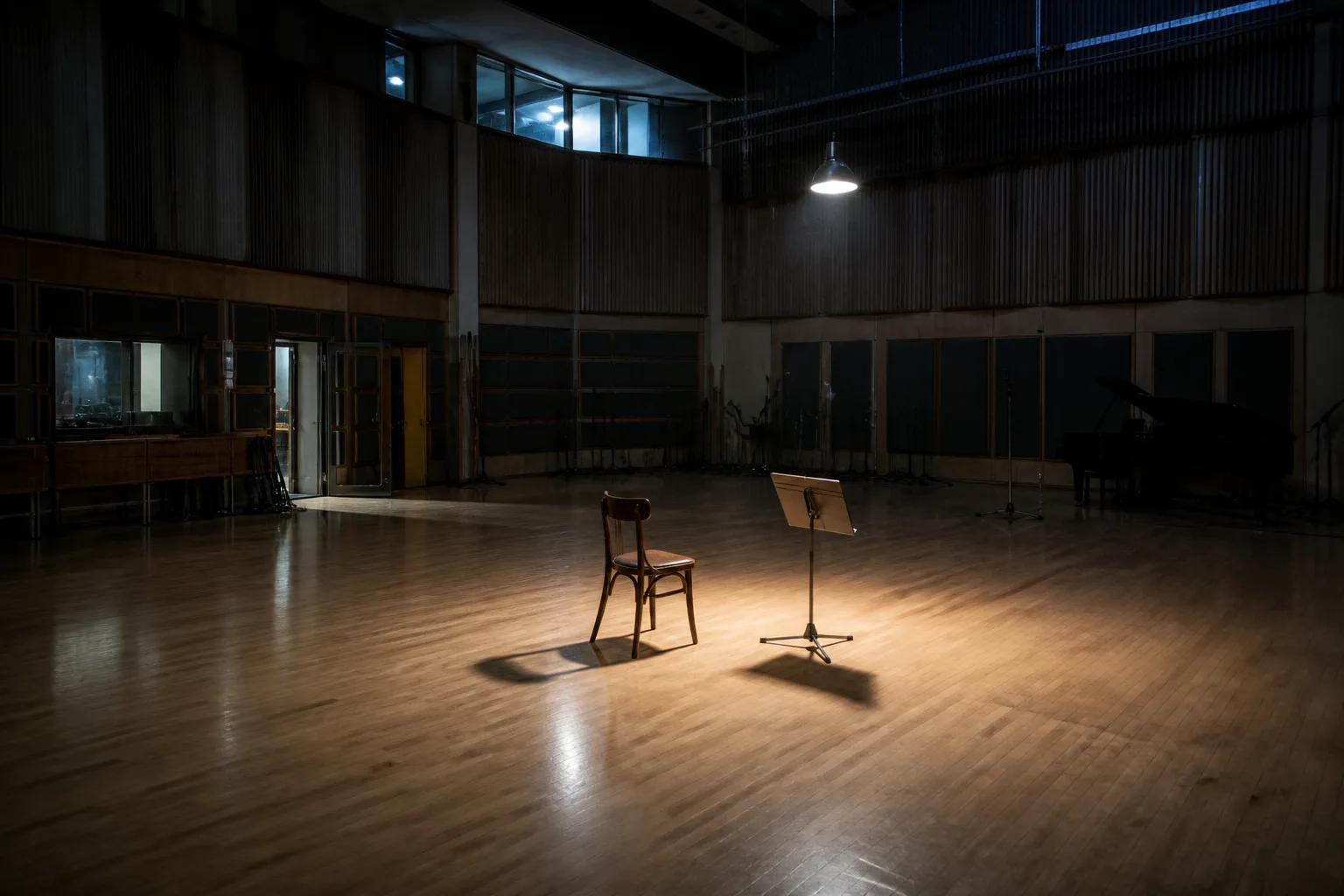
The work that trains the ear is the first to go
The same Sonarworks respondents who shrugged at replacement drew a bright line through the studio. Audio cleanup, noise reduction, stem separation, session housekeeping: useful, non-threatening, already in the workflow. Lyrics, composition, aesthetic choice: keep your hands off. That distinction is rational for a producer with twenty years of taste. It is lethal for the person whose job was the cleanup.
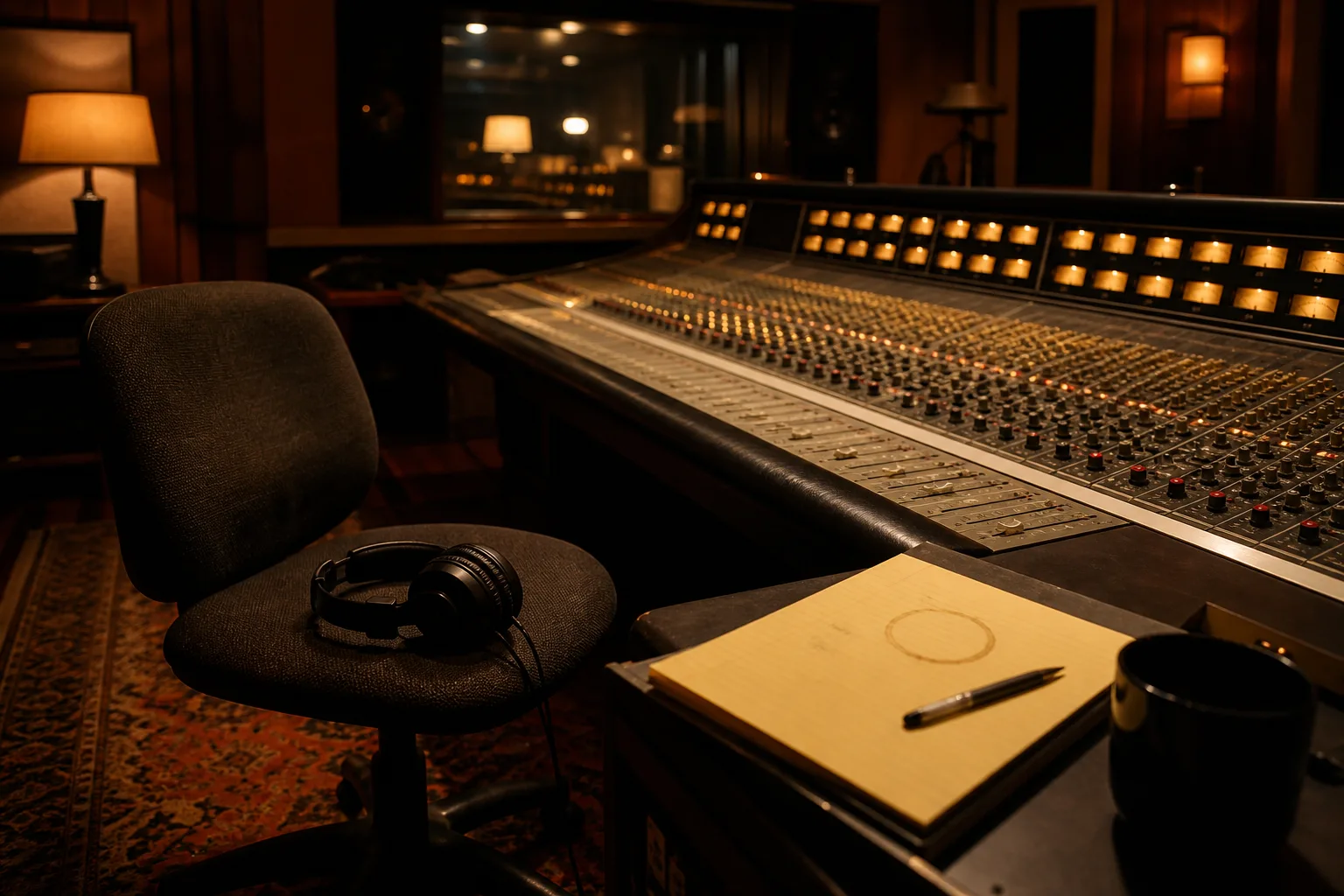
A junior mixing assistant used to spend two years taking clicks out of a vocal and learning, by repetition, what a mix is supposed to feel like. Those hours were the apprenticeship. iZotope, LANDR, and a dozen unnamed plugins now do the first eighty percent in minutes. The senior keeps the last twenty — the ride on the vocal, the low-end that belongs to this room — and no longer needs a second chair. The same fracture is already visible in software, where agents ate the junior work that used to grow architects. Music is running that experiment with a smaller union and worse benefits.
The Bureau of Labor Statistics does not print “ghost producer.” It does print the infrastructure layer. Sound engineering technicians: 16,900 jobs in 2024, projected down 2 percent by 2034. Lighting technicians: 12,100, down 5 percent. Broadcast, sound, and lighting technicians as a group sit at 146,100 jobs and a median $56,600 — the music industry’s middle class by any honest definition. Official forecasts are a slow leak in the exact occupations that used to be the on-ramp.
Festivals automate the perimeter before they automate the DJ
Live music was supposed to be the safe harbor. You cannot prompt a crowd. You still can thin the crew that keeps one from crushing itself.
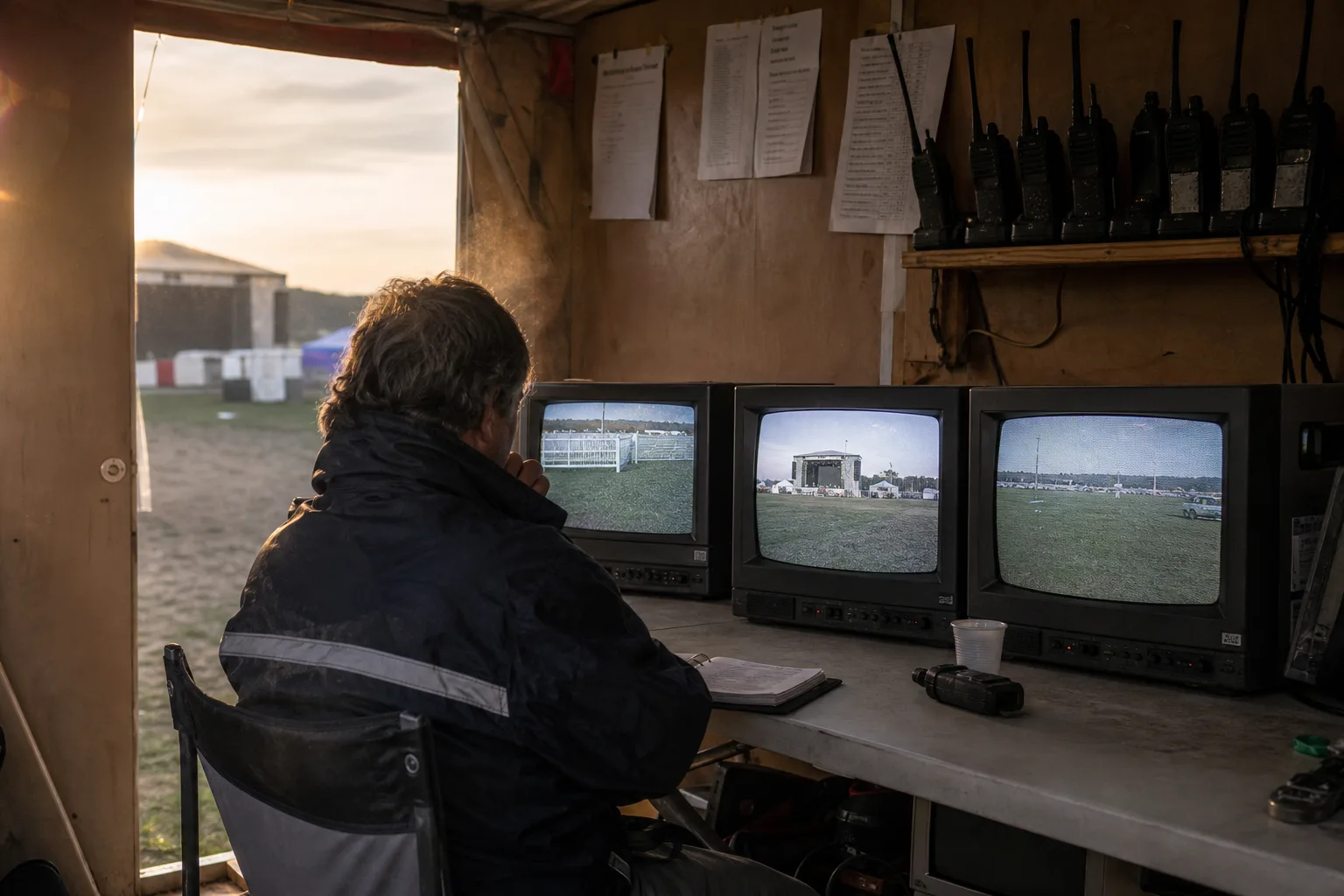
Switzerland’s Paléo Festival spent 2025 wiring Technis sensors to Videtics video analysis so a control room could watch density and anomalies without another steward on every sightline. In Riyadh, MDLBEAST’s Soundstorm brought AvidBeam’s crowd-prediction stack to 450,000 attendees. Neither is a robot bouncer. Both are a reason to staff fewer humans per acre. Autonomous patrol machines are already in the adjacent rooms: Knightscope K5s at casino-resorts and convention centers, towers in the Crypto.com Arena district. The festival copy is a procurement cycle, not a science project.
Lighting is the same hourglass in a haze machine. AI-assisted programming now writes cue lists that used to occupy a mid-level desk operator for days. Headliners still hire a lighting director with taste. Corporate dates and second-stage EDM — the jobs that trained those directors — run leaner. BLS already has lighting technicians shrinking faster than the rest of the technical trades.
This is the barbell the rest of the K-shaped consumer economy already knows. Superstars absorb AI as leverage. Amateurs absorb it as a bedroom studio. The professional middle — good enough to get hired, not famous enough to be the brand — is the residual capital can delete. Middle-management cuts in tech made the same bet a year earlier: harvest the translators, keep the names, and hope the organization still remembers the job in five years.
When the second chair disappears, you do not just lose a paycheck. You lose the school.
Taste does not spawn itself
Sonarworks respondents keep saying the future producer is a creative director: vision, taste, the ability to tell a model what not to do. Culled has already mapped that relocation of scarcity — from rented specialty to synthesis. The missing clause is biological. Taste is not a prompt setting. It is thousands of bad decisions made on someone else’s clock. If the industry stops hiring people to make those decisions, it will still have stars for a while. It will have fewer people capable of becoming one.
The Planet Money question still matters. Labels will keep settling. Unions will keep suing. Models will keep singing. Watch the load-out at dawn instead. The headliner has a bus. The rigger has a day rate. One of those is being repriced by software that does not need to sleep, and it is not the name on the poster.
Continue reading


Sources
NPR Planet Money (Aug. 18, 2026) on AI-music compensation; AFM federal complaint against Universal and Warner over Suno and Udio licenses (June– July 2026) as reported by Music Business Worldwide; Sonarworks/Sound On Sound survey of 1,194 working creators (Nov. 2025); BLS Occupational Outlook for broadcast, sound, and lighting technicians (2024–34); Paléo Festival Technis/Videtics crowd-flow system (2025); MDLBEAST Soundstorm/AvidBeam deployment (Dec. 2025); Knightscope entertainment-venue patrols.


