

Alphabet burned $5.9 billion in a quarter and the market called it overspending. The real constraint is physical: advanced packaging at TSMC is sold out through 2026, with 52-to-78-week lead times. Capital arrives faster than capacity, and the gap shows up as cash burn.
Every financial panic needs a villain, and this month the market chose capital expenditure. Alphabet reported the strongest quarter in Google Cloud’s history — $119.8 billion in total revenue, up 24%, with cloud revenue climbing 82% to $24.8 billion and a backlog of $514 billion. The stock fell roughly 6.5% the next morning. What did the damage was $44.9 billion of capex in a single quarter, the first negative free cash flow in the company’s history at $5.9 billion, and raised 2026 guidance of $195 billion to $205 billion.
The consensus reading was immediate and nearly unanimous: Big Tech is spending faster than artificial intelligence can pay it back. That reading is half right and entirely misleading. Cash burn is a symptom. The disease is a queue.
The Binding Constraint Is a Booking Window, Not a Budget
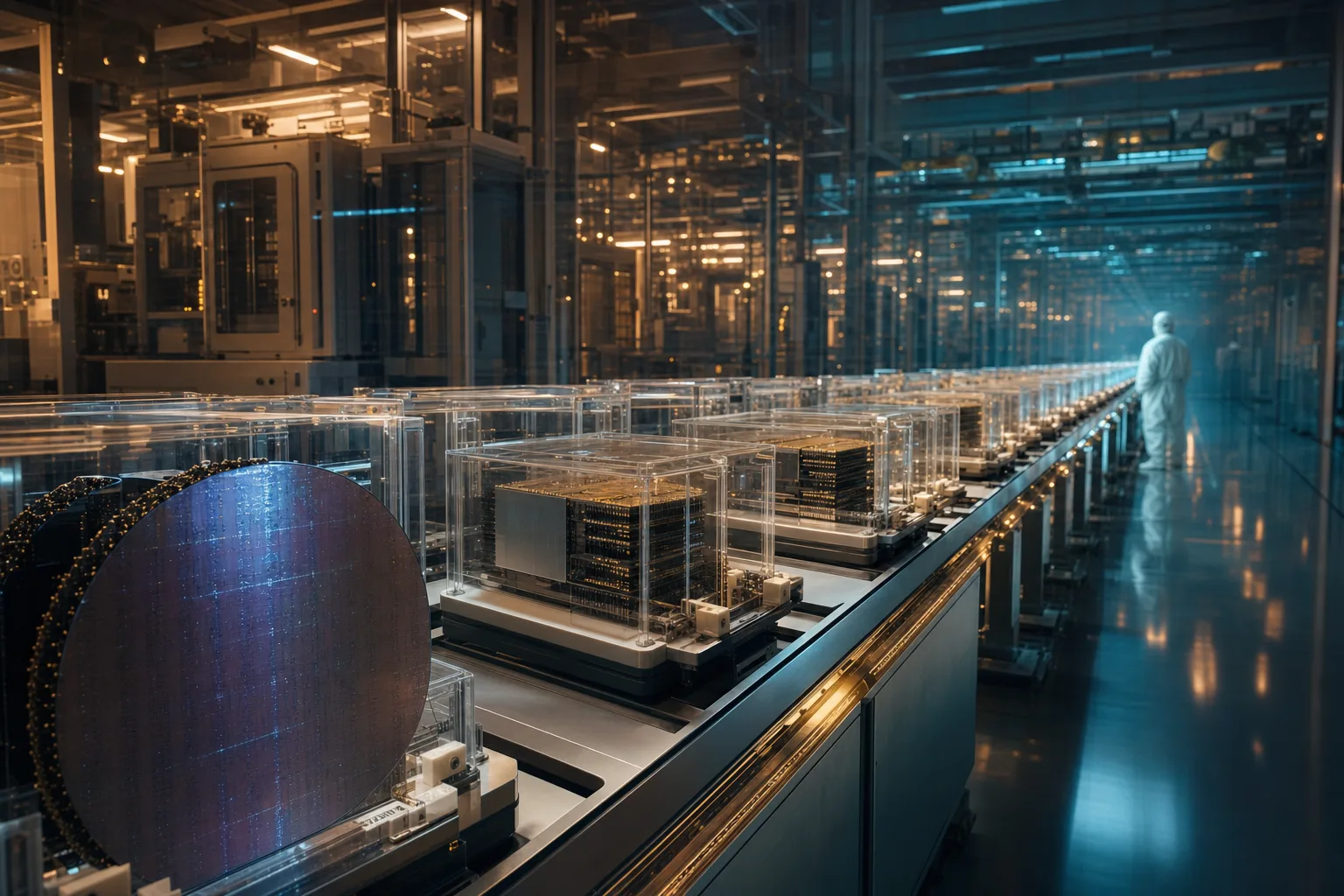
For two decades, the limiting factor in semiconductors was lithography — the ability to shrink a transistor. That problem is largely solved. TSMC produces 2nm and 3nm logic at workable yields. The step that now gates AI deployment is what happens after the wafer: advanced packaging, the 2.5D assembly that binds a large logic die to stacks of high-bandwidth memory. TSMC’s version is called CoWoS, for chip-on-wafer-on-substrate, and every consequential AI accelerator passes through it.
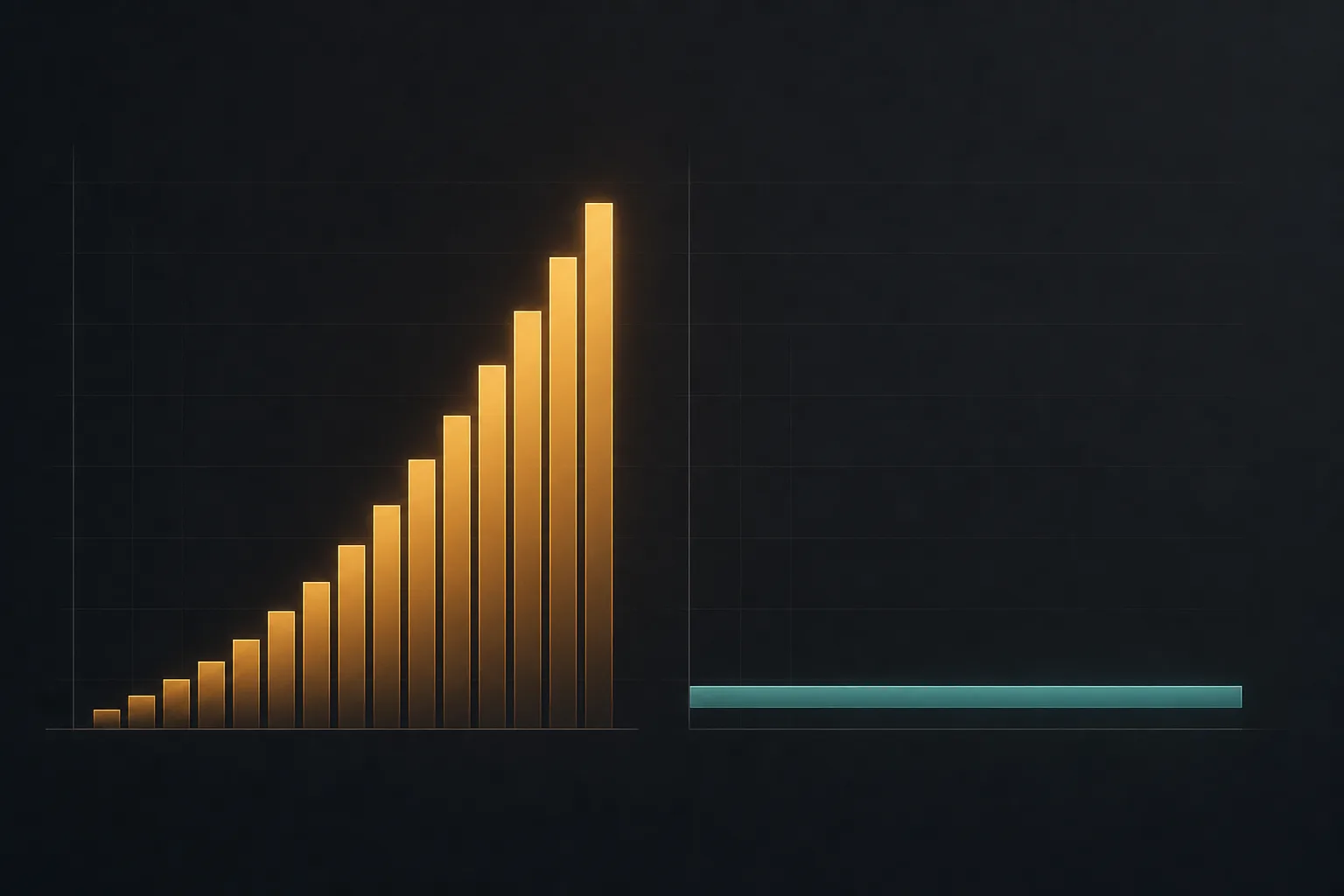
The numbers are unforgiving. CEO C.C. Wei told shareholders in June that CoWoS capacity remains extremely tight and sold out through 2026. Monthly capacity is ramping hard — from roughly 75,000 to 80,000 wafers toward a target of 120,000 to 130,000 by year-end, against about 35,000 at the close of 2024 — and lead times have not budged from 52 to 78 weeks. Estimated 2026 demand approaches one million wafers, up from roughly 370,000 in 2024. Nvidia alone is thought to hold around 60% of allocation, and more than 85% of 2026–2027 capacity is already booked.
This is why capacity headlines keep failing to relieve the shortage. Pre-booking consumes future output the moment it is announced. A hyperscaler that wires money today is buying a delivery slot four to six quarters out, and it pays for the data center shell, the power interconnect and the land in the meantime. That is the mechanical origin of negative free cash flow. It also explains why the market’s applause for Nvidia’s record quarter arrived so joylessly: revenue was never the question. Throughput was.
Apple Shows the Same Shortage at Consumer Scale
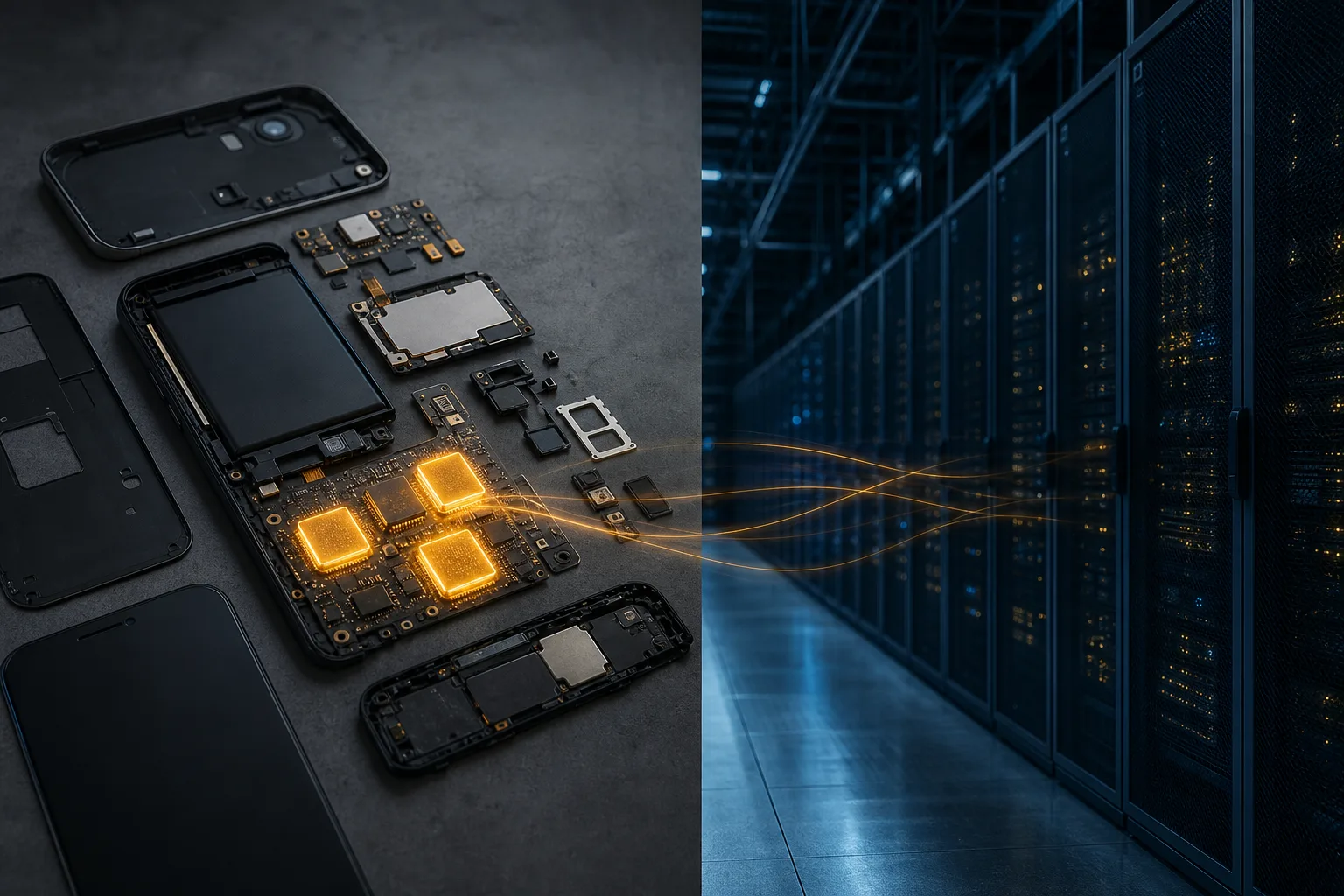
If the packaging queue is abstract, Apple has made the memory half of it visceral. Component analysts put the memory content of a single iPhone at more than $130, up from roughly $30, pushing memory past 30% of the bill of materials on many devices this year. In response, Tim Cook raised prices on several MacBook and iPad models by about 20% and described the shortage as a hundred-year flood.
Then the lobbying began. Apple has been pressing Washington for permission to source DRAM from ChangXin Memory Technologies, the blacklisted Chinese supplier, arguing that Micron is exploiting a tight market — a claim with some arithmetic behind it, given Micron’s gross margin above 80%. Micron’s executives counter that Apple’s own bargaining during the 2023 downturn drove prices low enough to cancel the capacity investments that would have prevented today’s crunch. The administration is left choosing between cheaper consumer electronics and a domestic memory industry.
Both sides are describing the same physics from opposite ends. HBM commands premium pricing and is allocated through 2026, which pulls fabrication toward the data center and starves consumer DRAM. Apple’s fiscal third-quarter report on July 30 will be read for iPhone demand; the more informative line is what it says about component costs. When the world’s most powerful procurement organization cannot buy its way out of a shortage, price is not the mechanism doing the rationing.
Lead Time Is Quietly Becoming a Financial Instrument
Here the story crosses from infrastructure into finance. When allocation is scarce and pre-bookable, a delivery slot becomes an asset: transferable in effect, valuable in proportion to scarcity, and increasingly the thing that capital is actually purchasing. South Korea’s recent AI package — including an SK Hynix and Nvidia initiative valued above $500 billion, with facilities scheduled to come online in 2027 — is best understood not as a construction budget but as a claim on future memory output.
That reframing matters for how the cycle ends. The dot-com comparison is imperfect precisely because the constraint is real rather than speculative: fiber was overbuilt into abundance, while packaging is rationed into scarcity. It also sharpens the bear case. If efficiency gains arrive faster than slots do — the wager behind China’s push to make models cheaper rather than larger — then some of today’s locked allocation was bought at the top. And if application revenue never justifies the buildout, the industry will discover that it collateralized a queue. Markets have priced stranded claims on scarce infrastructure before, a pattern familiar from Bitcoin’s periodic audits of its own capital stack.
Watch the Booking Window, Not the Budget Line
The central proposition is simple: AI’s cash burn measures the distance between money and capacity, not the recklessness of the people spending it. Picture a restaurant with a two-year waiting list. Adding tables looks like expansion; the reservation book says otherwise, because every new table was claimed before the carpenters arrived. Capex tells you how much someone wired. Lead time tells you when anything arrives.
So the useful discipline for the next several quarters is to stop reading capital expenditure as sentiment and start reading the packaging lead-time index as the actual clock. When that 52-to-78-week window begins to compress — not when a capacity target is announced — the constraint is breaking, and the cash burn will resolve itself. Until then, free cash flow is not a verdict on judgment. It is a receipt for a place in line.
Continue reading


Sources
Alphabet Q2 2026 results coverage and capex guidance, TSMC CoWoS capacity and lead-time trackers, C.C. Wei shareholder remarks, Wall Street Journal reporting on the Apple-Micron lobbying fight via 9to5Mac and 24/7 Wall St., Culpium supply-chain analysis of Apple memory costs, Reuters coverage of South Korean AI memory partnerships


