

Economists lifted Singapore's 2026 GDP forecast to 5 percent from 3.5 percent on AI-led electronics. Tuesday still prices Brent near $97 and Hormuz at about ten commodity ships a day. The annual print can hold while Jurong's bunker and chemicals book takes the first loss.
The Monetary Authority of Singapore’s September survey of professional forecasters, released last week, moved the median 2026 GDP call to 5.0 percent from 3.5 percent in June. Manufacturing was rewritten to 8.4 percent. Non-oil domestic exports were rewritten to 17 percent. Those are not rounding errors. They are what an AI hardware cycle looks like when it hits an entrepôt’s customs book.
Tuesday still opened the other ledger. Brent settled Monday at $97.31 a barrel, up $1.03, after $98.06 — a six-week high. Kpler counted about ten commodity ships a day through the Strait of Hormuz over the past ten days, the lowest since May. Tehran said it will declare a restricted zone and publish Oman-agreed maps. Financial Times sources said Saudi Aramco’s 400,000-barrel-a-day Jizan refinery on the Red Sea was struck again. Goldman Sachs has $120 oil in the continuation case.
If AI plants underwrite 5 percent, the oil desk should be a footnote. It is not. It is the invoice that arrives first.
The 5 Percent Call Is an Electronics Average
The Ministry of Trade and Industry had already lifted the official 2026 range on August 11 to 4.5–5.5 percent from 2–4 percent, after a first half that grew 6.1 percent and a second quarter that printed 5.9 percent year on year. Enterprise Singapore, the same day, pushed its NODX forecast to 14–16 percent from 3–5 percent on semiconductors and the machines that make them. The MAS poll is catching up to shipments, not inventing a story.
Every respondent named a sustained AI-driven technology cycle as support. That is the industrial logic Beijing wrote into a plan that treats intelligence as an economic form rather than a gadget line — the 15th Five-Year Plan’s AI-first economy. Singapore does not issue five-year slogans. It issues NODX. The forecast moved because wafers, servers, and toolmakers already left the dock.
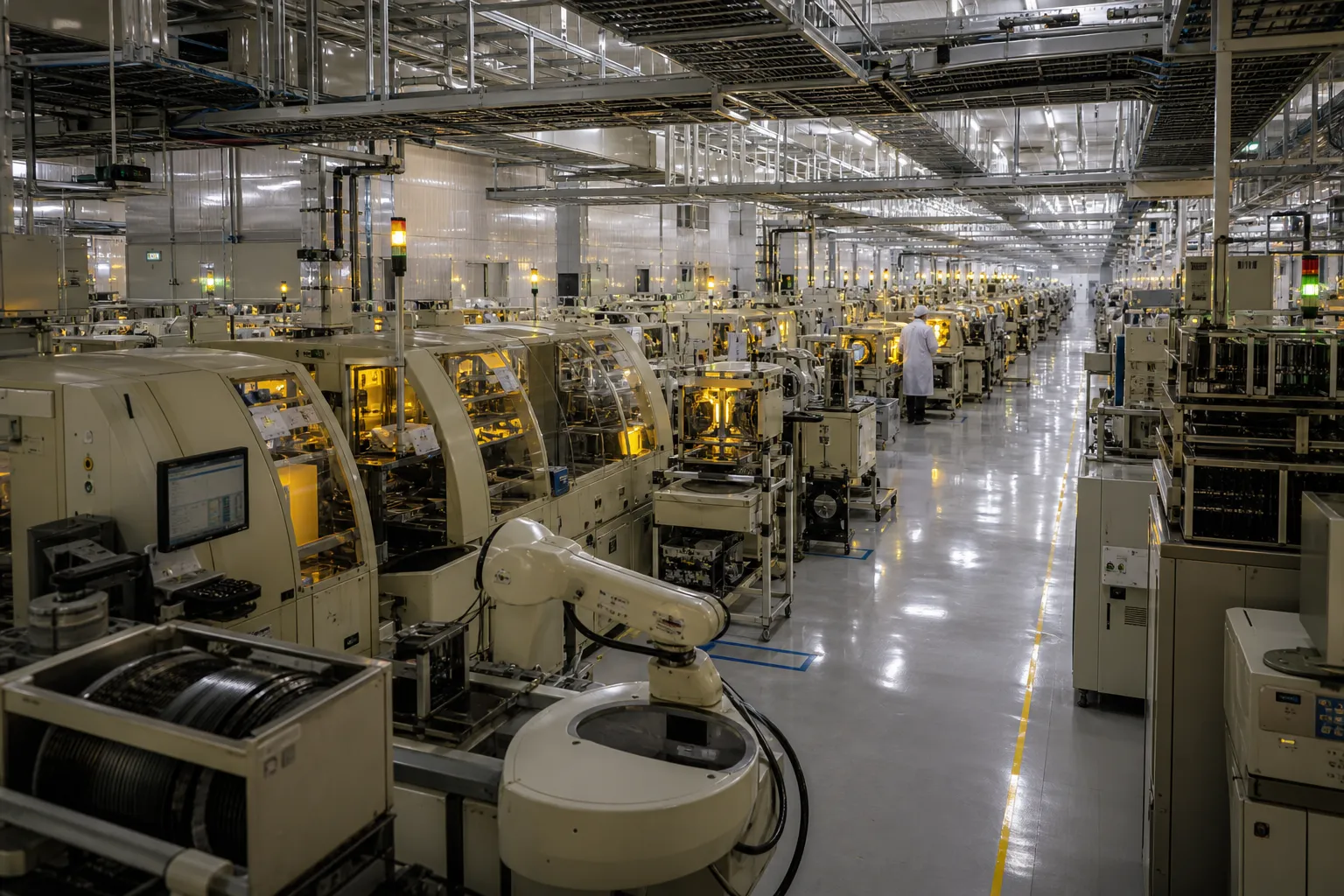
The same cycle can still snap. About 65 percent of those forecasters now rank an AI bust, with financial spillovers, among the top downside risks — higher than in June. The capex rhyme with 2000 is not empty fiber; it is a reminder that a city-state’s annual print is only as sturdy as next quarter’s electronics invoices.
Hormuz Invoices the Other Singapore First
Jurong Island, the bunker barges, cracker margins, jet into Changi — that book does not wait for an annual average. It prices VLCC availability and war-risk premia overnight. Markets have celebrated Hormuz reopenings that did not arrive. The Versailles memorandum sent Brent lower while the strait stayed a corridor with rules. This week’s maps are exclusion maps.
The slow global story is the climate accident of a choked strait. Singapore’s fast story is product and bunker. The Straits Times tape had the STI sitting soft under Friday’s record while energy-import costs climbed. That is not a veto of 5 percent. It is the high-frequency city living under the electronics city.
The 5 percent forecast is an electronics average. Hormuz invoices Jurong by the hour.
The Survey Already Named Both Risks
The most-cited downside in September was a prolonged Middle East conflict, set beside the AI-bubble scare. Upside was unanimous: keep the tech cycle. CPI-all-items was trimmed to 2.1 percent and core to 1.9 percent in the same poll — numbers written before this week’s tanker sequence. The Singdollar path remains the FX insurance if imported inflation sticks.
The test is boring and sufficient. If electronics NODX holds while Hormuz stays near ten ships, the 5 percent call can absorb a quarter of ugly chemical margins. If NODX rolls over, the average was a first-half souvenir. Watch the customs book and the bunker rack, not the headline that made the morning brief.
Continue reading


Sources
MAS Survey of Professional Forecasters September 2026; MTI and Enterprise Singapore August upgrades; Monday Brent settle and Kpler Hormuz counts; Straits Times and Business Times Singapore desk copy; prior Culled Hormuz and AI-plan coverage


