

Yandex said Sunday that its three named supercomputers — Lyapunov, Galushkin, and Chervonenkis — were undamaged by recent UAV attacks on company data centers, have been trucked out of prior locations in Sasovo, Vladimir, and Kaluga, and are being installed as independent clusters on new computing sites still used for consumer services and foundation-model training.
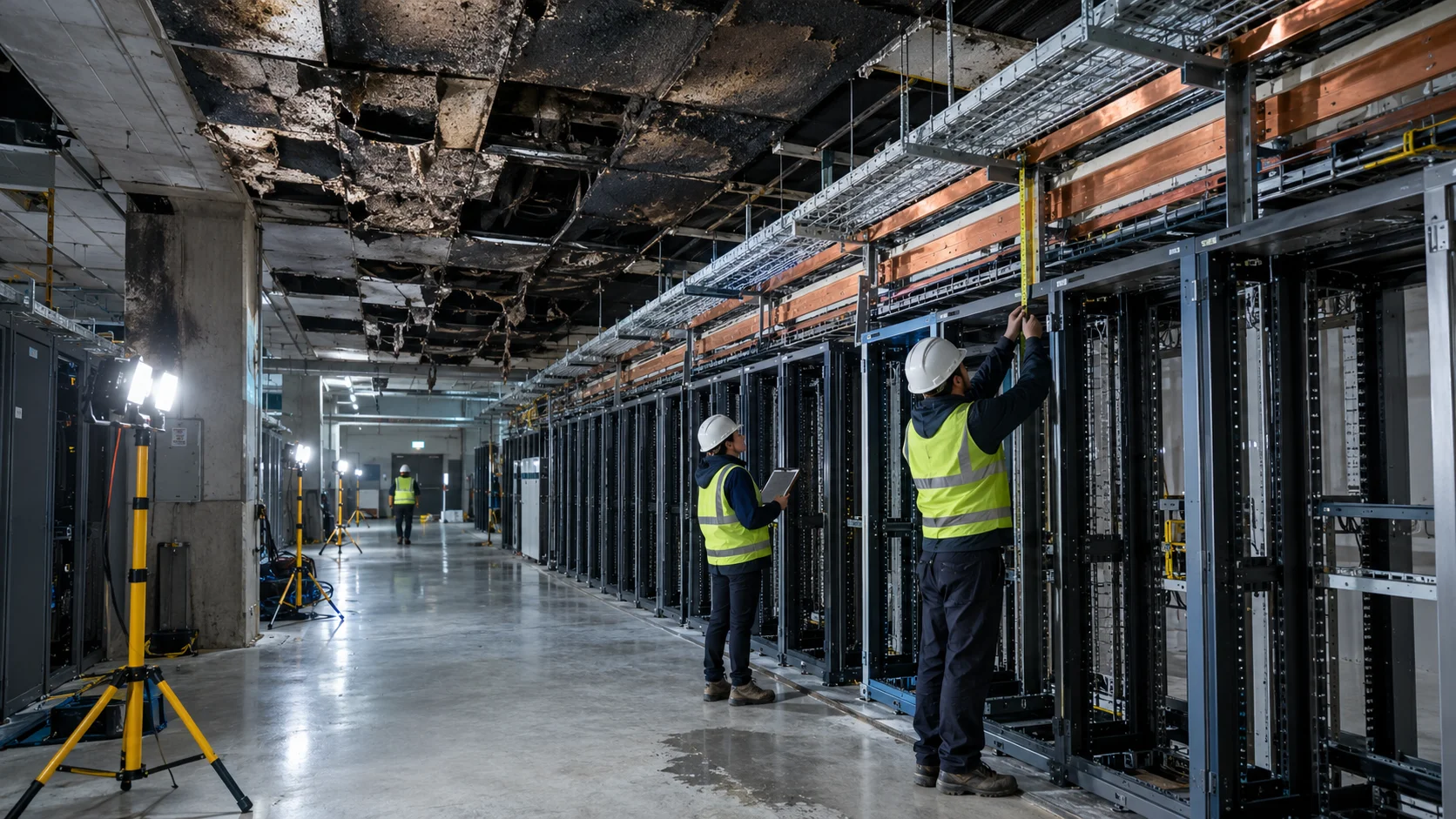
Sunday, October 26 — Yandex answered the question hanging over Russia’s consumer internet since early October: the company’s GPU supercomputers did not burn in the drone strikes — they left town. Press officials told RIA Novosti, Forbes Russia, and other outlets that clusters named Lyapunov, Galushkin, and Chervonenkis were unharmed, removed from data centers that had been attacked, and are being reinstalled on new computing sites. Yandex did not publish the destinations; it stressed that each machine is a standalone cluster, not a single super-site that must stay together.
That distinction is technical and strategic. Sources close to the company told Forbes the three systems do not depend on one another — they can live in different facilities because Yandex never built one monolithic supercomputer, but three independent training nodes.
Which systems moved — and from where
The hardware map is public from years of Russian tech reporting:
| Cluster | Prior home | Role |
|---|---|---|
| Lyapunov | Sasovo, Ryazan region | LLM and HPC; entered service 2020 |
| Chervonenkis | Sasovo | Highest-throughput trainer; Top500 rank 19 in 2021 |
| Galushkin | Vladimir | Parallel training node; commissioned 2021 |
All three were built on AMD EPYC CPUs and NVIDIA A100 accelerators — the same generation Western sanctions later made hard to replace at scale. June 2026 Top500 entries cited by Forbes showed Chervonenkis near rank 101, Galushkin near 136, and Lyapunov near 141 — still world-class by Russian standards, no longer headline global.
The trigger was kinetic, not electrical. Starting October 8, Ukrainian UAV strikes hit Yandex facilities in Sasovo, Kaluga, and Vladimir. The Vladimir site shut completely on October 11. Outages rippled through Yandex-owned services and Yandex Cloud tenants; small businesses bore much of the downtime, Russian IT press reported mid-month.
Who controls them now
Ownership did not change: the clusters remain Yandex assets, used for consumer products and foundation language models, per the company’s statement. Control of where they may sit, however, now involves the Russian state. Digital minister Maxut Shadaev said the ministry helped Yandex secure additional sites after the attacks and that key systems had already failed over to prepared reserves. Forbes quoted Yandex saying years of distributed infrastructure work made the shift possible — and that remaining systems were moving to third-party capacity.
That is STATE as binding constraint: wartime security policy plus ministry gatekeeping on critical IT real estate. PLATFORM still sets the architecture — Yandex engineers run the racks — but dispersion follows a government-assisted land-and-power hunt, not pure commercial colocation math.
Energy and sanctions explain slower narratives but not this week’s headline. Central Russia sites were chosen originally for power and land cost, not export compliance. Relocation is about targeting risk and redundancy, not importing new GPUs.
Is Russia’s AI infrastructure being reorganized?
Partially — in the same way Ukraine’s grid war reorganized European energy: not a new technology stack overnight, but a geography rewrite.
Yandex Cloud said engineers restored access to more than 90% of customer data, with a new location opening October 23 and services returning in phases. Supercomputer redeployment lags cloud failover; training jobs need stable power, cooling, and networking, not just storage copies. Until all three clusters are live, Russia’s domestic LLM race runs on remaining capacity and older silicon — a bottleneck competitors in the Gulf and China do not face at the same intensity.
The reorganisation has three layers:
- Physical dispersion — three clusters, three (undisclosed) sites, reducing single-strike payoff.
- State partnership — ministry-backed sites substitute for predictable colocation markets.
- Sanctions ceiling — A100-era fleets cannot easily be refreshed; relocation protects existing metal rather than expanding it.
What to watch
- Time-to-train — When Yandex resumes large-scale foundation-model runs without throttling public cloud customers.
- New site hints — Lease filings, power-grid data, or regional subsidy announcements pointing to replacement facilities.
- Second-wave strikes — Whether attackers shift from known Yandex addresses to whatever backup sites emerge.
The supercomputers did not vanish. They are on trucks, under tarps, between wars — still Russia’s most visible AI muscle, now learning to live without a fixed address.
Continue reading


Sources
Yandex press statements via RIA Novosti, Forbes Russia, Meduza, and Habr (Oct. 26, 2026); Russian digital ministry comments via Forbes; Culled AI infrastructure coverage.


