

Super Typhoon Champi crossed into Taiwan's peak-impact window on October 23 with gusts reported up to 173 km/h, at least one death, dozens of injuries, and more than 1,000 evacuations as domestic flights were cancelled and rail, ferry, and highway services suspended. Officials ordered residents downstream of a Hualien landslide dam holding about five million tonnes of water to leave as mountain rainfall forecasts reach 600–900 mm — a civil-engineering emergency stacked on top of the logistics choke Culled flagged before landfall, still without confirmed fab outages.
Taipei, Oct. 23 — The forecast window Culled marked on Tuesday — peak wind and rain Friday and Saturday — is now operational reality. Super Typhoon Champi has forced cancellation of domestic flights, disrupted international schedules, and suspended rail, ferry, and highway services across Taiwan, according to Culled’s Oct. 23 world briefs. Gusts were reported up to 173 km/h; authorities counted at least one death, 94 injuries, and more than 1,000 evacuations as the storm’s outer bands reached the island.
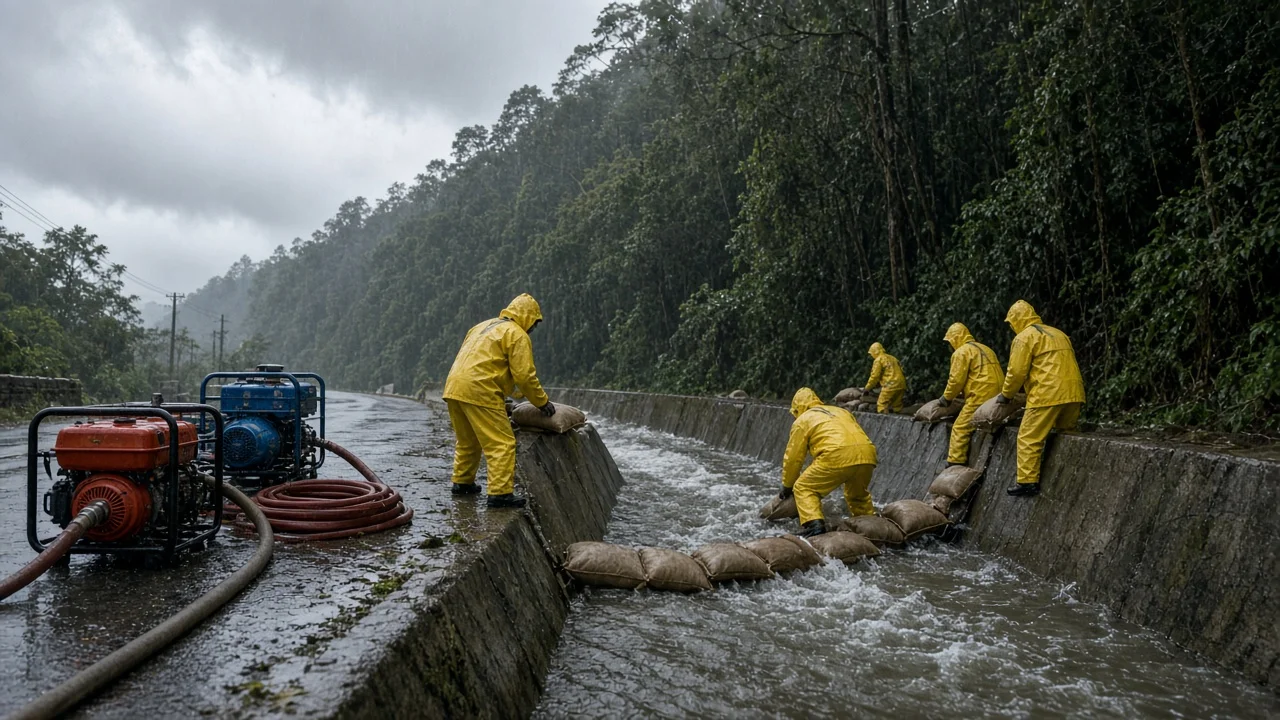
The headline human emergency sits in Hualien County on the east coast: officials urged evacuation downstream of a landslide dam holding about five million tonnes of water as forecasts called for 600–900 millimetres of mountain rainfall. That is not a semiconductor story until it is — because the same storm system that threatens settlements can sever Suhua Highway approaches, feeder roads, and coastal access long before a wafer line trips offline.
Two failure modes, one storm
Chip investors usually model Taiwan risk as cleanroom continuity: backup generators, water trucks, seismic bracing. Champi is testing a parallel channel: STATE-managed mobility and civil defence.
| Channel | What Oct. 23 confirms | What it does not confirm |
|---|---|---|
| Transport | Domestic flights cancelled; rail, ferries, highways suspended | Multi-day Taoyuan cargo apron closure (not reported as of this filing) |
| Civil engineering | Evacuations below Hualien landslide dam; extreme mountain rain band | Dam breach or controlled release (not reported) |
| Production | — | TSMC or Micron force majeure, utility trips, or wafer-line pauses |
The distinction matters for markets. Tuesday’s piece argued Champi could be logistics negative space — container gates, air slots, cross-strait feeders — without fab flooding. Landfall data upgrade the thesis from precaution to disruption: when an island’s domestic aviation network stops, the probability of delayed test equipment, spare parts, and specialty chemicals rises even if Hsinchu fabs hum on diesel.
A graze track can still be a throughput shock. It becomes a supply shock only when utilities or wafer lines fail.
Why Hualien is not “far from fabs”
Geography is not exposure. Hualien sits on the eastern cordillera that catches Pacific moisture Champi pushes ashore. Landslide dams and road closures on mountain corridors feed into national logistics graphs that fabs do not draw on PowerPoint maps but truck dispatchers do.
Kaohsiung and Hsinchu remain the production centers equity screens watch. Hualien is the reminder that Taiwan’s network is small and serial: one closed highway segment can lengthen drayage to Taoyuan cargo terminals; one weekend without domestic flights can strand technicians and tool vendors who still travel commercially. That seriality collides with Nvidia’s DSX POD pitch — fourteen days to energize a modular AI factory at a prepared site assumes the upstream island keeps shipping memory and accelerators on schedule. A typhoon weekend does not erase backlog; it queues it at terminals already tight after a season of storm stops.
Micron’s October labor friction added a human scheduling variable before Champi arrived. Meteorology and payroll disputes are independent shocks, but they stack in the same calendar week investors were already repricing AI duration against oil and Nasdaq beta.
Falsifiers — unchanged in kind, tighter in time
Three markers would move Champi from logistics duration to supply evidence, echoing Tuesday’s checklist with Friday’s landfall as the starting clock.
Force-majeure language from TSMC, UMC, or major OSATs — not precautionary statements, but confirmed curtailments tied to power or water.
Measurable container backlog at Kaohsiung or Taoyuan gates persisting 72 hours after weather clears, visible in carrier advisories and yard dwell statistics.
Controlled release or breach at the Hualien landslide dam — a STATE flood event that closes eastern approaches for days regardless of fab status.
Until one fires, the correct read is escalation of throughput risk, not automatic GPU shortage. Equity markets may still sell Taiwan semiconductor beta on headlines alone; the operational test is whether allocation letters slip next week, not whether rain fell this weekend.
What to watch before Monday’s open
CWA warning levels and any extension of land warnings into the Kaohsiung or Taoyuan prefectures — not because fabs are fragile, but because worker mobility and trucking curfews follow government alerts.
Ministry of Transportation notices on Suhua Highway, eastern rail, and port gate hours — the earliest public signal of freight delay.
Dam monitoring statements from Hualien authorities — secondary flood risk can outlast wind.
Champi did not invent Taiwan’s typhoon season. It did convert October’s AI rally into a dual-clock problem: modular data centers racing toward fourteen-day hookups while the island that feeds them runs on weather time and, in Hualien, on five million tonnes of water held behind a slope that rain is still trying to move.
Continue reading


Sources
Culled world briefs and desk monitoring Oct. 22–23, 2026 (Champi gusts to 173 km/h, one death, 94+ injuries, 1,000–1,300 evacuations, domestic flight cancellations, rail/ferry/highway suspensions, Hualien dam ~5 million tonnes, 600–900 mm mountain rain); prior Culled Oct. 21 Champi logistics framing (CWA peak Fri–Sat, Focus Taiwan, Malay Mail/SCMP on China coastal shutdowns); related DSX POD and Micron labor coverage.


