

The climate question is no longer only whether the world will overshoot 1.5°C. It is who will pay to remove carbon already in the atmosphere — and whether voluntary corporate buyers will fund that industry at the scale models require. On October 21, 2026, UNEP said the lowest plausible overshoot pathway needs about 320 gigatonnes of CO₂ removed and permanently stored this century. Months earlier, Microsoft — the dominant voluntary buyer — reportedly bought 8.55 million tonnes of removal credits through mid-July, about 80% below the comparable 2025 pace, while global removal sales tracked 66% lower.
The United Nations Environment Programme did not mince words in its Emissions Gap Report 2026: The Point of Return, released October 21. Holding warming to 1.5°C with little or no overshoot is, in UNEP’s framing, no longer realistic. The remaining task is to limit how far and how long the planet exceeds that line, then bring temperatures back by century’s end.
The lowest plausible overshoot pathway UNEP models would peak warming around 1.7–1.8°C mid-century and return to 1.5°C or below by 2100 — with roughly a 50 percent chance. That path requires deep cuts (18 percent below 2025 emissions by 2030, 45 percent by 2035, 69 percent by 2040) and something harder to invoice: about 320 gigatonnes of CO₂ removed from the atmosphere and permanently stored across the twenty-first century. UNEP compares that mass to roughly eight years of 2024 global CO₂ emissions. Socioeconomic and technological barriers make delivery uncertain.
Those gigatonnes are a physical obligation in integrated assessment models. They are not an automatic purchase order on today’s voluntary carbon market.
The buyer who built the market is stepping away
The sharper financial signal predates the UN press room. Bloomberg reported in August — citing BloombergNEF calculations — that Microsoft bought 8.55 million metric tons of carbon removal credits in the year through mid-July 2026, about 80 percent less than in the comparable 2025 period. Global removal credit sales over the same window totaled 18 million tons, tracking 66 percent below 2025 levels. Microsoft told Bloomberg that removals are one pillar of decarbonization and that adjustments reflect a disciplined approach, not a change in ambition.
The tension is arithmetic, not rhetoric. Microsoft’s latest sustainability reporting attributes a 25 percent rise in its carbon footprint last year largely to AI-driven electricity demand and slower-than-hoped clean power. At the same time, the company is spending at hyperscale on GPUs, data centers, and power contracts measured in gigawatts. CAPITAL allocates marginal dollars to the asset with the clearest near-term return — and removal credits are a long-dated, imperfectly verified optionality.
Microsoft is not a marginal participant. It entered voluntary removals in 2020 and, according to BNEF, has since purchased a large share of global contracted volume. MSCI estimated that in 2025 Microsoft accounted for about 86 percent of the value of contracted carbon-credit offtake deals it tracked — $10.6 billion across 23 transactions. Concentration that extreme makes any procurement pause a market-wide event, even if Microsoft still buys roughly half of 2026 transactions so far.
When one buyer represents most contracted offtake value, “voluntary” starts to look like a single counterparty risk.
Illustrative economics: the $32 trillion question
Multiplying UNEP’s 320 Gt by a flat price is not a forecast — it is a scale exercise. At $100 per tonne, cumulative spending would be about $32 trillion over the century (nominal, not present value). At $20, roughly $6.4 trillion; at $1,000, $320 trillion. Real bills depend on technology mix, timing, durability, and how much removal society actually deploys.
Price discovery is already strained. Boston Consulting Group reported in September 2026 that direct-air-capture suppliers were seeking median forward prices around $900 per tonne, while half of prospective buyers were unwilling to pay more than about $365. Suppliers need high prices to finance energy-intensive machines; buyers need auditability and permanence guarantees. The gap is the market.
| Market lane | What is purchased | Role in overshoot |
|---|---|---|
| Avoidance credits | Emissions prevented versus a baseline | Slows additional warming; does not unwind past CO₂ |
| Nature-based removal | Forest, soil, and ecosystem carbon | Can remove CO₂; permanence and measurement contested |
| Durable engineered removal | DAC, biochar, mineralization, geological storage | Closest to modelled gigatonne storage — expensive, early |
| Compliance allowances | Permits to emit under a cap | Prices marginal abatement; not the same as atmospheric removal |
An ordinary avoidance credit is not necessarily a claim on a tonne permanently removed. UNEP’s removal requirement is overwhelmingly about net negative emissions in the back half of the century — a different product, with different capital intensity and verification standards.
Where demand might come from if voluntaries retreat
Three channels matter for investors.
Corporate procurement can return if AI emissions force reputational or contractual liabilities — or if removal costs fall faster than modelled. Microsoft’s stated ambition is unchanged; the observed 2026 pace is not.
Project finance and offtake still need long-term buyers willing to sign take-or-pay contracts. MSCI’s concentration data imply the pipeline is fragile when the anchor tenant throttles orders.
Regulated demand is the structural alternative. Europe is debating whether to admit permanent removals into the EU emissions trading system, a move Carbon Brief and other outlets have covered as potentially creating compliance-backed demand — and as risking weaker incentives to cut emissions directly if removals are treated as fungible substitutes.
STATE pricing — carbon taxes, procurement mandates, liability regimes — converts a climate-model gigatonne into a legal payment obligation. Without that step, removals remain a philanthropic and marketing line item inside corporate sustainability budgets, competing with AI capex that generates revenue this quarter.
AI as the control experiment
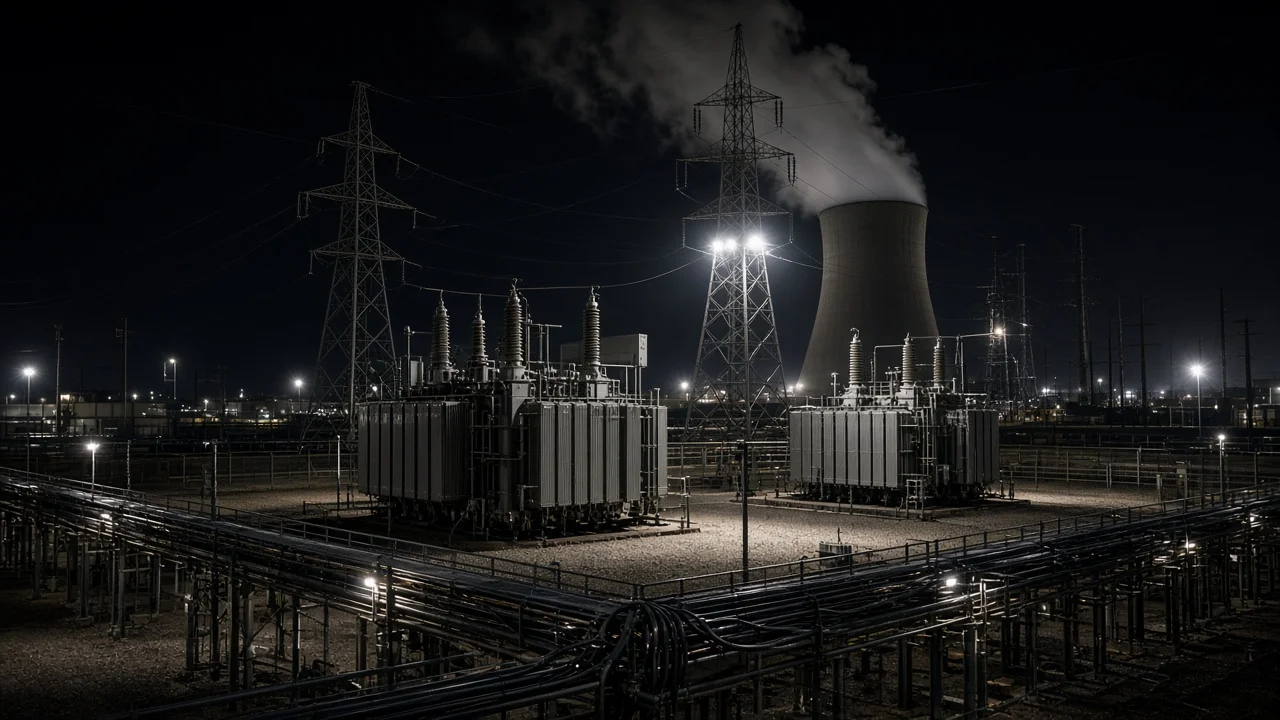
Hyperscaler AI buildouts are the live experiment in whether PLATFORM growth and climate liabilities can be managed with the same balance sheet. Modular factories and 14-day deployment claims accelerate compute delivery; they do not automatically deliver zero-carbon electrons or verified removals at scale. If the largest voluntary removal buyer reallocates to inference racks while emissions rise, the market message is blunt: voluntary demand is discretionary.
UNEP’s October headline supplies the century-scale quantity. BloombergNEF’s mid-year tally supplies the price taker’s retreat. The finance story is the space between them — who must be obligated to pay for atmospheric cleanup once overshoot is the baseline scenario, and whether that obligation is traded as a credit, taxed as a liability, or socialized when corporate buyers choose GPUs over gigatonnes.
Continue reading


Sources
UNEP press release and Emissions Gap Report 2026 (Oct. 21, 2026) on lowest overshoot pathway and ~320 Gt CO₂ removal; Bloomberg/BloombergNEF via Yahoo Finance (Aug. 13, 2026) on Microsoft 8.55 Mt purchases through mid-July and global market -66%; MSCI carbon-removal offtake concentration; BCG September 2026 DAC price survey; Carbon Brief on EU ETS removals debate; Microsoft sustainability disclosures on emissions growth


