

For traders, Russian energy matters only when it moves marginal crude supply, diesel availability, or the relative price of product contracts. Moscow never left global markets; much of the volume was redirected. The tradable question is whether sanctioned-origin ULSD reaching New York can compress America's diesel premium when crude stays flat — and whether tanker tracking shows a pattern or a photo opportunity.
Monday, October 27 — The Russia energy story is back on trading desks, and most of the headline stack is the wrong object. For anyone marking risk, Russian barrels matter when they change marginal crude price, accessible supply, or the relative value of product contracts. A diplomatic breakthrough by itself is not a signal; a change in where diesel can be sold, at what discount, and under which compliance fence is.
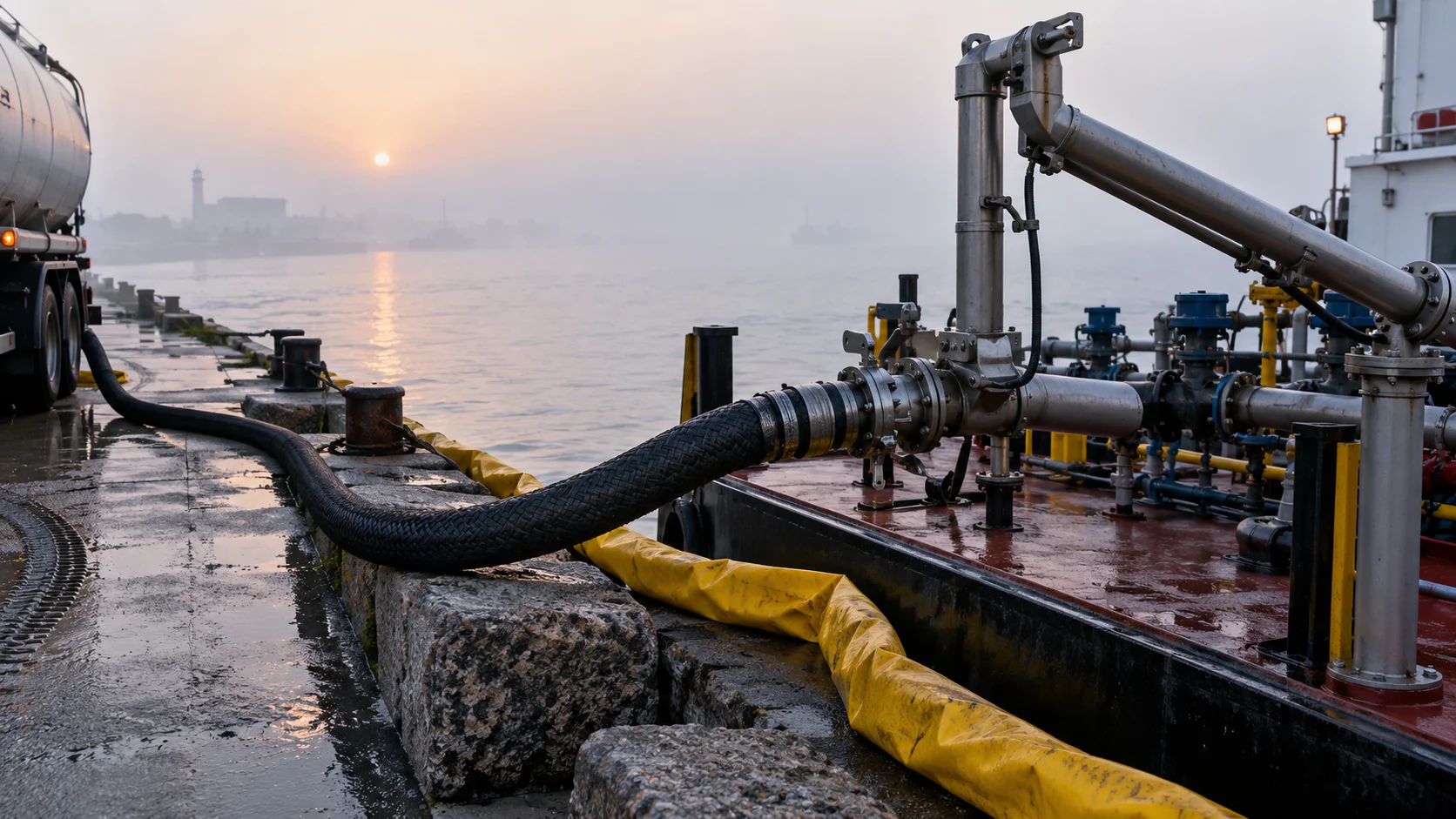
That fence is now legible. Treasury’s General License 135 authorizes sale, delivery, offloading, and U.S. import of Russian Federation-origin diesel through 7 April 2027, while blocking debits to specified sovereign accounts — a narrow channel inside an otherwise intact Russia program, not a wholesale sanctions repeal. Ship-tracking data cited by Reuters on October 23 put the Malta-flagged Agioi Fanendes at roughly 40,000 metric tons of ultra-low-sulfur diesel loaded in Primorsk on October 22, with a New York arrival window around November 7. Lloyd’s List and others reported additional Russian-loaded tankers signaling U.S. Gulf and Atlantic destinations — the kind of repetition that would matter if it persists.
Where the trading opportunity actually lies
These are conditional mechanisms, not price forecasts. Each row is a hypothesis you can falsify in futures and freight data.
| Market | Potential effect | Trading implication |
|---|---|---|
| Brent / WTI crude | Extra accessible supply could shave scarcity premiums | Bearish only if volumes are genuinely incremental to global balance |
| ULSD / heating oil | Russian diesel reaching U.S. buyers could ease regional tightness | Potentially bearish diesel cracks if arrivals scale |
| Brent–WTI spread | Shifts in regional crude and product flows | Spread can widen or narrow with Atlantic arbitrage |
| Tanker equities / freight | Shorter routes, fewer sanction-detour miles | Pressure on some product-tanker earnings if arbitrage normalizes |
| European gas / LNG | Long-dated Russian supply narratives | Mostly a probability trade on future capacity, not near-term molecules |
| Upstream producers | Lower realized oil if crude follows products down | Relative weakness if the shock is product-led |
Crude and diesel are coupled in politics but separable in refinery economics. Culled has tracked that split when Brent fell while U.S. pump diesel stayed near records and when Europe debated strategic diesel releases as a faster inflation channel than crude diplomacy.
The interesting trade may be diesel, not crude
A Russian diesel cargo can touch the regional product market without moving global crude production much. That matters because diesel can stay expensive when crude softens — middle-distillate tightness, refinery outages, and logistics frictions show up in crack spreads before they show up in WTI.
Illustrative arithmetic (hypothetical levels, not live quotes):
| Diesel ($/bbl equiv.) | Crude ($/bbl) | Simplified crack | |
|---|---|---|---|
| Before | 145 | 100 | 45 |
| After | 125 | 100 | 25 |
If diesel falls from $145 to $125 while crude holds $100, the simplified crack compresses by $20/bbl — a large move for refiners and product-spread traders even when the crude tape is flat. Actual cracks depend on which product benchmark, crude marker, and contract convention you use; the point is the channel, not a single print.
Scale is the restraint. 40,000 tonnes is on the order of ~300,000 barrels depending on density — meaningful at a harbor, negligible against U.S. distillate consumption measured in millions of barrels per day. Braemar and other brokers have publicly doubted Russia can deliver the staged tonnage Trump described while a large share of refining capacity remains offline after Ukrainian strikes — another reason to separate announced policy from delivered molecules.
What would make this actionable?
Three confirmations beat one cargo headline:
- Repeated tanker arrivals — not a single Primorsk load with ambiguous ultimate buyer.
- Narrowing U.S. diesel premiums versus Northwest European gasoil — arbitrage should show up in relative product quotes, not only in press releases.
- Measurable shifts in freight or insurance on the lane — if the trade is real, someone is paying for ton-miles and compliance counsel.
Watch NY Harbor ULSD futures, heating oil, and gasoil spreads alongside OFAC’s written perimeter. EU and UK product bans and the $100/bbl premium-product cap still bind many counterparties even when U.S. persons have a license — the FT noted legal friction around vessels already flagged in European regimes.
Financing stories farther up the curve — Arctic LNG equity, long-dated gas supply MOUs — do not create near-term molecules. They become futures-relevant when they change the probability, timing, or volume of physical LNG production. Until then they are balance-sheet narrative, not a prompt-month trade.
The falsifiable question
If product markets are not responding — cracks steady, premiums unchanged, arrivals sporadic — then Russia’s return to Western energy headlines is politically interesting and marginally tradable. If cracks compress while crude flatlines and Atlantic diesel flows accelerate, the story deserves the lead on a traders’ publication.
Until the tape chooses, the honest headline is not “Russia is back.” It is whether America’s diesel premium has finally met a product-level supply valve — or whether General License 135 is permission without volume.
Continue reading


Sources
OFAC General License 135 (Oct. 9, 2026); Reuters and Lloyd's List ship-tracking on Primorsk-loaded cargoes; prior Culled coverage of GL 135 and diesel-crack mechanics.


