

Sunday's tape is still digesting Brent's $116.72 Friday settle, energy leadership through the week, and inflation breakevens that climbed with crude rather than fading on diplomacy headlines. With Washington weighing renewed strikes while talks stall and QatarEnergy locking in decades of U.S. LNG, the oil rally is pricing duration — not a one-day geopolitical flutter.
Sunday, October 25 is a markets story told in the gap between spot crude and the yield curve. Brent settled $116.72 on Friday — among the highest prints since the spring — while energy names again cushioned broader equity weakness through the week and inflation breakevens moved up with oil instead of treating the rally as a transitory blip. That joint motion is what separates a headline trade from a duration problem: portfolios that own long Treasuries, long tech, and long peace are paying the same war invoice.
Breakevens are voting on persistence
When crude rises and TIPS-implied inflation expectations rise with it, the bond market is not merely marking up gasoline. It is repricing how long energy can stay an input-cost channel — the same channel Culled traced when breakevens climbed alongside Hormuz strikes and when rates and oil constraints met in the Fed reaction function.
Friday’s 10-year Treasury still hovered near the 5 percent neighborhood that made Wall Street’s Oct. 23 session a stagflation composition puzzle: energy up, financing tight, megacap tech no longer the automatic offset. Breakevens rising in that context tell you investors are less willing to buy the “one-off supply shock” story — especially while Gulf logistics remain impaired.
| Signal | What moved | What it implies |
|---|---|---|
| Brent >$116 | War premium sustained | Inflation risk embedded, not hedged |
| Energy vs. broad indices | Sector leadership | Equity beta is hydrocarbon-heavy |
| Breakevens up with crude | Nominal yields sticky | Fed cuts stay conditional |
| Long duration lagging | Tech + bonds correlated | ”Duration” is oil plus rates |
Iran is still the calendar risk
Culled’s Sunday upfront still frames the binding geopolitical fork: Washington is weighing renewed strikes while talks remain stalled; Iran contests U.S. access to Gulf and Gulf-of-Oman ports and insists Washington must exit its military “quagmire.” A tanker hit by an unidentified projectile but continuing to port is the kind of detail that keeps insurance and routing premia alive even when diplomats speak.
Markets have rehearsed false endings. Swiss-mediated talks jolted oil without reopening Hormuz. The Versailles MOU sold peace the waterway never fully delivered. Equities priced in peace while transit counts lagged. Sunday’s breakeven bid is the bond market refusing to repeat that reflex.
Qatar’s LNG deal is structural, not spot
Doha’s weekend energy narrative is not a futures tick — it is a multi-decade hedge. QatarEnergy signed two Cheniere sale-and-purchase agreements for up to 4 million tonnes per annum of U.S. LNG from 2031 through 2054, while reporting circles advanced talks for additional Gulf Coast molecules from Venture Global. The deals acknowledge Ras Laffan damage and Hormuz disruption have turned the world’s second-largest LNG exporter into a buyer of American gas, not merely a seller of spare cargoes.
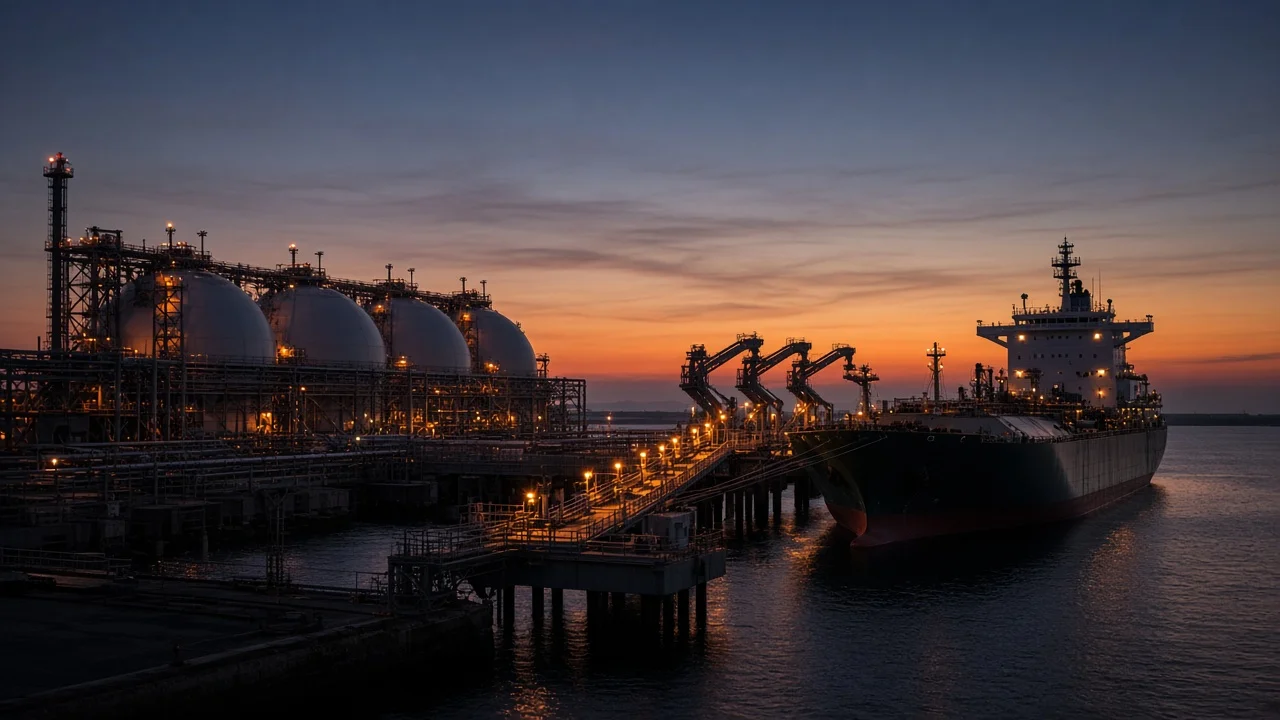
For traders, that is confirmation the premium has tenor: state energy champions are locking 2050s supply while Brent holds war-level prices. It rhymes with Culled’s read that Hormuz became an accidental climate lever — forced participation in a hydrocarbon shock nobody modeled as permanent — and with the wider argument that war proved the cloud has geography when backup power and logistics bills arrive together.
What Monday will test
Asian opens will read Kuwait and Saudi weekend messaging: exports returning toward pre-war patterns while product tankers and refining throughput stay constrained, buyers sharing Hormuz risk on owned vessels. European gas benchmarks already climbed in tandem with oil through the week.
The falsifier is coordinated relief — Brent sustained below the low nineties on verified transit recovery, breakevens falling with it, and long bonds rallying without a growth scare. Until then, the oil rally is a duration call on how long war markets must finance expensive energy, expensive money, and expensive peace simultaneously. Culled’s frozen-funds and risk-premia map is the parallel track: when geopolitical stress rewires finance, the macro book stops pretending barrels are someone else’s problem.
Continue reading


Sources
Friday Brent settle and regional briefs; Culled upfront on U.S.–Iran strike planning; QatarEnergy–Cheniere LNG agreements; prior Culled coverage on Swiss talks, MOU optimism, and breakeven dynamics.


