

Senate Banking Chair Tim Scott summoned Jensen Huang for a Dec. 3 public hearing and House panels scheduled a Dec. 1 transcribed interview after Huang resigned as Nvidia CEO, pairing those dates with Howard Lutnick's Dec. 10 Commerce slot—calendars that narrow near-term subpoena drama while Monday's KOSPI fell about 3.6 percent and London's FTSE held a resilient bridge session. Treasury Secretary Scott Bessent said Sunday Nvidia should hire an outside CEO and give the board ten days to answer on Singapore chip-routing, U.S. officials draft licences that would bar Chinese remote use of advanced AI exports through Malaysia, Indonesia, and Singapore, and POLITICO reported AMD, Qualcomm, and major AI labs accelerating Washington outreach to fill the lobbying vacuum Huang left behind.
Markets want a Q3 print Tuesday; Washington wants routing answers and a succession plan. The residual this week is whether scheduled testimony and export-licence drafts cap governance volatility—or whether rival chip voices now set semiconductor policy without Huang in the chair.
Washington, Nov. 16 — Nvidia governance stopped behaving like a single-stock story the moment Jensen Huang resigned and agreed to testify. Monday’s trade split the difference: fixed December dates for Huang and Commerce Secretary Howard Lutnick gave counsel a path off immediate subpoena cliffs, while Seoul’s chip-heavy KOSPI slide and a steadier London open showed overseas allocators still treating US succession and export politics as duration risk—not a one-day headline.
Testimony versus markets
Senate Banking Chair Tim Scott summoned Huang for a Dec. 3 public hearing after the company’s CEO transition announcement. House Republicans scheduled a Dec. 1 closed-door interview in the same week Lutnick takes a Dec. 10 slot—calendars Culled already flagged when remote-access export drafts moved beside congressional process.
Voluntary dates do not erase liability; they schedule it. They do push conflict into a window where Colette Kress can host Tuesday’s fiscal Q3 call as interim chief and where comeback talk—reporting that Huang has discussed a return, shareholder pressure, and a petition above 175,000 signatures—competes with federal demands for an outside successor.
Asia priced the human-risk leg first. Culled’s world desk logged the KOSPI down about 3.6 percent and a Nikkei loss near 2.4 percent while the FTSE 100 finished only marginally lower or modestly higher depending on the bridge print—Europe’s lower megacap-AI weight acting as shock absorber. New York extended declines into late morning, with the Nasdaq down about 2 percent as NVDA premarket weakness fed the same governance stack AMD had exploited on prior governance shocks.
Bessent’s ten-day board clock
STATE pressure arrived from the executive branch, not only the gavel. Treasury Secretary Scott Bessent said Sunday Nvidia should hire an outside CEO and give the board ten days to answer questions on Singapore chip-routing, press coverage summarized—a federal timetable layered on top of earnings optics and the deal web Huang built before his exit.
That ultimatum turns routing into succession politics. Investigators and reporters have tied Megaspeed-style transshipment narratives to the same Southeast Asian nodes Washington is now drafting rules to licence more tightly.
Licences and the influence vacuum
Parallel to the board clock, U.S. officials are drafting rules that would require licences for advanced AI chip exports to Malaysia, Indonesia, and Singapore while barring Chinese customers from remotely using the compute—tightening the perimeter Culled traced after KLIA seizure reporting and remote-access choke-point analysis. Press accounts citing shipment records put dollar magnitude on why routing answers matter as much as fab output.
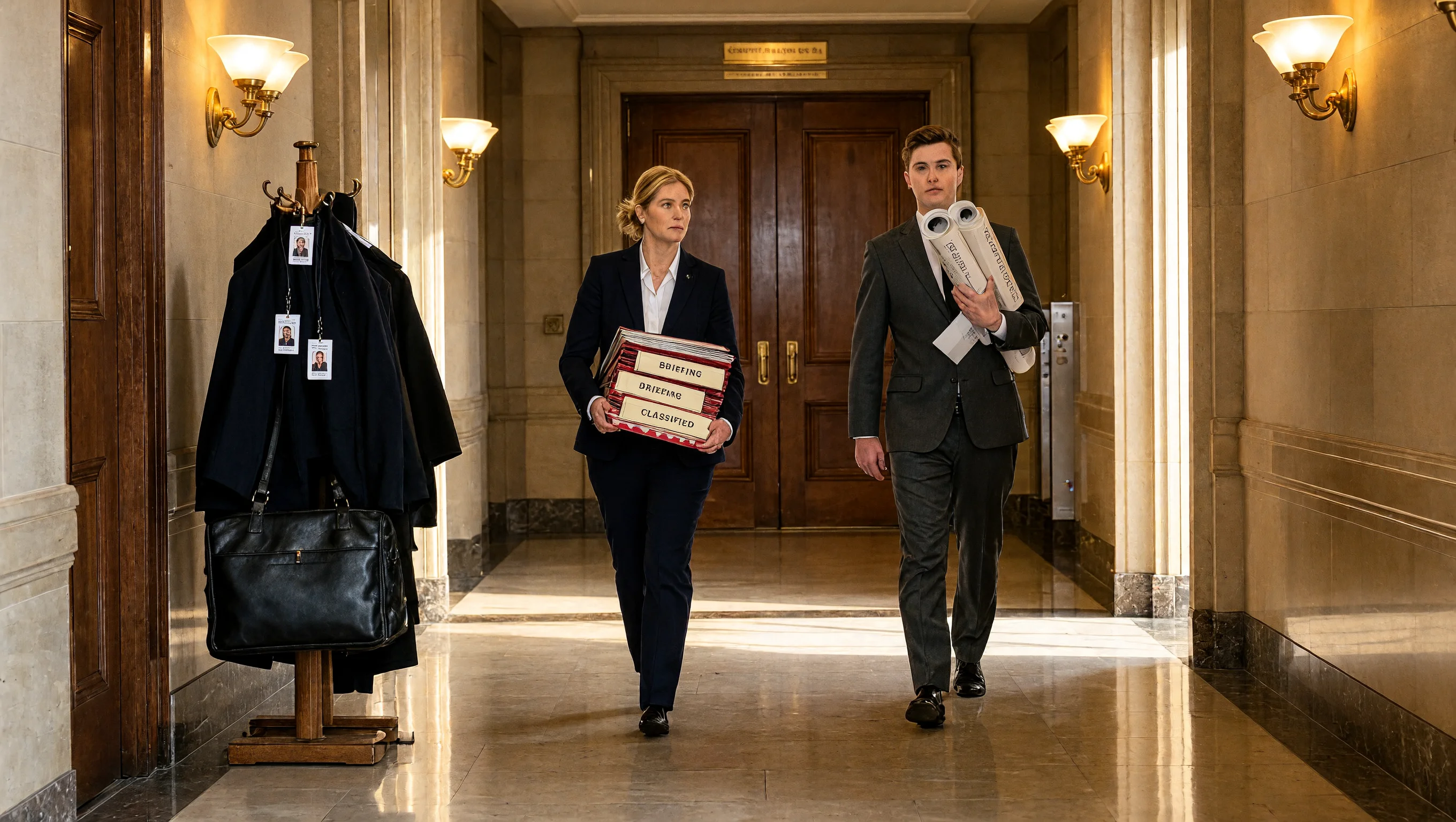
Huang’s resignation opened a Washington influence vacuum AMD, Qualcomm, and major AI labs are racing to fill, POLITICO reported Monday. Export-control drafting and December testimony now compete with lobbying budgets for who sets the next semiconductor agenda—custom-silicon rivals, cloud tenants, and Commerce drafters on the same corridor calendar.
PLATFORM still supplies the architectures; STATE sets who may plug in. Without Huang as primary diplomat, rival briefings can shape licence text before Kress stabilizes the corporate voice—overlapping the DOJ antitrust thread on ecosystem leverage.
What the tape is pricing
CAPITAL is not exiting AI; it is repricing key-person and compliance beta inside the complex. London’s resilient session and Europe’s muted AI beta say geography still diversifies governance shocks. Seoul’s slide says foundry adjacency does not.
The market’s bargain is temporal: December testimony buys procedural calm this week if Huang and Lutnick show up prepared—but Bessent’s ten-day clock and licence drafts mean the binding constraint moved to whoever controls Washington’s next export sentence.
What would change the read
A clean outside CEO appointment with detailed Singapore routing disclosures could compress the federal-board bundle without waiting for December. Conversely, a broad BIS licence rule paired with a subpoena fight or delayed Huang appearance would prove testimony dates were deferral, not de-escalation—the scenario where governance and export law stay on one ticker.
Until then, Tuesday’s earnings answer demand; Washington answers jurisdiction. The residual for allocators is duration: who speaks for advanced compute in the capital after Huang left the cockpit—and whether markets believe that voice arrives before the licences harden.
Continue reading


Sources
CNBC and Nvidia investor relations on congressional summonses; legal digest and world briefs on KOSPI and FTSE moves; InvestingLive on Southeast Asian licence drafts; Wall Street Observer on Bessent; POLITICO on post-Huang lobbying scramble.


