

The Pan American Health Organization determined that sustained measles transmission in the United States has continued for longer than twelve months, ending the country's elimination designation, according to Axios and multiple outlets citing the regional verification panel's November meeting in Washington. CDC tallies show more than 5,400 confirmed U.S. cases in 2026, the highest surge in decades. Status loss is symbolic on paper but operational in the indicators required to regain elimination.
Elimination is not eradication. It is an epidemiological verdict that a country stopped continuous domestic spread for long enough that imported sparks no longer become endemic chains — and PAHO's reversal means the United States must now prove the opposite journey: twelve months without uninterrupted circulation of the same genotype and lineage.
Washington, Nov. 14 — The Pan American Health Organization concluded that the United States no longer meets measles elimination criteria after the same virus strain circulated domestically for more than twelve months, Axios reported following a three-day expert meeting in Washington. Reuters and the Wall Street Journal published similar accounts, citing people familiar with the Regional Verification Commission process. PAHO did not immediately publish a full public decision document Culled could cite line-by-line at ship time; the reporting nonetheless marks a formal status reversal, not another weekly case chart.
The United States had held elimination since 2000 — roughly 26 years. Losing it does not change clinical treatment overnight; it changes how international reviewers classify domestic spread, how surveillance targets are set, and how policymakers explain why herd immunity thresholds matter.
What elimination status actually measures
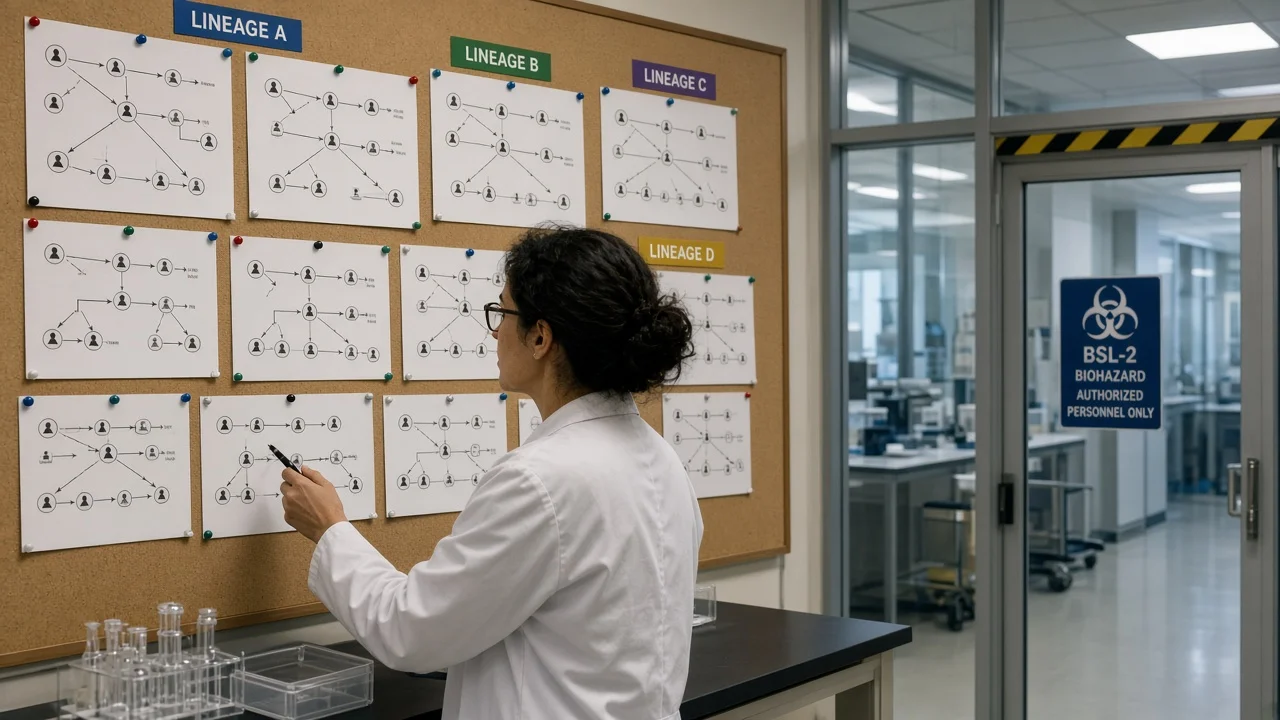
WHO and PAHO use “elimination” to mean interruption of endemic transmission: the same measles genotype and lineage propagating inside a country without a twelve-month break. Imported cases can still arrive on airplanes; isolated outbreaks can still flare. The designation fails when molecular tracing shows one chain never quite extinguishes — the standard PAHO articulated ahead of its November 2026 review, with analysis windows anchored to major 2025 outbreak start dates.
Axios noted the arithmetic: 5,412 confirmed U.S. cases so far in 2026 on CDC surveillance, against 2,289 for all of 2025 — the highest national tally in 35 years in outlet accounts. Pennsylvania’s ongoing outbreak alone has contributed more than 1,500 cases and multiple deaths in public reporting. Officials caution both years are likely undercounts where testing and mild illness go unrecorded.
That volume is the backdrop; the status decision is the genotype clock. Culled treats them as linked but distinct: case counts explain strain on hospitals; elimination rulings explain whether domestic chains are now considered self-sustaining.
Why the ruling lands now
PAHO scheduled the U.S. review for its regular November commission meeting rather than an ad hoc spring session, citing harmonized regional timing and ongoing CDC sequencing work, including expanded viral genomics pipelines. The delay did not pause transmission; it concentrated evidentiary judgment into one panel sitting as Canada, the United Kingdom and other peers had already lost elimination amid overlapping resurgences.
The Americas region itself forfeited regional elimination in 2025 once Canada documented uninterrupted circulation for a year — a reminder that status is hierarchical: one country’s endemic chain can alter regional bookkeeping even when neighbors still hold national designations.
Operational consequences short of politics
Experts quoted in outlet coverage stress the determination is partly symbolic yet still operational:
- Surveillance must prove absence of continuous domestic chains, not merely low weekly counts.
- Vaccination coverage must stay high enough — commonly cited around 95% for measles — to prevent sparks from becoming sustained fires.
- Genomic continuity becomes the gating evidence, not press-conference totals.
Regaining elimination requires the reverse proof: twelve months without uninterrupted circulation of the same strain, per PAHO/WHO frameworks repeated in Reuters-sourced reporting.
None of that is a partisan scorecard. It is a checklist STATE health agencies either meet or do not, independent of which administration holds the microphones.
Vaccination physics, not rhetoric
Measles is among the most contagious viruses clinicians routinely encounter; CDC materials cited in Axios note roughly one in five unvaccinated U.S. patients who develop measles requires hospitalization. Outbreak geography in reporting clusters among undervaccinated pockets even when national coverage looks tolerable on averages — a LABOR and community-trust problem because schools, clinics and employers inherit exposure risk from neighbors’ immunization gaps.
Federal messaging and funding cadence still matter because they set whether local departments can run catch-up campaigns, genotype sampling, and contact tracing at elimination-grade intensity. Culled links that administrative capacity question to how shutdown stalemate already strained federal systems without equating the stories.
What readers should watch next
Three indicators will move faster than op-eds:
- A formal PAHO or CDC publication specifying the verification date and molecular finding — the missing evidentiary capstone once embargoed panel notes clear.
- Whether 2026 weekly case velocity falls enough to begin a fresh twelve-month elimination clock, or whether genotype data show continuing lineage persistence.
- Local MMR uptake in outbreak counties versus national averages — the variable that determines whether imported sparks die or become the next year-long chain.
Until the published commission document arrives, the accurate headline is already consequential: international reviewers classify U.S. measles as endemic again, and the path back to elimination is measured in months of silent chains, not declarations.
Continue reading


Sources
Axios reporting on PAHO's November 2026 determination; Reuters and Wall Street Journal accounts citing people familiar with the panel; CDC case surveillance totals; prior PAHO statements on review timing and RVC criteria.


