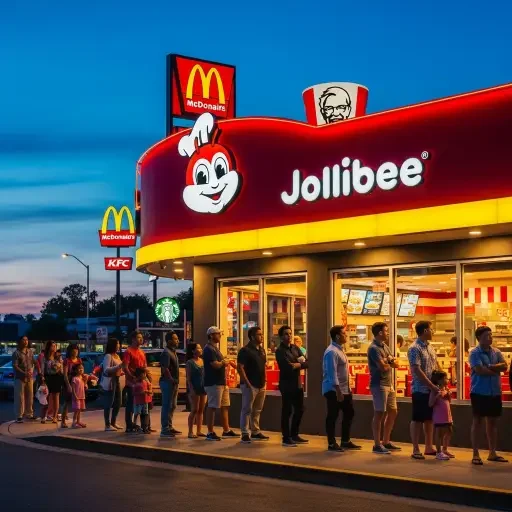
Jollibee Foods Corporation — the Filipino quick-service chain whose mascot has become as recognizable across Southeast Asia as the golden arches are in the West — is preparing to hive off its international operations and pursue a U.S. listing by 2027. The plan, disclosed in reporting and conversations with investors, converts a previous growth project into a capital-markets strategy: separate the internationally scaled brands into a vehicle that can be priced against North American peers and given a “New World” growth multiple, while leaving the Philippine cash cow on the home exchange.
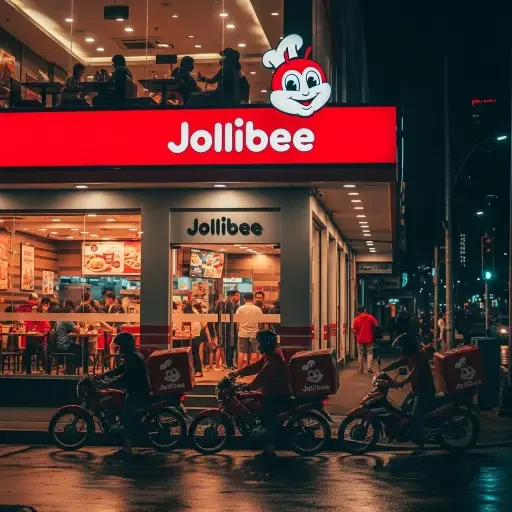
Why separate? At base, valuation arithmetic. Jollibee’s portfolio now straddles two regimes: a mature, high-margin domestic franchise and a collection of faster-growing, geographically dispersed concepts acquired or built over the past decade. On the Philippine Stock Exchange, the combined entity has to reconcile slow-but-reliable cash flow with the market’s limited appetite for high-multiple growth stories. A U.S.-listed international arm can be benchmarked against global quick-service peers — and priced more richly.
The split is not mere optics. It gives the company structural optionality: an independently capitalized international operator can pursue tuck‑ins, franchise conversions, and store rollouts funded by U.S. equity, while the domestic parent retains stable dividends and balance-sheet conservatism. For private-investor counterparts and public-market analysts, the two‑company shape clarifies growth visibility and risk profile.
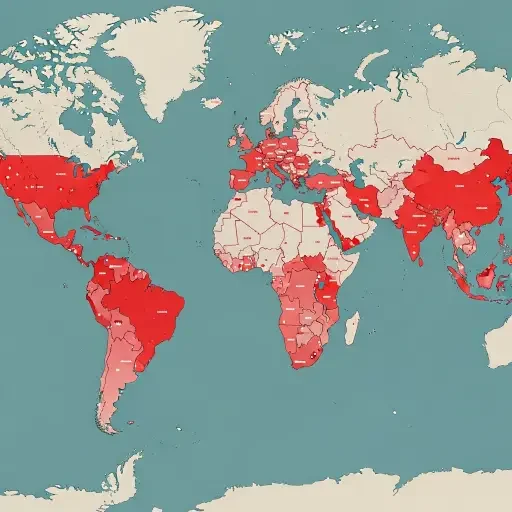
Operationally, this is a reorganization of control flows. The international vehicle will aggregate brands, master franchises, and joint-venture stakes outside the Philippines — the pieces that scale transnationally. Centralizing those assets makes it easier to run a single growth P&L, present consistent metrics to investors (same-store sales, unit economics, development pipeline), and avoid cross-subsidization debates that depress multiples. For management, it’s a chance to show a clean growth runway rather than a blended story.
Investor reception explains the timetable. U.S. investors favor predictable, repeatable growth and comparable peer sets. When a company lists in North America, brokers and indexers slot it into sector buckets that carry pre-built valuation norms. Jollibee’s international arm will be measured against the likes of Yum! Brands, Restaurant Brands, and regional fast-casual platforms — a re-rating that could lift price-to-earnings and enterprise-value-to-sales ratios beyond what the Philippine market affords.
The move does carry friction. Tax, governance, and franchise agreements must be untangled. Minority partners in joint ventures, local franchisors, and sovereign sensitivity in some markets all complicate a straightforward corporate carve-out. Regulators in the Philippines will weigh capital-flight optics: does listing abroad hollow out domestic ownership? Management will need to demonstrate that the domestic company remains a prioritized, financially healthy entity.
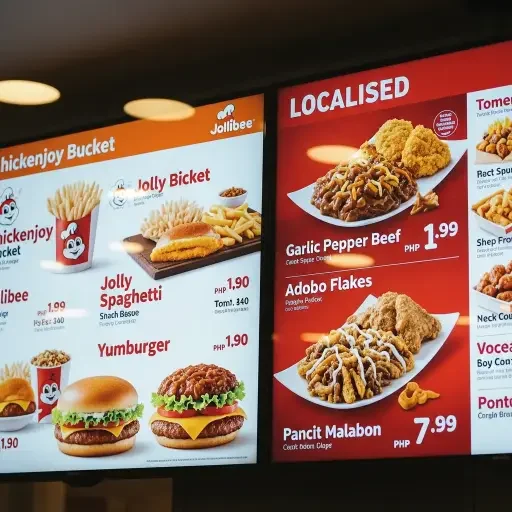
Strategic precedents matter. Recent decades have examples of consumer companies splitting international growth units to attract richer valuation. The playbook is straightforward: isolate growth, allocate capital markets accordingly, and let market comparables do the value discovery. But foodservice has particularities—unit economics vary wildly by geography; labor cost curves, real-estate regimes, and supply chains are local. Success will require disciplined reporting (unit-level margins by market), tight franchise governance, and an honest articulation of where scale benefits accrue.
For Jollibee’s investors the calculus is simple in outline and nuanced in practice. Retail and domestic institutional holders get a company focused on Philippine fundamentals: cash generation, brand strength, and periodic buybacks or dividends. Global investors gain exposure to a diversified, growth-oriented platform that can expand in markets where the brand already resonates. The split could unlock share buybacks, secondary offerings, or M&A funded by the international business’s public equity — tools that were harder to deploy under a single, blended entity.
Risk remains. If the international arm fails to achieve the scale and margin glide path expected by U.S. markets, its public valuation could underperform and create investor churn between the two listed companies. Currency volatility, geopolitical shocks, and franchisee disputes could also amplify perception-driven multiples. Conversely, a fast, repeatable rollout across North American urban markets — where diaspora demand and novelty can translate into premium unit economics — would validate the thesis and justify a materially higher multiple.
The tactical timeline — listing by 2027 — suggests management believes the necessary operational, legal, and investor-preparation work can be completed within a three-year window. That includes audited carve‑out financials, governance structures for cross-border stakeholder protection, and a roadshow narrative that convinces American investors they are buying a global scaling story, not a regional curiosity.
Jollibee’s choice is a wager on market segmentation: the belief that capital markets will reward precise narratives. If correct, the company will be two things at once — a disciplined domestic cash engine and a venture that trades as if it were born to scale globally. For investors watching from Manila and New York, the question is whether the split will raise the sum-of-the-parts valuation or merely rearrange where value is recorded.
In the end, the spin-off is a capital-allocation experiment as much as a brand strategy. It exposes how companies that grew in one economic regime choose to reprice themselves when ambition meets markets that assign different risk and reward codes. If Jollibee executes, the listing will be a concise demonstration: separate narratives, separate multiples, one corporate origin.
Tags
Related Articles
Sources
AP reports, company statements, regional market data, public-market comparables, and investor commentary.