

Finland's Defence Forces want to buy one million anti-personnel mines from domestic manufacturers for roughly €100 million, with production targeted from 2028. The October announcement is new; the strategic reversal is not — five NATO allies have already quit the Ottawa landmine ban, citing conventional Russian aggression after Ukraine.
Finnish public broadcaster Yle reported on 19 October that the Defence Forces intend to procure about one million anti-personnel mines from domestic suppliers, budgeting roughly €100 million (about $112 million at recent rates, not a round $100 million). Colonel Riku Mikkonen of Army Command told news agency STT that domestic production should be running by 2028, with deliveries spread over several years and full stocks arriving in the 2030s. No contracts are signed yet; the next step is tendering.
That is a procurement plan, not a warehouse receipt. It is still the clearest industrial signal since Finland’s Ottawa withdrawal took effect on 10 January 2026.
Five exits, one stated enemy
The humanitarian shock is the cluster, not Finland alone. Estonia, Latvia and Lithuania deposited withdrawal instruments on 27 June 2025; their exits became effective 27 December 2025. Finland followed on 10 July 2025, effective 10 January 2026. Poland deposited its notice on 20 August 2025; withdrawal took effect 20 February 2026.
Each filing names deteriorating European security and Russia’s full-scale invasion of Ukraine — not an undisclosed adversary. Estonia’s withdrawal note, published by the UN depositary, describes an “existential threat” from Russian aggression that “fundamentally destabilized the European security order.” Poland’s attached justification speaks of military asymmetry when adversaries are not bound by the same legal restraints. Finland’s government states that anti-personnel mines would improve Defence Forces capabilities in a changed environment while insisting it still supports mine-clearance humanitarian work.
This is the first time states parties have left the Ottawa Convention since it entered force in 1999. For three decades the treaty helped make Europe a continent that destroyed stockpiles rather than replenished them.
Poland’s number dwarfs Finland’s
The scale story sits in Warsaw. On 2 March 2026, Poland’s Armaments Agency opened market consultations — not yet a contract — for 14.7 million operational anti-personnel mines across four types (directional fragmentation, bounding, surface fragmentation, and pressure mines), plus 1.47 million training variants. Consultations were scheduled through late April 2026; Polish defence media reported double-digit industry participants.
Add Finland’s proposed one million and two NATO front-line states are sketching a combined 15.7 million mine procurement envelope before counting the Baltics’ smaller restocking plans. These are planned quantities, not delivered arsenals.
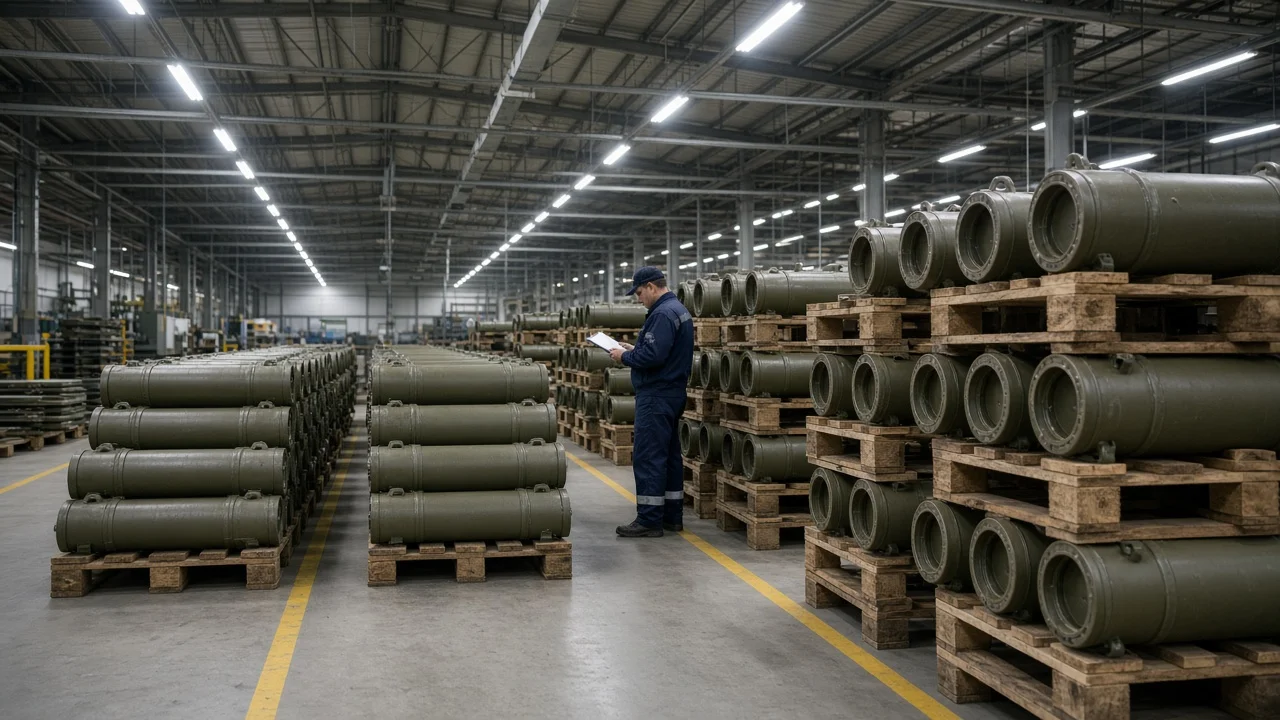
Finland is planning to buy back roughly the stockpile it destroyed after joining Ottawa in 2012.
Between 2012 and 2015, Finland destroyed 1,013,571 anti-personnel mines to meet Article 4 obligations — a process Helsinki once cited as proof of Europe’s demining direction. The new programme would cover pressure-activated mines and tripwire pipe mines; Ruotuväki quoted per-unit cost hints near €200 for pipe mines and under €100 for blast types.
Doctrine, industry, and the bill that comes later
Finnish officials tie the purchase to lessons from Ukraine: infantry, obstacles, and layered defences still matter beside drones. That is a conventional land-warfare reassessment visible in public defence commentary, not evidence of a classified contingency.
Industry follows policy. Mikkonen told STT that roughly six Finnish firms could manufacture mines or components; Rapporteur and other regional outlets note Helsinki wants surge capacity in crisis, with Baltic and Polish customers mentioned as logical export candidates — though Finland says it has no confirmed foreign orders yet. Poland’s consultation explicitly probes domestic production and technology transfer; state-owned PGZ units and private firms have already advertised restart capacity.
The balance-sheet question is wider than procurement lines. The International Campaign to Ban Landmines urged leaders on 12 October to reverse Finnish and Polish production plans. Humanitarian groups count clearance, victim assistance, and decades of lost agricultural use — costs that do not appear in a €100 million appropriation. Finland’s 2012–2015 destruction programme cost on the order of €220,000 to eliminate old stock; rebuilding capability plus any future emplacement would carry a different, longer ledger.
What to watch next
Contracts, not press releases, will define the story. Finland aims to issue requests for tenders and sign deals toward late 2027; Poland must convert March consultations into competitive awards with 2026–2028 delivery windows floated in agency documents. Until those signatures land, Europe is announcing the return of a weapon class it once treated as obsolete — openly, and in response to a threat its governments keep naming on the record.
Continue reading


Sources
Yle and Finnish Defence Forces magazine Ruotuväki on Finland's October 2026 procurement plan; Polish Armaments Agency market consultation of 2 March 2026; UN depositary notifications and government statements on Ottawa withdrawals.


