

Natural white diamonds have shed more than half their wholesale value since 2021, yet Rapaport's August RapNet Diamond Index posted its first one-carat gain in fifteen months. The rebound is concentrated in smaller, liquid categories — not a verdict on the whole book of mined stones.
CNBC on Saturday, 26 September framed natural diamonds as having lost much of their shine: Rapaport Group data cited in the piece put the average one-carat stone at $3,898, 51% below the $8,007 level of 2021. The Diamond Standard Index for investment-grade goods touched 2,490 in early August — described as a record low — and was trading just above 2,500 later in the month. The through-line was structural: a Covid-era production glut still working through dealer books, compounded by lab-grown stones that undercut naturals on price at every carat weight.
Two weeks earlier, on 2 September, Rapaport published a narrower, segment-level counterpoint. The Rapaport Trade Diamond Index (RAPI) — which tracks asking prices for round, D–H, IF–VS2 goods on Rapaport Trade — rose 0.5% for one-carat diamonds in August, the first monthly increase in fifteen months after flat or negative readings back to May 2025. Smaller liquidity buckets moved faster: 0.30-carat goods gained 2% and 0.50-carat stones 2.5%, while the three-carat index fell 0.4% after roughly eighteen months of stability.
Those two releases sit on the same market but measure different layers. CNBC’s five-year arc is a consumer and investor mood piece anchored in average one-carat pricing and a separate investment index. Rapaport’s August table is a wholesale asking-price pulse for specified round categories — not realised transaction averages across every quality, and not the exceptional fancy-colour or auction stones that still command headline sums.
What moved in August — and what did not
Rapaport attributed the August firming partly to supply cuts by miners and manufacturers, a post-summer pickup in trading, and stabilising demand in some channels. Indian manufacturers increased shipments to the United States after July’s confirmation of a 10% U.S. tariff rate on Indian goods, the release noted, while Antwerp and Israel were seasonally quiet and Chinese demand remained soft ahead of the September Jewellery & Gem World Hong Kong fair. Miner financials in the same cycle were still weak: Alrosa’s first-half revenue fell 36% year over year and De Beers’ dropped 19%, though De Beers trimmed losses on lower expenses and steadier pricing, per Rapaport.
CNBC’s longer lens adds the demand-side shock that makes a monthly bounce easy to misread. Lab-grown diamonds — chemically identical to mined stones — trade at steep discounts; a CNBC marketplace search found near-colorless lab goods with strong cuts near $450 against naturals in the $2,800–$3,200 band for comparable specs. The Knot’s 2026 Real Weddings Study reported that engagement rings with lab-grown centre stones accounted for 61% of sales in 2025, up 239% since 2020. That migration is concentrated in bridal and fashion jewellery — the same counter where Signet and other chains have leaned into lab lines — not in the isolated world of record-breaking coloured gems.
A single positive RAPI month does not repeal fifteen months of erosion; it marks where liquidity returned first — in smaller, faster-turn categories.
Supply responses are real but lagged. De Beers said in July it would halt production at South Africa’s Venetia mine for more than two years; CNBC also cited mine bankruptcies and permanent shutdowns in 2026 as potential tightening events. Wholesale contacts quoted in the piece pointed to price appreciation for certain qualities as inventory clears — language that rhymes with August’s small-stone strength but still falls short of a broad recovery call.
The watchlist: inventories, discounts, breadth
For anyone trying to separate a trade bounce from a cycle turn, three observables matter more than a single auction record or a bridal-chain earnings beat.
Dealer inventories. The 2023–2024 overhang CNBC described has to show up as lower aged stock and fewer distressed list-to-sale gaps on RapNet and in sightholder reports. Until inventory normalises, asking-price indices can tick up while realised discounts to list remain wide.
Realised discounts. RAPI measures best asking prices for a defined spec — not the price at which a stone actually leaves a memo line. Track whether August’s gains persist when traders report transaction prices and memo returns, especially on two- and three-carat goods where August still printed red.
Segment breadth. August’s story is small-stone led. A durable recovery would need adjacent carat steps — and eventually larger goods — to move in the same direction for more than one month. The three-carat slip is the immediate falsifier inside Rapaport’s own table.
Keep categories separate in commentary: ordinary white rounds in bridal and wholesale channels are not fancy colours, gemstones such as rubies or emeralds, or investment indices built on curated baskets. Each can rise or fall on its own liquidity and storytelling.
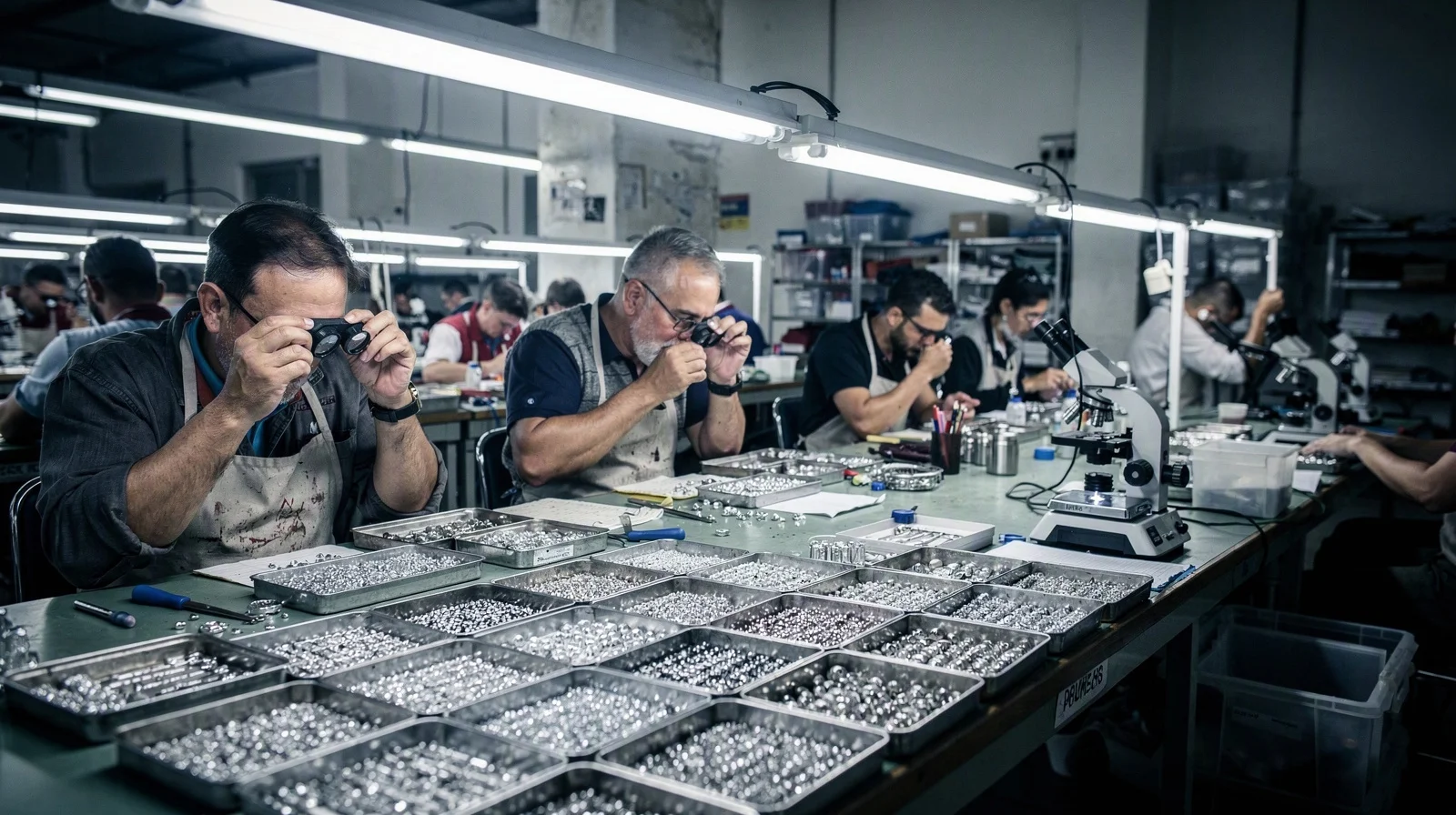
The falsifier
A genuine wholesale recovery would show consecutive RAPI gains across one-carat and neighbouring sizes, narrowing list-to-sale spreads on RapNet, and miner sales volumes stabilising without repeated emergency supply cuts. A false dawn looks like August repeated only at 0.30–0.50 carat while larger indices flatline or fall, lab-grown share of new engagement rings keeps climbing, and the Diamond Standard Index revisits its August trough even as trade wires celebrate a single positive month.
CNBC’s 26 September piece captured the half-decade scar. Rapaport’s 2 September data captured where the market stopped bleeding first. Neither release, on its own, answers whether naturals regain pricing power at the counter — only whether the wholesale book can clear stone by stone, segment by segment, without confusing a melee bounce for a market bottom.
Continue reading


Sources
CNBC (26 Sep 2026) on the multi-year decline in natural diamond prices, lab-grown share of engagement rings, and supply responses from De Beers and distressed miners; Rapaport via GlobeNewswire (2 Sep 2026) on August 2026 RAPI movements by carat size and trading conditions in India, Antwerp and China


