

Tonight Ed Sheeran, Zach Bryan, and Bruno Mars fill U.S. stadiums—the spectacle fans see. The money question is who controls the venue, the ticket transaction, and sponsorship cash that outlasts any tour. AEG's O2 renewal and Live Nation's DOJ settlement put that infrastructure fight in numbers.
Tonight three stadium dates land in the same U.S. evening: Ed Sheeran’s Loop Tour at Lucas Oil Stadium in Indianapolis, Zach Bryan at Jordan-Hare Stadium in Auburn, and Bruno Mars’ Romantic Tour at Levi’s Stadium in Santa Clara. That is the product fans photograph—not a map of who keeps the money when tens of thousands show up.
Live Nation stacks concert promotion, Ticketmaster, and a deep venue footprint. AEG answers with AEG Presents, AXS ticketing, and owned arenas—including London’s O2. The contest is less who books the artist than who controls the building, the primary ticket transaction, premium inventory, and multi-year sponsorship that monetizes the audience after the house lights come up. The pattern rhymes with other vertical fights over distribution rails, even when the commodity is a night out rather than a stream.
AEG’s O2 math: the venue as a P&L
On October 7, AEG and Virgin Media O2 extended naming rights on The O2 through 2038—framed as the UK’s largest renewal of its kind. Guardian reporting put the package near £200 million over ten years, or about £20 million a year; neither side published a confirmed price, and City AM quoted a source close to the telecom calling that figure “purely speculation.” The signal does not need the exact sterling total: a venue owner can sell a decade of brand association and priority-ticket loyalty against a proven attendance machine.
Newly cited 2025 accounts make the asset case concrete—£148.6 million in revenue and £76.5 million in pre-tax profit, with 239 events and a £27.5 million dividend upstream to AEG’s U.S. parent. That is not merely a place to stage concerts. It is a high-margin experience business that harvests concessions, premium seats, and sponsorship whether or not AEG promotes every headliner.
Live Nation’s scale: revenue is not the margin map
Live Nation’s full-year 2025 results show why scale alone misleads. The company reported $25.2 billion in revenue—about $20.9 billion from Concerts and $3.1 billion from Ticketing—with adjusted operating income of $2.37 billion and fan attendance near 159 million. Segment AOI tells the story the top line hides: Ticketing contributed roughly $1.13 billion and Sponsorship & Advertising about $845 million, while Concerts delivered about $687 million on far larger revenue at a 3.3% AOI margin. Promotion moves bodies through doors; ticketing and brand inventory convert access into operating profit. That is why AXS versus Ticketmaster is a fight over the fee-bearing rail on top of face value—the same gate where platform rules reshape who can sell.
Antitrust meets bricks: does the building get more valuable?
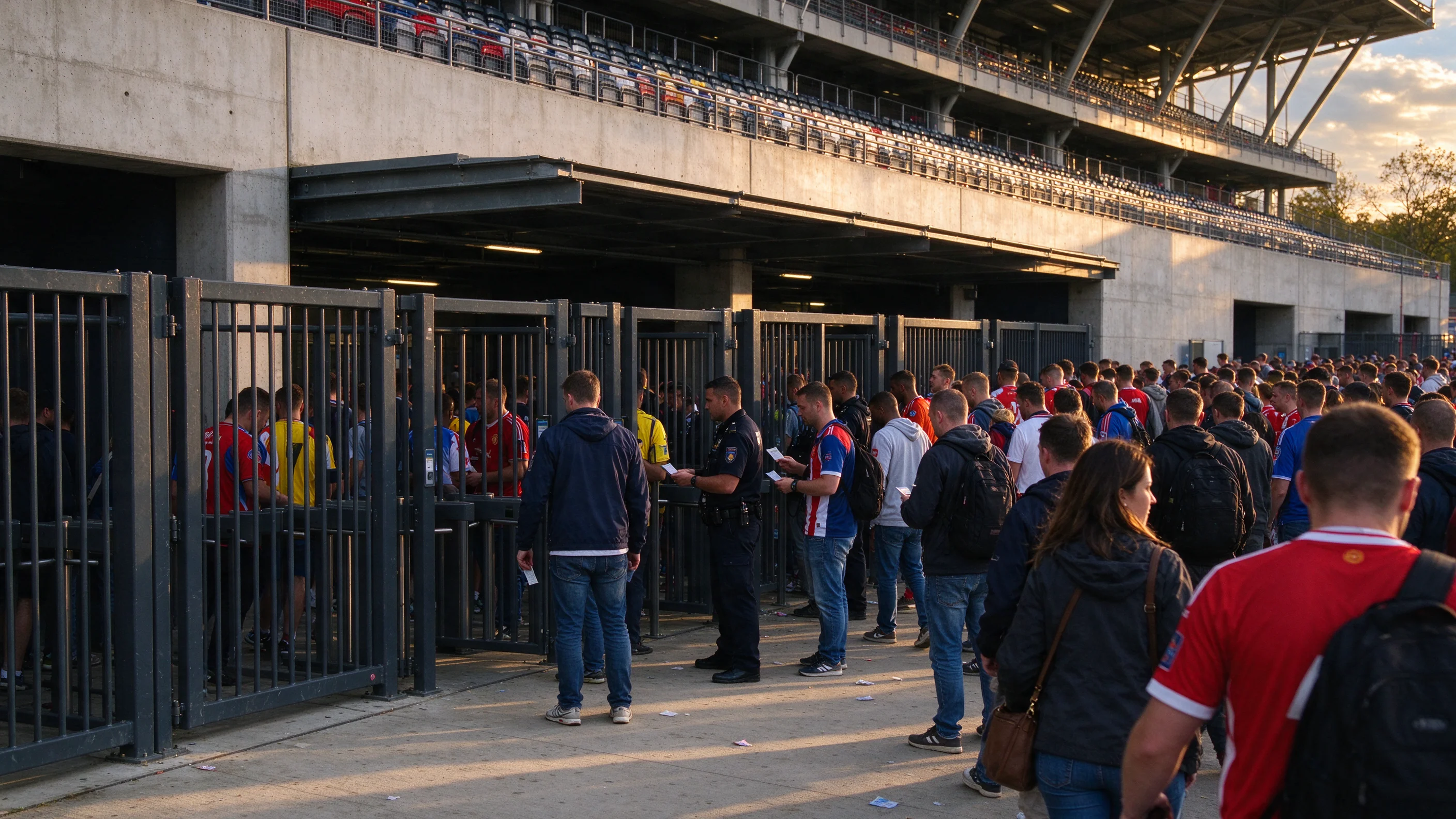
In March 2026, Live Nation announced a settlement with the U.S. Department of Justice. The company’s account and the DOJ’s proposed final judgment describe opening amphitheaters to competing promoters, letting rival platforms distribute up to half of primary tickets at Live Nation amphitheaters, capping service fees at those venues, and unwinding preferred or exclusive booking control at specified sites—subject to court entry of the judgment.
If exclusivity and conditioned access weaken, does owning the venue become more valuable relative to promoter leverage? AEG’s O2 renewal is one answer in another jurisdiction: monetize the asset through naming rights and loyalty that do not require booking every date yourself. Live Nation’s settlement is the U.S. regulator’s attempt to pry open the amphitheater layer where promotion, ticketing, and calendar control had fused.
What tonight’s shows do—and do not—prove
Use the three stadium nights as a reminder of demand intensity, not a promoter scorecard. Venue listings confirm the dates; they do not establish which company promotes each show or how production costs net into anyone’s AOI. Sold-out demand is necessary, not sufficient. Capture depends on who rents the room, who clears the ticket, who sells the suite, and who signs the decade-long naming deal—the franchise logic that turns a weekend spectacle into a recurring business system.
Stadium lights still sell the dream. Balance sheets increasingly price the building.
Continue reading


Sources
Live Nation FY2025 earnings release; Live Nation DOJ settlement statement; DOJ proposed final judgment and competitive impact statement; AEG International O2 naming-rights press release; Guardian reporting via AOL on O2 deal terms and 2025 venue accounts; City AM on disputed £200m figure; Lucas Oil Stadium, Auburn Athletics, and Levi's Stadium event listings for Oct. 10 shows.


