

Rockpoint Group reclaimed its 32-story Financial District tower at 100 Summer St. on October 27 for $260 million, the only bid at a Wells Fargo foreclosure auction held on the building's steps. Rockpoint paid $806 million in late 2019; the $546 million gap is the equity and appraisal vapor that lenders, limited partners and CMBS holders have been marking in slow motion since remote work hollowed legacy office stacks.
Boston, Oct. 28 — Rockpoint Group kept its 100 Summer St. tower — by buying it back at a foreclosure auction for $260 million, roughly $236 per square foot, on October 27. Bisnow reported that auctioneer Marianne Sullivan of Sullivan & Sullivan opened bidding at $260 million on the steps of the 1.1 million-square-foot building; Rockpoint was the sole bidder in a proceeding that lasted about 40 seconds, according to Banker & Tradesman.
The price is a 68% discount to Rockpoint’s $806 million acquisition from Blackstone in late 2019, months before the pandemic emptied cubicles. The arithmetic headline — $546 million of value gone — is the gap between those two trades, not a third-party’s opening ask.
How the Loss Routes
Wells Fargo held a $470 million mortgage on the 2019 purchase and moved to foreclose in September 2026, after Rockpoint defaulted. At $260 million, the auction clears the asset back to the sponsor while crystallizing a loss stack:
- Senior lender: Wells Fargo absorbs the difference between outstanding debt and sale proceeds — either through a credit mark, workout with insurers, or sale of the defaulted loan into distressed-debt markets.
- Equity: Rockpoint’s limited partners already suffered dilution of net asset value; buying back at $260 million resets the basis for any future recap but does not restore 2019 equity.
- Tenants and leasing: The tower was about 72% leased at auction, with 330,000+ square feet available, per auction materials. Tenants include SimpliSafe, which took 150,000 square feet in 2021 — leases that now anchor cash flow at a far lower building valuation.
The Boston Globe previewed the auction in September, framing 100 Summer as another downtown trophy forced into a public sale after remote-work drift and rising capital costs.
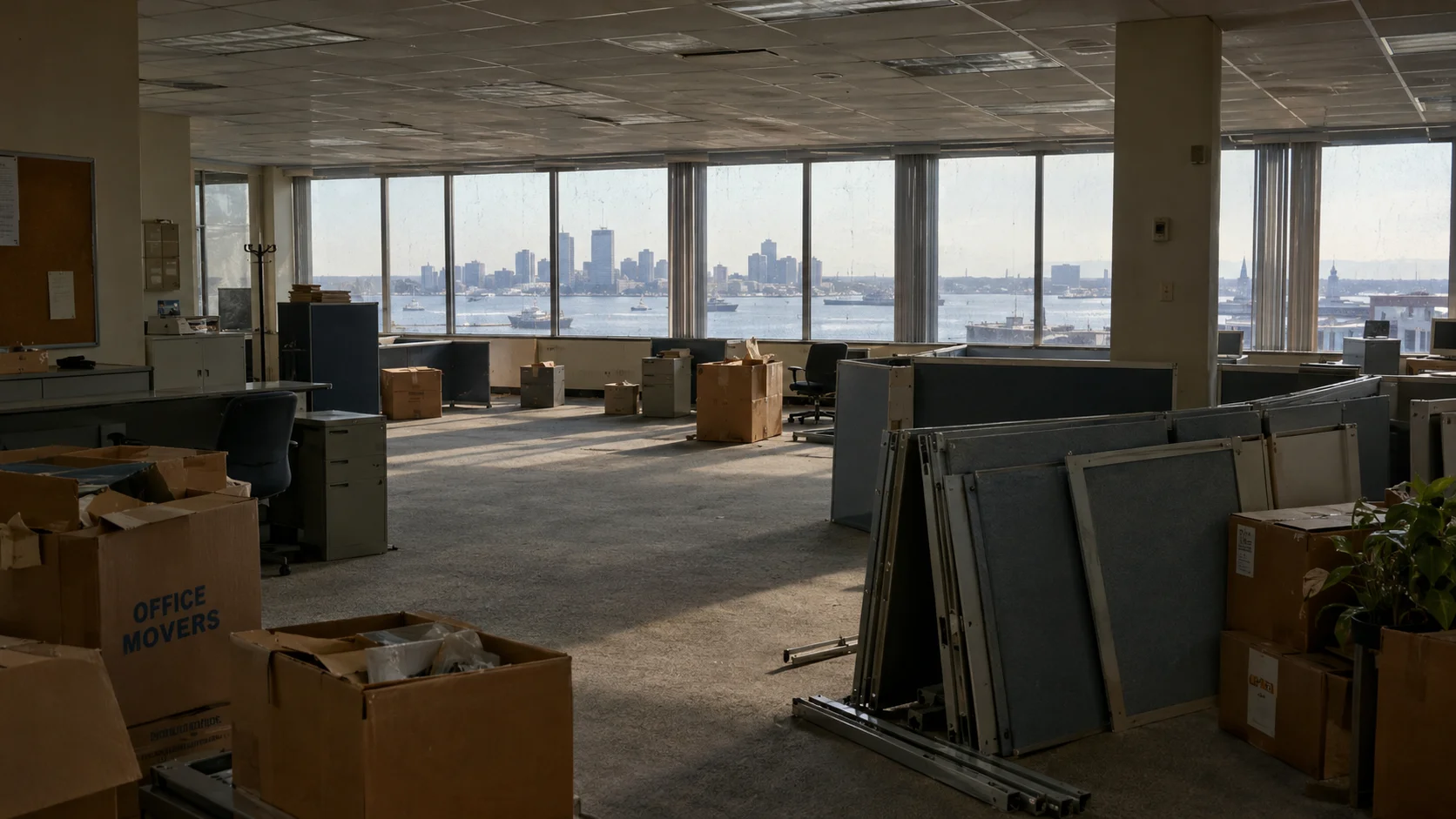
Exceptional Dollars, Familiar Pattern
100 Summer is not the only U.S. office asset repricing through foreclosure or deed-in-lieu, but the scale — nearly $806 million to $260 million on a fully leased-not-full tower — makes it a reference point. Distressed sales in San Francisco, Chicago and Washington have shown similar 50–70% haircuts on 1980s-vintage stacks that lack the amenity arms race of new Class A product.
Capital markets feel the lag. CMBS trusts mark loans on delinquency schedules; insurance companies that underwrote 2019 vintages face regulatory capital hits when appraisals catch up. Refinancing windows that assumed 4% cap rates on Boston Financial District rent rolls no longer close without equity checks that sponsors like Rockpoint struggled to write.
Buying back at auction is a workout tactic: shed the lender, reset basis, and attempt a long hold with lower debt — not a vote that downtown Boston office is healed.
What Would Change the Verdict
Comparable Boston foreclosure outcomes in the next two quarters would show whether $236/SF is the new clearing level for 1980s towers or a fire-sale floor. Lease-up above 80% with credit tenants would improve debt capacity even at lower absolute values. Falling policy rates would help refi math but cannot fix utilization if employers keep shrinking footprints. A surprise bid from a third-party buyer would have signaled market clearing without sponsor rescue — the absence of that bid matters.
For investors watching the commercial reset, 100 Summer is a labeled loss: $546 million of nominal value removed in one afternoon on Summer Street, with lenders and LPs still distributing the bill across portfolios that pretended office was a slow glide, not a cliff.
Continue reading


Sources
Bisnow (Oct 27, 2026); Banker & Tradesman; Boston Business Journal; Boston Globe (Sept 2026 auction notice); Sullivan & Sullivan auction terms.


