

August opened with a risk-on bid rooted in two simultaneous signals: hyperscaler cloud revenue accelerating hard enough to prove AI is monetizing, and hardware shortages — HBM, CoWoS, component inflation — forcing capex up rather than demand down. Markets are buying scarcity as confirmation, not caution.
August did not invent a new AI narrative. It reopened an old bid with cleaner evidence. Microsoft’s Azure grew about 43% and crossed $100 billion in annualized cloud revenue; Amazon Web Services accelerated to 37% — its fastest clip in eighteen quarters; Google Cloud printed roughly 82% growth with a backlog that now reads like a multi-year order book. Stocks that monetized infrastructure jumped. Stocks that spent without matching acceleration were sorted out. The market’s grammar for early August is blunt: show cloud compounding, or sit out the risk-on.
That is the first pillar. The second is uglier and, for this cycle, equally bullish. Hardware is not clearing. High-bandwidth memory remains allocated; TSMC’s CoWoS advanced packaging stays booked out for a year or more; component prices are rising fast enough that hyperscalers are rewriting capex guides upward to buy the same capacity at a higher bill. Amazon lifted its 2026 capital outlook toward $220 billion and blamed memory costs for the raise. Microsoft has already framed roughly $25 billion of its calendar-year spend as component-price inflation rather than incremental compute. Scarcity that once looked like a bubble warning is now priced as confirmation — demand so urgent that the factory floor, not the CFO, sets the pace.
Sentiment flipped from prove-it to buy-the-bottleneck
Earlier this year, even Nvidia’s cleanest beat could sell off when investors feared the $700 billion hyperscaler buildout would never pay for itself. That prove-it mood has not vanished; it has narrowed. Meta’s cash-flow collapse and Apple’s supply warning still punish soft monetization. But Azure, AWS, and Google Cloud acceleration gave the tape something it lacked in February: evidence that enterprise AI workloads are converting into cloud revenue at rates that justify the depreciation cliff.
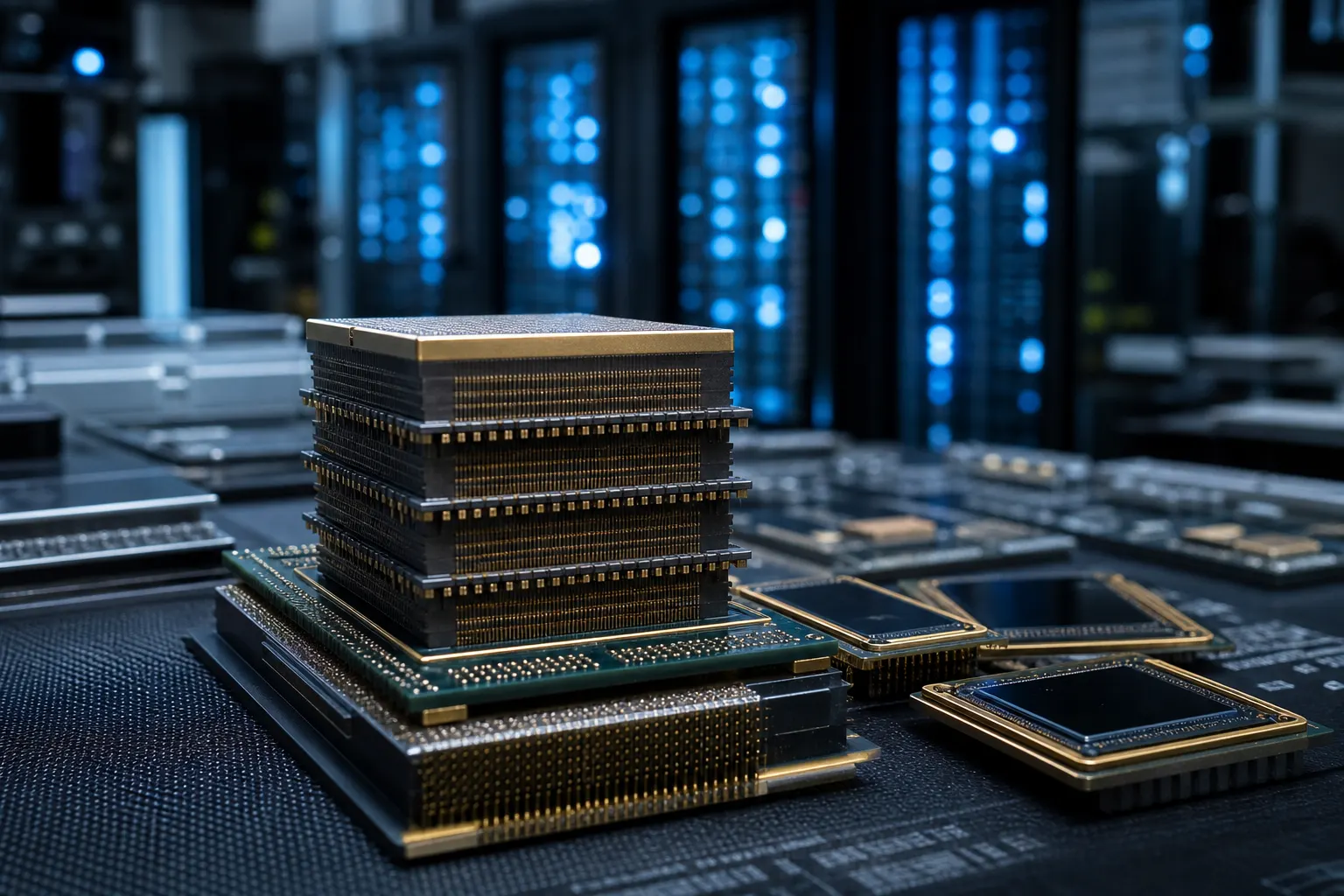
The paradox is that shortages reinforce the bid. When we mapped the cloud race hitting the CoWoS packaging ceiling, the point was physical rationing. August’s risk-on is the market’s translation of that rationing into portfolio language: if capacity cannot expand fast enough, contracted demand is real; if memory vendors can tax the buildout, semis capture rent; if hyperscalers keep raising guides instead of cutting them, the cycle has not topped on willingness to pay. This is not the simple dot-com replay skeptics wanted. It is a scarcity premium layered on top of accelerating cloud KPIs.
Capex buys queues — and an escape hatch
The dollars still tilt toward merchant GPUs in the near term, which is why the semiconductor complex rallies with every cloud beat. Longer term, the same shortages accelerate the custom silicon push — Trainium, TPUs, Maia, MTIA — that hyperscalers are building to exit Nvidia’s queue. China’s efficiency bet is the other pressure valve, as Beijing’s cheaper training stack tries to do more with less silicon. Neither escape hatch clears August’s tape. Both explain why capital keeps funding the bottleneck instead of walking away from it.
What would break the risk-on is not another memory-price print. It is a cloud deceleration that turns today’s scarcity into stranded depreciation — the utility gap reappearing as empty racks with expensive HBM inside. Until that print arrives, August’s bid has a simple logic: growth that clears the P&L, and gaps that prove the order book is still ahead of the fab.
Continue reading


Sources
Microsoft Q4 FY2026 Azure print (~43% growth, $100B annualized cloud); Amazon Q2 2026 AWS 37% to $42.2B and raised 2026 capex toward $220B on memory costs; Alphabet Google Cloud ~82% growth and raised AI capex; CNBC and sell-side coverage of memory/component inflation; CoWoS and HBM allocation reporting; Culled prior coverage of Nvidia's prove-it paradox, Broadcom custom silicon, CoWoS packaging ceiling, and the AI utility gap


