

A noticeable shift is underway: capital is moving from high-multiple growth into large, cash-rich consumer and industrial names that behave like 'value' without being arcane. That rotation may persist while policy uncertainty remains high, but microcaps whose narratives depend on whispered rule changes deserve heightened skepticism.
Every broad market rotation has a readable logic and an unreadable tail risk. The current move — capital flowing into mass-market, cash-generating names that behave like value — is intelligible. It is driven by two simultaneous forces: market participants seeking shelter from policy-driven volatility, and capital allocators repricing the premium they pay for growth. That combination can sustain a durable reweighting of portfolios, but it also sharpens the contrast between sensible reallocation and outright speculation in microcaps that live off policy rumor.

Why the rotation feels different now — and why it may last
Start with the why. Large consumer-facing and industrial companies are delivering tangible cash flows, predictable buybacks, and dividend policies that matter when macro or policy signals wobble. When regulators threaten sector-specific shocks or when monetary and fiscal policy inject uncertainty into growth forecasts, allocators do two things: they narrow the set of “must-own” names, and they demand financial durability for every price paid. Mass-market firms check those boxes. Their margins are often thin but stable; earnings are less binary than for pre-revenue or early-revenue tech plays; and balance sheets frequently carry enough liquidity to weather short-term policy headwinds.
Concurrently, the market’s “growth” premium — the multiple investors were willing to pay for uncertain future cash flow — has compressed. That change is not a sudden moral failing of innovation; it’s an adjustment in discount rates and risk tolerance. When the expected path of policy enforcement is unclear, the variance around those cash flows rises; rational capital prefers present certainty to speculative future upside. The result: flows into names that offer cash generation and optionality without brittle narrative dependence.

Mass-market names are not cheap in an absolute sense; they are simply cheaper relative to high-growth peers and cheaper in terms of valuation risk. That subtle distinction matters for positioning. A household-name retailer trading at 14x forward earnings isn’t a bargain if its top line is eroding; it is a different animal when the business prints steady cash and can buy back stock at meaningful rates. Investors should ask two questions: does the business generate free cash flow reliably over cycles, and does management prioritize capital allocation discipline? Those answers separate durable reweights from managerial fiction.
Where microcaps and policy chatter collide
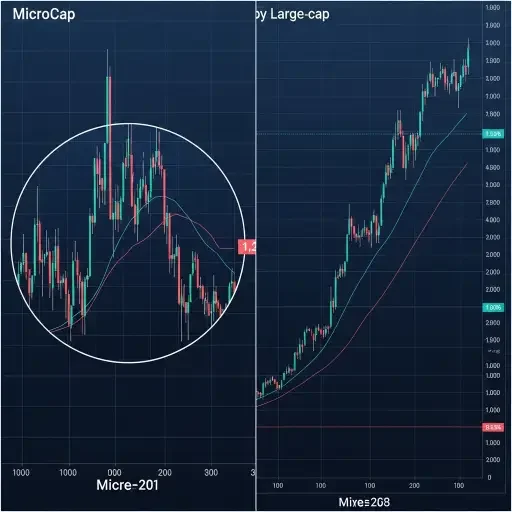
The risky corner of today’s market is the small-cap space, especially microcaps whose prices hinge on prospective policy changes: subsidy programs, licensing decisions, state procurement, or narrowly targeted regulation. These names often present narratives that are easy to sell to retail desks and social feeds — a single press release or a rumor can spark 50–100% moves. That price action is intoxicating; it confers the illusion of intelligence and inside knowledge. The reality is cruder: policy outcomes are binary and lumpy. A favorable ruling can lift a microcap’s prospects, but adverse clarification or a delay often obliterates value, and liquidity in these names is thin when exits matter.
Microcap narratives live and die by event risk. Unlike large-cap rotations, where flows are driven by reallocation across diversified balance sheets, microcap moves are concentrated bets on single outcomes. That creates an asymmetric payoff with downside magnified by leverage, illiquidity, and headline reversals. For allocators whose objective is capital preservation or steady compounding, such bets are noise; for speculators, they are entertainment. The difficulty is most investors mix both impulses without clear sizing rules.
Practical guardrails for investors
If capital is rotating toward value-like mass-market stocks, how should one act? Here are concise, investor-facing guardrails:
- Size conviction to the information edge. Increase exposure to large, cash-generating names incrementally as their narratives prove durable; avoid concentration based on transient headlines.
- Treat microcaps as event-driven options, not core holdings. If a microcap’s thesis rests on a single policy event, size positions to reflect that binary risk and prefer buying instruments or structures that limit downside (e.g., long-dated, out-of-the-money options where available).
- Prioritize liquidity and cash-flow quality. Free cash flow margin, capex cyclicality, and balance-sheet liquidity should carry greater weight in valuation when policy uncertainty is elevated.
- Distinguish durable clarity from plausible spin. Management claims about “pending approvals” should be verified against regulatory timelines and counterpart incentives; market-friendly narratives often outpace legal and bureaucratic reality.
What this rotation implies for market structure
A persistent movement into large, cash-rich names changes liquidity profiles across exchanges. ETF wrappers amplify the effect: passive flows into cheapened segments can create feedback loops that compress volatility in large caps while concentrating event risk in the small-cap cohort. That structural bifurcation—calmer, deeper liquidity in mammoth names; thinner, headline-driven liquidity in microcaps—raises systemic considerations for short-term traders and long-term allocators alike.
Final compression: one line, one action
Capital is reassigning risk: from narrative-dependent growth to cash-generating mass-market names. That reassignment may persist as long as policy uncertainty elevates the premium for present cash flow. The practical rule: favor durable cash quality and disciplined allocation; treat microcaps tied to policy as optional bets, sized and hedged accordingly.
Continue reading


Sources
Market flows, sector fund flows, corporate cash metrics, recent regulatory announcements, microcap volatility data


