

Bill Ackman signals a cooling of jets on privatizing Fannie and Freddie, framing the current moment as ‘the political climate’—coded language for power, cash streams, and a Treasury reluctant to relinquish the cash cow.
In the dining-room theater of finance, the table is set with two things squarely in view: a policy instrument that touches the bottom line of millions of Americans, and a political calculus that refuses to be hurried. Bill Ackman, the activist investor with a scholar’s appetite for leverage and a raconteur’s sense of timing, has begun to insist that the moment to privatize Fannie Mae and Freddie Mac—the government-sponsored enterprises that underwrite a heavy portion of U.S. housing finance—has not yet arrived. The phrase, couched in market-speak and served with a measured bite, is a refusal to rush a cash flow machine that Treasury would rather not unplug. The political climate, he implies, is not yet hospitable to the exit.
Altogether, the performance is a study in asymmetrical pressure: on one side, the conviction that privatizing the GSEs would reintroduce competitive discipline and capital efficiency to a murky, implicit subsidy; on the other, the political economy of risk—who bears the costs when a housing-macro shock strikes, and who pockets the gains when the bet pays off. Ackman’s position—that the time for privatization should be calibrated to a favorable political climate and a clarified fiscal cost—reads as both investor prudence and public accountability. Yet the frame is unmistakably adversarial to the idea that Treasury can pivot cleanly away from a generational cash cow without industrial-grade collateral damage to interest rates, mortgage access, or the implicit government guarantee that keeps mortgage-backed debt in the market’s sweet spot.
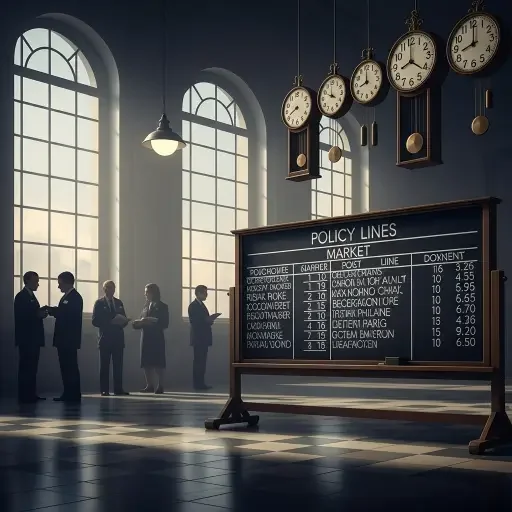
The invocation of the political climate is both a shield and a sword. It politely refuses the blunt instrument of a hurried privatization, while signaling that the Treasury—custodian of the state’s cash flows—will not surrender control until it has fully mapped the downstream consequences. It’s not just a question of who owns the risk, but who can monetize certainty. Privatization would reposition the GSEs from the government’s implicit backstop to a private balance-sheet chase for yield and market discipline. That reframe promises efficiency but injects new volatility: who underwrites the guarantee now? How will pricing, capital adequacy, and risk retention be negotiated in a system that benefits from a heavy, almost hegemonic, information asymmetry in housing finance?

Ackman’s caution is not merely a hedge-fund prudence memo. It is a narrative about sequencing, about the psychology of reform. In Washington, timing is the substrate of leverage. If you pry too soon, you risk political blowback, legislative gridlock, and the perception that privatization is a windfall for financiers at the expense of homeowners and taxpayers. If you wait too long, you risk losing the policy rationale—the argument that privatizing would wean markets off government guarantees and restore competitive pricing. The Treasury, the perennial stabilizer, stands as the ultimate arbitrator of timing. Their counterspeech—quietly, publicly—signals that the cash cow is not yet at a skinny end of the blade. It remains a machine with a large, invisible audience: mortgage borrowers who benefit from cheap credit, and the family trust that benefits from a predictable cost of funds.
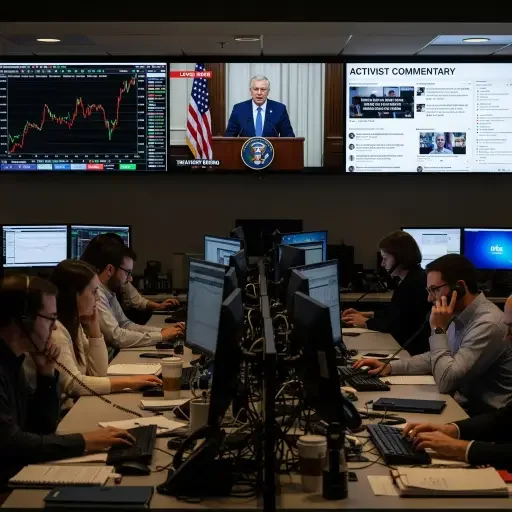
This is not merely a policy debate; it is a market symphony where the percussion comes from prospectus risk, regulatory expectations, and the long memory of financial history. The GSE saga has always been about what happens when the line between public purpose and private profit blurs, and who gets to redefine that boundary first. Ackman’s stance—pause, calibrate, observe—functions as a warning bell to investors who crave clarity where there is arcane complexity. It is a reminder that the most consequential shifts in capital structure do not masquerade as quick reforms; they demand a consensus on cost, benefit, and the social contract that underwrites housing finance.
In his framing, the phrase “cool their jets” becomes a public-relations technique with strategic content. It communicates restraint without retreat, ambition without reckless speed. It invites opponents and proponents alike to articulate a more precise map: a redesigned subsidy, a formalized guarantee, a transparent runway for privatization costs, and a credible transition plan that minimizes disruption to mortgage access. The audience—policymakers, investors, homeowners, taxpayers—reads this as a proposal for disciplined reform rather than a rash policy pivot.
As markets digest Ackman’s position, the implicit wager remains: can the political climate mature quickly enough to align with a privaterized architecture that still preserves the socialized benefits of housing finance? Or will the climate stay chilly, forcing a longer, more incremental approach that preserves the status quo while preserving upside for those who can forecast the next policy pivot?
The next act, as the public narrative evolves, will hinge on a few defining signals: Treasury’s cost estimates and risk premiums, Congressional appetite for reform, and the evolving calculus of systemic housing risk. Ackman has staked a claim that timing is a feature, not a bug—a component of the equation that can warp outcomes as surely as any rate move. If the “political climate” finally warms, privatization might accelerate with a clean alignment of fiscal and market incentives. If not, the pause can harden into a longer deferral—an implicit confirmation that the state remains the better custodian of the mortgage tide.
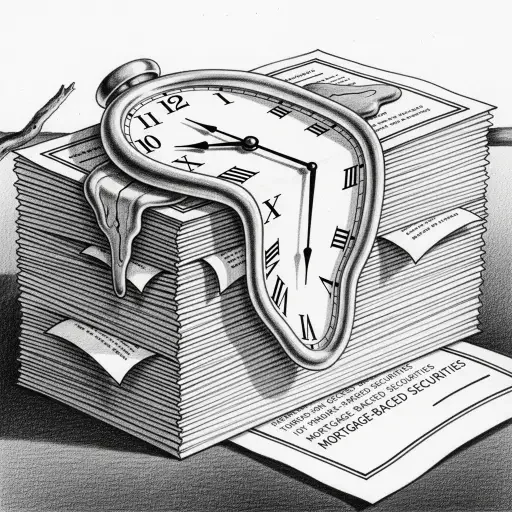
In this theater of capital and policy, Ackman’s intervention is a reminder that finance does not exist in a vacuum. It is tethered to governance, optics, and the slow burn of political feasibility. The privatization question remains unresolved not because the economics are unequivocal, but because the politics are asymmetrical—one actor’s imperative, one institution’s constraint, a Treasury that must balance risk, reward, and credibility. The punchline is not a verdict but a posture: cool the jets, study the climate, and prepare for a sequencing that honors the complexity of both markets and the public good. The market will watch, the policy wonks will debate, and the real-world impact—home loans, rates, and access—will tell the final part of the story. Until then, Ackman’s pause is both a tactical stance and a longer view, a reminder that in the machinery of finance, timing is a form of governance—and governance, a form of timing.
Continue reading


Sources
Market commentary, public statements from Bill Ackman, Treasury remarks on Fannie and Freddie privatization, historical context on GSE privatization attempts, and contemporary investor risk assessments.


