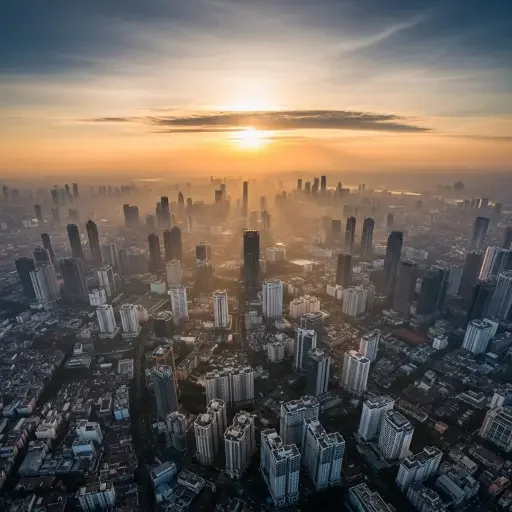
In November 2025, the urban world quietly shifted on its axis. Jakarta, Indonesia’s sprawling capital, claimed the title of Earth’s most populous city with nearly 42 million residents, dethroning Tokyo after a quarter-century reign. Even more remarkable: just seven years ago, in 2018, Jakarta ranked 33rd in global city rankings. It’s the urban planning equivalent of a shooting star—dramatic, swift, and impossible to ignore.
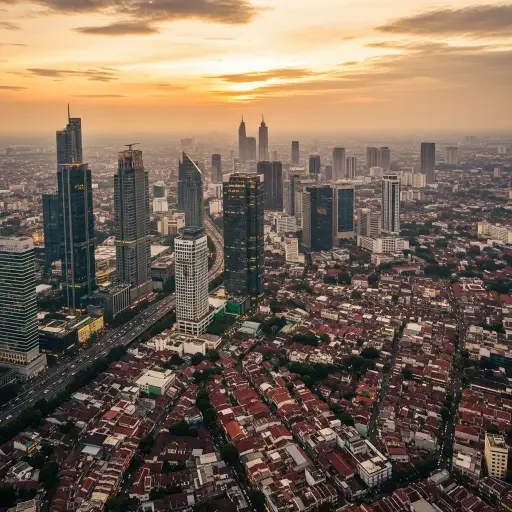
The Megacity Explosion
To understand Jakarta’s meteoric rise, we need to grasp just how radically our species has urbanized. For most of human history, most people lived in small communities—prior to 1000 CE, less than 5% of the world’s population lived in urban settings. Fast forward to today, and approximately 45% of the world’s population lives in a city.
The term “megacity”—an urban area with 10 million or more inhabitants—would have seemed absurd to our ancestors. In 1975, only three cities qualified: Tokyo, New York City, and Mexico City. Today, that number has ballooned to 33, with 19 located in Asia. By 2050, there could be more than 15,000 cities worldwide—with the majority having populations below 250,000.
How Cities Grow Giant
So what transforms a city into a megacity? It’s rarely one factor but rather a perfect storm of circumstances. Cities grow through natural population increase when lower death rates meet sustained birth rates, but the real accelerant is migration—people fleeing rural poverty, environmental disasters, or simply chasing opportunity.
Strategic decisions matter enormously: ports and trading cities enjoy natural advantages, governments can designate new capitals, and special economic zones can turn fishing villages into manufacturing powerhouses. Shenzhen, China, epitomizes this last phenomenon—once a sleepy coastal town, it transformed into a megacity virtually overnight after becoming a Special Economic Zone in the 1980s.
Then there’s agglomeration—the snowball effect where existing infrastructure, pooled labor, and proximity to suppliers make it cheaper and more efficient for businesses to cluster together. It’s why Silicon Valley became Silicon Valley, why Wall Street stayed on Wall Street.
São Paulo: The Industrial Giant of South America
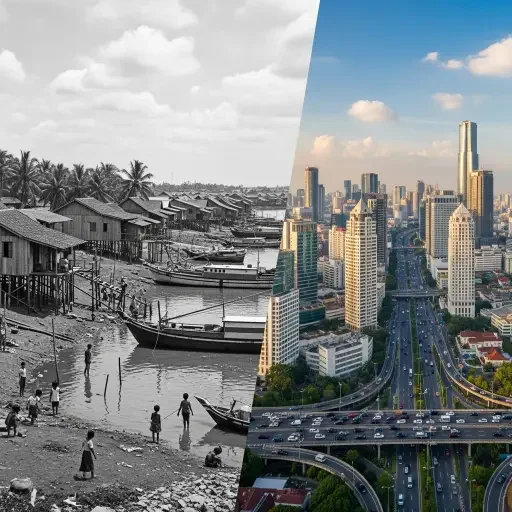
With 18.9 million people in its metropolitan area, São Paulo stands as the colossus of the Americas and the largest city in the Southern Hemisphere. Founded by Jesuit priests in 1554, São Paulo remained relatively modest for centuries—it was a coffee trading post, nothing more. Then came the transformation.
São Paulo’s population grew from about 240,000 in 1900 to 580,000 by 1920. At that time, it had just one-tenth the population of Rio de Janeiro. But the city was about to catch fire. Between 1920 and 1940 the population more than doubled, reaching 1.3 million. By 1950, São Paulo had 2.2 million people—nearly matching Rio’s 2.4 million. A decade later, São Paulo led with 3.7 million to Rio’s 3.3 million.
What drove this explosive growth? Coffee first, then industrialization. From 1950 to 1975, São Paulo was one of the fastest growing urban areas on earth. Immigration fueled the boom—waves of Italians, Japanese, Portuguese, Germans, and Swiss arrived to work the coffee plantations after Brazil ended slave trafficking in 1850. Post-World War II, the city attracted Greeks, Poles, Russians, and Ukrainians fleeing political turmoil, along with massive internal migration from Brazil’s impoverished Northeast.
Between 1950 and 1980, São Paulo grew at an annual rate of 5-6%, a testament to its appeal as Brazil’s industrial and economic cornerstone. The city became known by the Brazilian saying: “Earn in São Paulo so you can spend in Rio.” It was, first and foremost, a place to work.
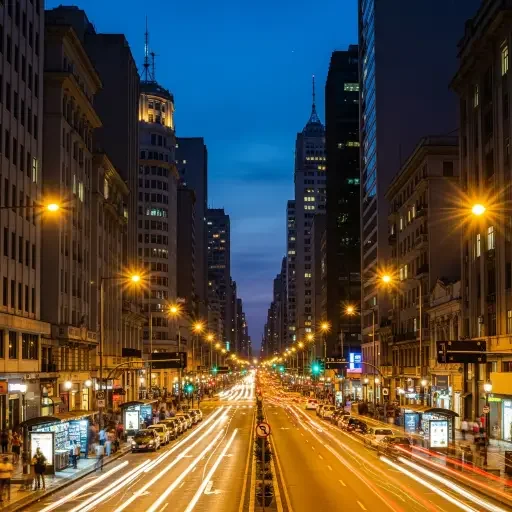
The growth came at a cost. Much of the suburban growth happened in favelas, which sprang up as people built shelter on steep hillsides or floodplains. An estimated 20 to 30 percent of São Paulo’s population lives in favelas, unplanned communities that often lack basic services like sewage, water, and electricity. Today, the metropolitan region sprawls across 7,951 square kilometers, with the city proper housing more than 12 million people at a density that reaches 7,216 people per square kilometer in some areas.
Tokyo: The Original Megacity’s Long Reign
For a quarter-century, Tokyo wore the crown as the world’s most populous urban area. Tokyo is now ranked third among the most populous cities with its 33 million residents, but its story remains one of the most remarkable urban transformations in human history.
Tokyo—once called Edo—was a fishing village that became the political center of Japan when Tokugawa Ieyasu established the Edo Shogunate in 1603. The population reached two million in 1905 and continued to grow to 3.7 million in 1920, when the first census was taken.
Then came catastrophe. Between 1940 and 1945, the population of Tokyo dwindled from 6,700,000 to less than 2,800,000, as soldiers were sent to the front and children were evacuated. The Allied firebombing of Tokyo in March 1945 killed at least 100,000 people and left a million homeless.
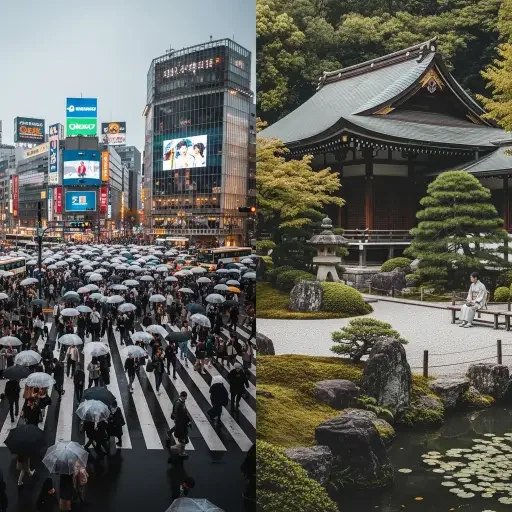
But Tokyo roared back. After the war, partly due to the first baby boom, the population reached 8 million and was the largest population in the world at one point. Tokyo’s urban agglomeration doubled in population between 1950 and 1970, driven by Japan’s economic miracle. The city became a model of efficient infrastructure, dense mixed-use development, and light-touch zoning that allowed organic growth.
What’s fascinating about Tokyo is what it accomplished without heavy-handed planning. The Tokyo Metropolitan Government redistributed resources between districts and upgraded infrastructure gradually, often in place rather than through massive redevelopment projects. The result: a megacity that works, despite crushing density. Nearly 30% of Japan’s entire population lives in the greater Tokyo metropolitan area—a staggering concentration of humanity.
Now, Tokyo faces a different challenge: decline. Tokyo is expected to fall from third in 2025 to seventh by 2050, reflecting Japan’s aging population and shrinking birth rate.
Los Angeles: The Sprawling American Megacity
Los Angeles, with approximately 12.5 million people in its metropolitan area, represents a fundamentally different model of megacity development—one built around the automobile rather than mass transit.
In 1890, Los Angeles had just 50,395 people. By 1900 it had grown to 102,479, and by 1930 it reached 1,238,048. The explosive growth continued: by 1984, Los Angeles surpassed Chicago to become America’s second-largest city.
What fueled LA’s boom? The explosive growth of the region in the 20th century can be attributed to its favorable Mediterranean climate, the availability of land and many booming industries such as oil, automobile and rubber, motion pictures, intermodal, logistics, and aerospace. By the 1920s, LA was producing more oil than anywhere else, accounting for nearly a quarter of world petroleum output. By 1921, more than 80 percent of the world’s film industry was concentrated in Los Angeles.
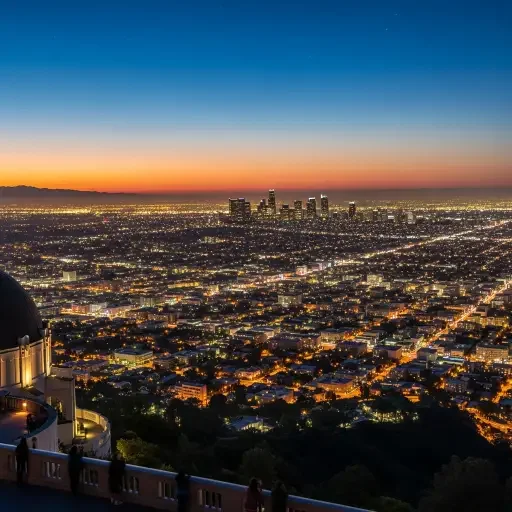
But LA’s sprawl came with consequences. The city grew from relative obscurity to one of the country’s ten largest cities at a time when suburban patterns of growth first became possible due to electric streetcars and automobiles. When the freeway system was built starting in the 1950s, LA became the archetype of car-dependent development. Traffic congestion became legendary, and the city earned a reputation for smog and pollution.
Interestingly, despite its reputation for sprawl, the Los Angeles-Orange County metro area was actually the most densely populated urbanized area in the United States in 2000, with higher density than even the New York-Newark area. The difference? New York built up; LA built out but packed people tightly within that sprawl.
New York City: The Dense Exception
New York City, with about 8.5 million people in the city proper and over 20 million in its metropolitan area, stands apart as America’s sole true mega-metropolis—and one of only two US megacities alongside Los Angeles.
New York City has more than double the population of Los Angeles, the country’s second-most populous city. What makes New York exceptional isn’t just its size but its density. At roughly 27,500 people per square mile, New York City proper is three times as dense as Los Angeles.
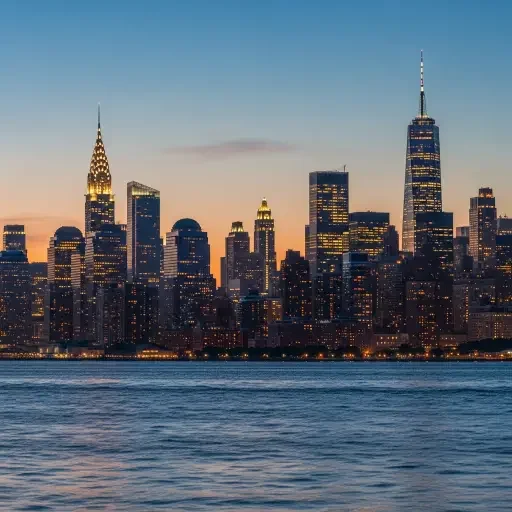
Between 2010 and 2020, New York City’s population grew by 629,000 residents, more than the total growth of the next four largest American cities (Los Angeles, Chicago, Houston, and Phoenix) combined. The city’s appeal remains strong: it’s estimated that nearly seven times as many young professionals applied for jobs in New York City in 2023 compared to 2019.
New York’s density is both its challenge and its superpower. The city accommodates this massive population through one of the world’s most extensive mass transit systems, towering residential buildings, and a street grid that forces vertical rather than horizontal development. An estimated 800 languages are spoken in New York City, making it the most linguistically diverse city in the world.
Unlike Tokyo or São Paulo, New York’s growth has been relatively steady rather than explosive. The city has long been a major population center, and its infrastructure evolved over more than two centuries to accommodate gradual increases. This gives it a resilience that newer megacities still struggle to achieve.
Jakarta’s Particular Challenge
Back to our protagonist: Jakarta’s explosion carries unique complications that make its rise both impressive and precarious. The city sits at an average altitude of just 11 meters above sea level and sinks at rates reaching 30 centimeters per year—a phenomenon called subsidence caused by over-extraction of groundwater. Population density has reached 22,000 people per square kilometer, creating a city of stark contrasts where gleaming towers stand beside sprawling informal settlements.
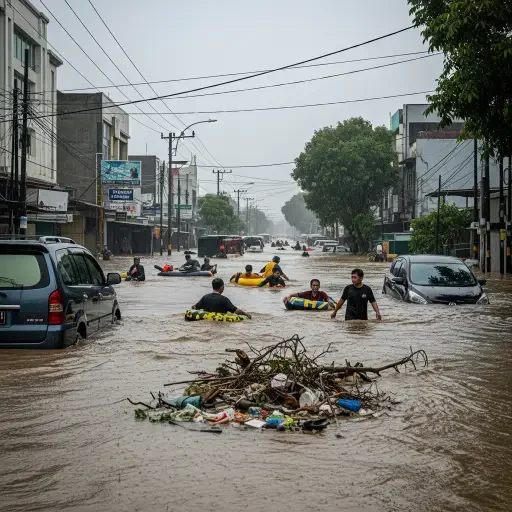
The challenges are formidable: Jakarta faces earthquakes, flooding, overcrowding, and pollution. Traffic congestion is legendary. In response, Indonesia announced plans in August 2019 to move the capital 1,200 miles away to Nusantara in Borneo, though the project has faced delays and funding difficulties. The government is essentially admitting that Jakarta has grown too big, too fast, and in the wrong place.
The Numbers That Tell Stories
Here’s a conversation-starter for your next dinner party: Dhaka, Bangladesh, currently ranks second with 40 million people and is projected to become the world’s largest city by mid-century. Meanwhile, Tokyo’s population is expected to decline by 2.7 million over the same period, reflecting Japan’s demographic crisis.
Cairo, Egypt, is the only non-Asian city in the top ten most populous urban areas. In the Americas, São Paulo leads with 18.9 million people. There are two megacities in the U.S.—Los Angeles and New York City.
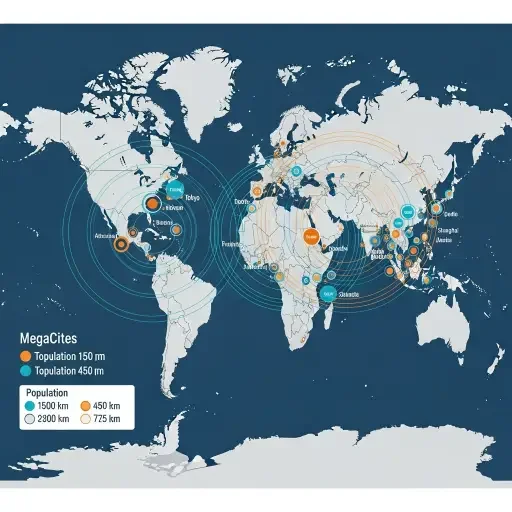
Small and medium-sized cities are still home to more people than megacities overall, and they’re growing more quickly. By 2050, projections suggest that 440 cities with a collective population of 600 million will account for half the world’s gross domestic product.
The Future of the Urban Planet
By 2007, the global population split evenly between urban and rural dwellers for the first time—a tipping point in human history. These aren’t just numbers—they’re the stage where humanity’s next act will unfold. Megacities drive innovation, culture, and economic growth while simultaneously wrestling with inequality, environmental degradation, and infrastructure gaps that would daunt any civilization. They are laboratories of the possible, for better and worse.
Jakarta’s rise to the top reminds us that the urban world remains in flux, reshaping itself with breathtaking speed. São Paulo went from coffee town to industrial powerhouse in half a century. Tokyo rebuilt from ashes to become the world’s largest city in just 25 years. Los Angeles sprawled from desert outpost to entertainment capital in a single lifetime. New York evolved over centuries but continues reinventing itself decade by decade.
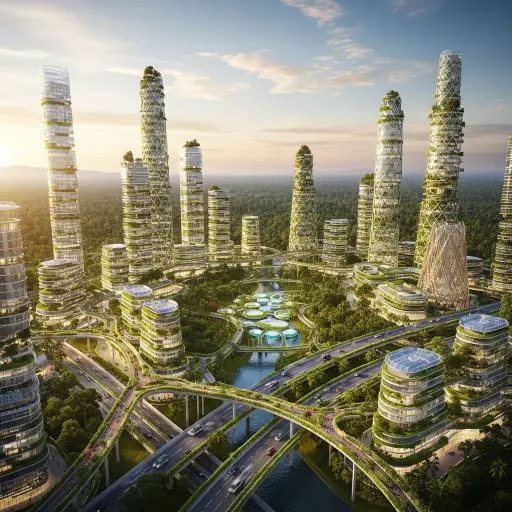
The cities that dominated the 20th century aren’t guaranteed supremacy in the 21st. In our hyperconnected, rapidly urbanizing world, yesterday’s fishing village might be tomorrow’s megalopolis—and the capital of yesterday might become tomorrow’s museum piece.
The only certainty? The age of megacities has only just begun. And if Jakarta’s seven-year leap from 33rd to first place teaches us anything, it’s that urban transformation happens faster than we can imagine—for better and for worse.
Tags
Related Articles
Sources
Urban demographic data from UN World Urbanization Prospects, city planning archives, historical census records, and contemporary metropolitan growth studies; contextualized through architectural and urban development research.