The markets close at 1 p.m. on Christmas Eve, and by 3 p.m., Teterboro Airport in New Jersey experiences its annual surge—a procession of Gulfstreams and Bombardiers lifting off in fifteen-minute intervals. The passengers are portfolio managers, M&A partners, and hedge fund principals who have spent the year engineering returns in percentage points. Now they seek something less quantifiable: environments where their presence requires no explanation and their net worth is simply assumed.
These destinations are not chosen for novelty. They are chosen for infrastructure—the kind that ensures a satellite phone works at 10,000 feet, that a private chef sources white Alba truffles on 48 hours’ notice, that a concierge can arrange a last-minute seaplane charter without requiring a credit card on file. Luxury, at this altitude, is not about excess. It is about the seamless elimination of friction.
Aspen: Altitude as Social Elevation
Aspen has been the de facto winter capital of American finance for half a century, but its appeal is not nostalgia. It is geometry. The town sits in a narrow valley with limited access, which naturally constrains visitor volume. Real estate is finite, absurdly expensive, and largely held by the same families who owned it in 1985. This creates a scarcity-driven social structure where being in Aspen over Christmas signals not just wealth but temporal alignment with a specific cohort.
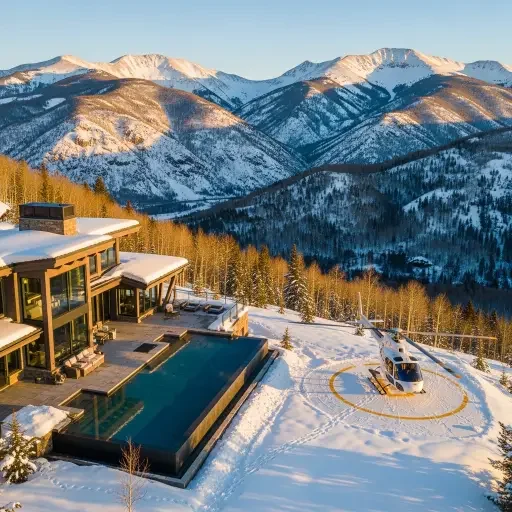
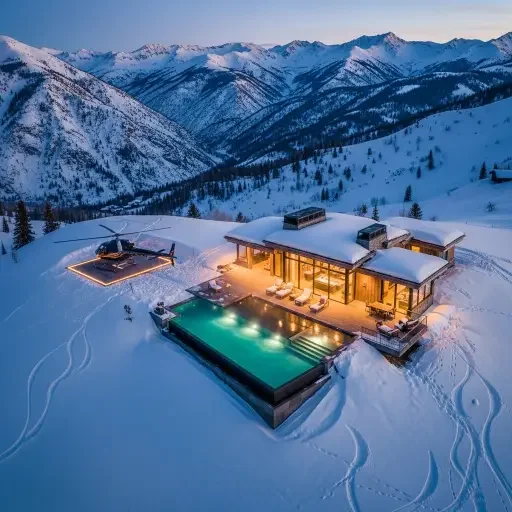
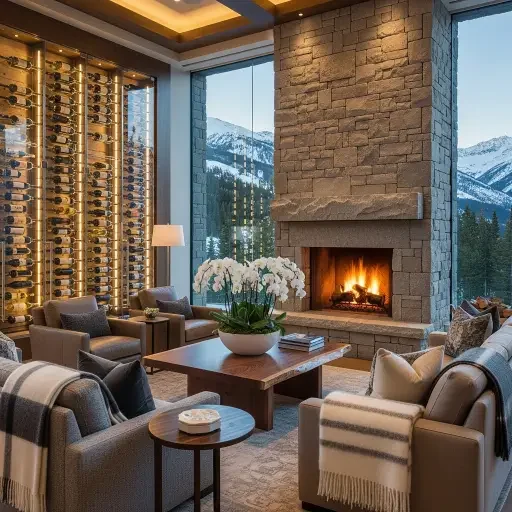
The chalets here are architectural marvels disguised as rustic lodges—reclaimed timber beams imported from 18th-century French barns, radiant-heated Italian marble floors, wine cellars dug directly into bedrock. Floor-to-ceiling windows frame Aspen Mountain like a living canvas, snow accumulating on ledges in geometric drifts. Heated driveways melt fresh snowfall instantly, ensuring that the only evidence of winter is aesthetic.
The social calendar is meticulously choreographed. Christmas Day lunch at Cloud Nine Alpine Bistro requires a ski-in approach and a reservation made in August. New Year’s Eve dinner at Matsuhisa is attended by the same forty people annually—a rotating cast of family offices and private equity principals who treat the evening as a board meeting with better sake. The Little Nell’s bar becomes an unofficial trading floor where off-the-record conversations about Q1 positioning happen over twelve-year Macallan.
Skiing itself is secondary. What matters is access to Buttermilk Mountain’s private terrain and the ability to call a helicopter for fresh tracks in the backcountry when conditions align. The point is not adrenaline—it is control over variables that ordinary visitors cannot manipulate.
St. Barts: Caribbean Sovereignty Without the Noise
St. Barthélemy occupies a unique regulatory and social position. It is technically French, which ensures European banking privacy norms, but Caribbean enough to offer year-round warmth and dollar-denominated transactions. The island has no commercial airport capable of handling jets larger than a regional turboprop, which means most visitors arrive via private aviation to neighboring islands and transfer by helicopter or chartered yacht.
The villas here are not listed on rental platforms. They are accessed through family offices, private membership networks, or personal referrals. Each estate sits on multiple acres with direct beach access, infinity pools that visually merge with the Caribbean, and staff quarters discreetly located in separate structures. The architecture is modernist—white stucco, teak accents, retractable walls that dissolve the boundary between interior and exterior.

Gustavia’s harbor during Christmas week resembles a floating wealth index—superyachts stacked three deep, their helipads and tenders visible from shore. Eden Rock’s restaurant becomes a nightly showcase of quiet power dressing: linen blazers, understated Audemars Piguet watches, women in Loro Piana resort wear that costs more than most people’s monthly rent. Conversations are conducted in low tones, often in multiple languages, occasionally interrupted by encrypted phone calls taken on the terrace.
The appeal is dual: absolute privacy combined with the ability to encounter peers without prearrangement. You can be alone on a private beach in the morning and at a dinner party with a former Treasury Secretary by evening. The island offers both isolation and optionality, a combination rare in global luxury markets.
Jackson Hole: Western Mythology Meets Capital Deployment
Jackson Hole operates on a different logic than Aspen—less social theater, more genuine remoteness. The town is surrounded by millions of acres of protected wilderness, which means development is structurally constrained. The wealthy here are either legacy landowners or those willing to pay eight figures for ranches that come with private trout streams and elk migration corridors.
The aesthetic is deliberately rugged: reclaimed barn wood, stone fireplaces large enough to stand inside, fur throws from Hermès draped over furniture custom-built by local craftsmen. The luxury is in the details—the Sub-Zero appliance wall hidden behind cabinet fronts, the heated floors in the sixteen-car garage, the private ski lift that accesses backcountry terrain without ever entering the public resort.
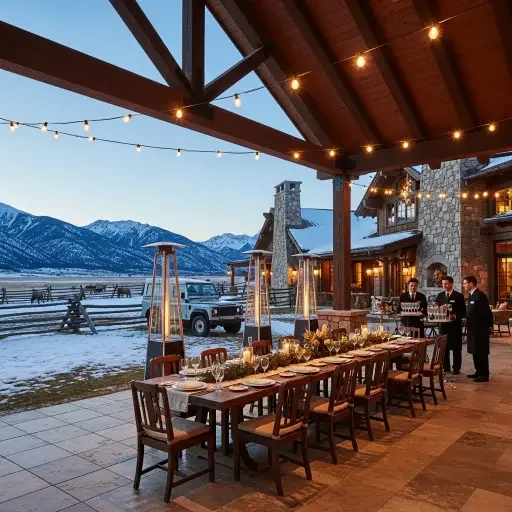
Christmas here is performatively understated. Families ski at Jackson Hole Mountain Resort’s Rendezvous Bowl—expert terrain that filters out tourists—and have lunch at Corbet’s Cabin, accessible only by skiing or snowcat. Dinners are hosted at private ranches, often featuring game hunted on the property: elk tenderloin, wild pheasant, rainbow trout pulled from the Snake River that morning.
The culture values competence over ostentation. Wearing a $3,000 Arc’teryx jacket is acceptable; talking about its price is not. The social currency is land, legacy, and the ability to ride a horse or field-dress an animal. Financiers who vacation here are often those who made their money and now want to be perceived as something other than financiers.
Private Islands, Bahamas: Sovereignty as Amenity
For those who find St. Barts too accessible, the Bahamas offers an alternative: full-island rentals where the only way on or off is by seaplane or private boat. These are not resorts with other guests. They are estates where the entire staff—chef, captain, housekeepers, security—is dedicated to one family or group. The islands themselves are often unnamed on public maps, their exact coordinates known only to aviation navigators and marine charterers.
The architecture here leans toward contemporary minimalism: glass pavilions, living roofs planted with native vegetation, solar arrays hidden behind dunes. The environmental footprint is carefully managed, not from regulatory pressure but because these owners control their own ecosystems and prefer them pristine. Beaches are raked daily. Reefs are monitored by resident marine biologists. Water is desalinated on-site using Tesla Powerwall arrays.
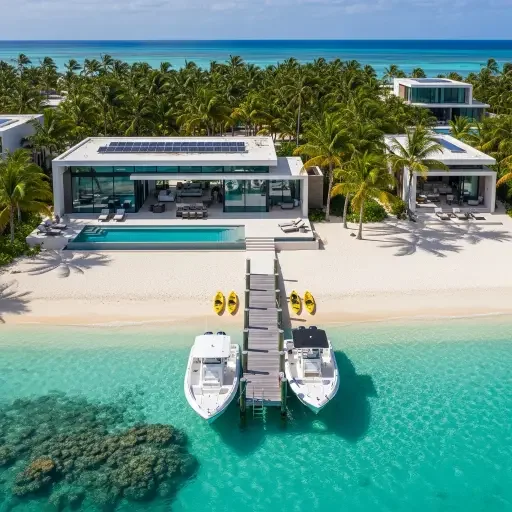
Days are structured around water—diving on private reefs, spearfishing for dinner, kiteboarding in channels where you will not encounter another human. Evenings are spent on terraces with unobstructed ocean views, eating food prepared by chefs recruited from Michelin-starred restaurants who have been flown in for the week. The wine list is whatever was loaded onto the seaplane. The dress code is barefoot linen.
The appeal is ontological: temporary ownership of geography. For ten days, you are not a guest—you are a sovereign. The island operates on your schedule. If you want to eat dinner at 3 a.m., the kitchen accommodates. If you want to explore a neighboring cay by boat, the captain is ready. The experience is less about luxury objects and more about luxury agency—the ability to impose your will on an environment without negotiation.
Napa Valley: Terroir Meets Term Sheets
Napa during the holidays is counterintuitive—it is harvest season in reverse, the vines dormant, the tasting rooms quieter. But for finance principals who own vineyards as tax-optimized side ventures, it is the ideal time to occupy the estates they visit twice annually. These properties are working vineyards attached to residences that would be extraordinary even without the agricultural component: modernist compounds with temperature-controlled wine cellars holding 10,000 bottles, chef’s kitchens designed for multi-course entertaining, guest houses larger than most primary residences.
The aesthetic is California agrarian refined to the point of abstraction: exposed steel beams, polished concrete floors, floor-to-ceiling sliding glass walls that open to vineyard views. The furnishings are curated—mid-century Knoll pieces, custom dining tables milled from single slabs of walnut, art collections featuring Diebenkorn and Rothko acquired at auction.
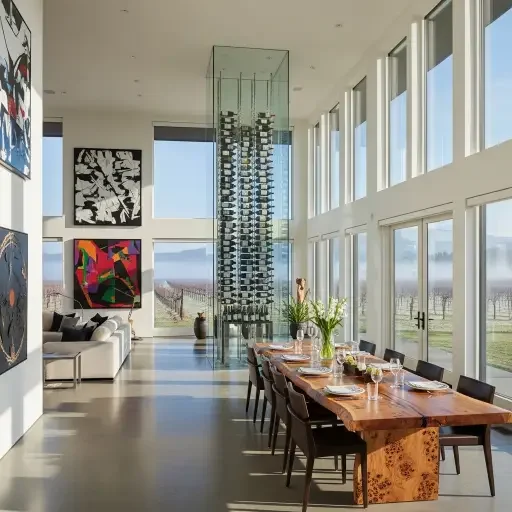
Christmas week involves private tastings in barrel rooms not open to the public, dinners at The French Laundry arranged through ownership connections, and casual gatherings where sommeliers from neighboring estates bring rare verticals for blind tastings. The conversations toggle between points of tannin structure and basis points on credit spreads—the same analytical frameworks applied to different substrates.
The appeal here is duality: proximity to San Francisco’s financial infrastructure while occupying a landscape associated with leisure. You can take a call with Hong Kong markets at 6 a.m., then spend the afternoon tasting through a library collection of Screaming Eagle. The valley offers both productivity and pleasure, neither fully committed to nor fully abandoned.
The Algorithm of Elite Escape
These destinations share structural commonalities. They are geographically constrained, either by terrain or regulation, which limits supply and ensures that arrival itself is a filtering mechanism. They offer world-class infrastructure disguised as effortless simplicity—the kind that requires enormous capital to create and maintain but is designed to be invisible. And they provide environments where wealth is ambient rather than performative, where everyone present operates from similar economic positions and therefore need not signal status.
What traders and financiers seek during year-end holidays is not escape from work but escape from civilians—from contexts where their decisions require explanation, where their presence invites questions, where their resources are visible and therefore subject to judgment. These five destinations offer something rarer than luxury: the freedom to exist without being perceived as exceptional. In Aspen or St. Barts, everyone is exceptional, which means no one is. The calculus that governs the rest of the year—who has more, who earned it faster—dissolves temporarily into a more fundamental equation: you are here, which means you belong.
The New Year’s toast, wherever it is raised, carries the same implicit acknowledgment: the markets will reopen, the volatility will resume, and the next twelve months will demand the same relentless optimization. But for this brief interval, in these carefully curated geographies, the algorithm pauses. The only position that matters is the one overlooking the mountain, the ocean, or the vineyard—and the assurance that when you return, the infrastructure you’ve built will still be waiting.
Tags
Related Articles
Sources
Based on luxury travel industry analysis, private club memberships, real estate transaction data, and interviews with high-net-worth travel advisors.