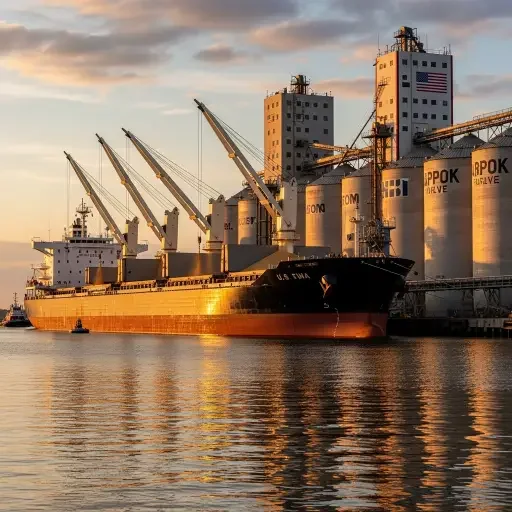
Every large commodity order is two stories in one: the physical tonnage crossing a harbor, and the narrative that order authorizes. China’s roughly 8 million‑ton purchase of U.S. soybeans this month is both. Physically, ships will load, silos will empty and crushers will run. Narratively, the purchase reads as partial fulfillment of earlier purchase pledges — enough to signal cooperation but short of a durable structural pivot in trade relations.
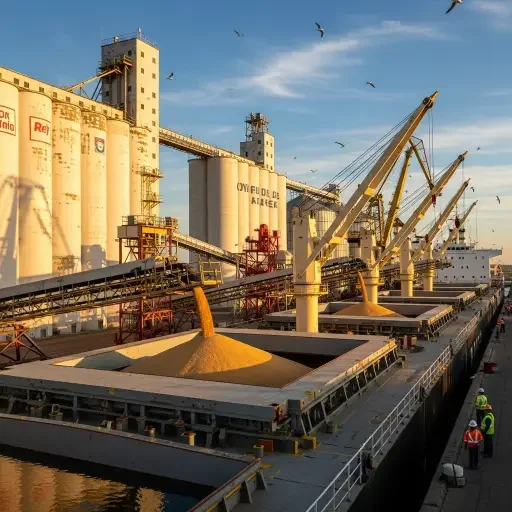
The size matters. Eight million metric tons is large by any bilateral standard — roughly the equivalent of a season’s flow from a mid-sized export campaign — but small compared to China’s annual import need, which exceeds 100 million tons. In other words: impactful in the short run, incremental in the long run.
Markets reacted predictably. Chicago Board of Trade soybean futures slipped after the headlines, as the certainty of demand removed a tail-risk bid. Cash markets in the U.S. Gulf tightened: exporters reallocated nearby cargoes, lifting basis levels for January–March shipments. Vegetable-oil markets — where soy oil competes with palm, canola and sunflower — felt the ripple: soy oil futures firmed as crush margins compressed. Hedge funds and merchandising arms that had positioned for a demand shock scrambled to rebalance. The buy reduced near-term price volatility, but it did not rewrite structural supply assumptions. Traders treat the order as a liquidity event, not a regime change.
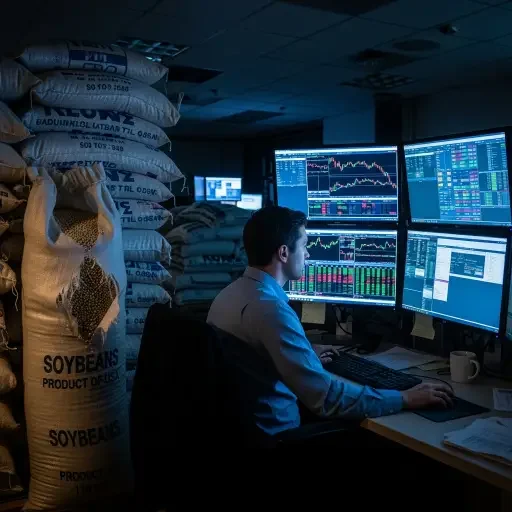
Why partial? Ask incentives. Beijing’s policy calculus balances domestic agricultural stability, political optics, and diplomatic leverage. Buying U.S. soybeans placates consumers and livestock producers at home (protein and feed), signals to Washington that trade channels remain usable, and preserves bargaining chips: future purchases are still on the table. For Washington and exporters, the purchase gives short-term revenue certainty without requiring concessions that would alter broader policy competition.
China’s state trading companies and large importers can time purchases to extract logistical advantages — cheaper freight slots, preferred loading windows, or favorable inspection schedules. The 8‑million‑ton figure allows staggered shipments, helping smooth congestion at key U.S. Gulf export nodes and reducing forced sales into weaker price windows.
Yet the logistics layer is brittle. U.S. export infrastructure — river locks, barge availability, rail car cycles and port berth scheduling — operates near capacity during peak season. An incremental multi-million-ton order magnifies pressure points. Freight rates ticked up on some routes; demurrage risk rose for time-sensitive charters. For processors, the question becomes less about aggregate supply and more about timing: when does this tonnage arrive at the crush plants? The order buys China breathing space and the market a moment of equilibrium — but it exposes chokepoints that could revive volatility if arrivals slip.
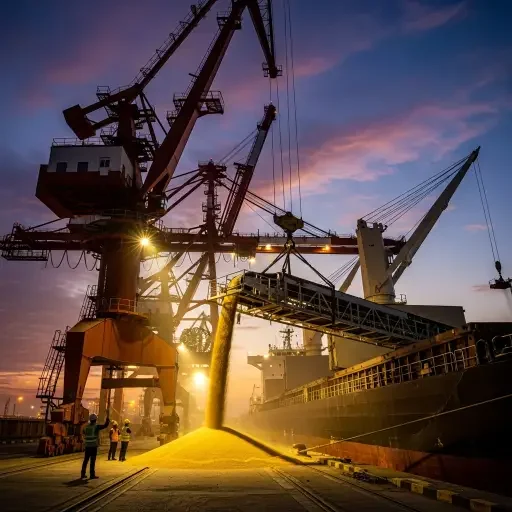
Capital flows followed information. Grain-exporting firms saw share rebounds; shipping names and bulk‑freight owners retraced losses. Commodity derivatives desks trimmed bullish convexity—selling calls and reweighting calendar spreads. Pension funds with agro‑exposure rebalanced allocations: the purchase reduced a downside scenario for agricultural commodity portfolios and nudged expected returns modestly lower.
At the sovereign-policy level, the political subtext is audible. Recent bilateral frictions made any announcement of large purchases politically sensitive. By framing the acquisition as a “partial” fulfillment, both sides preserve face. Beijing keeps market access visible; Washington keeps negotiation space intact. The phrasing matters because capital allocators and corporate planners decode words as contractual signals. A “partial fulfillment” is a soft contract: it reduces uncertainty without hardening obligations that would limit strategic flexibility later.
Meat packers in China already hedged protein costs on the futures curve; softer soybean prices give them near-term margin relief. For U.S. farmers and merchandisers, that relief is delayed by the physical cadence of shipments. Who benefits first: sellers who hold nearby crop already on hand; who pays later: carriers and crushers facing congestion.
This transaction is an archetype of modern trade risk allocation — split across time, actors and instruments. It’s a credit to contemporary markets that such a large flow can be telescoped into futures adjustments, shipping contracts and policy narratives in hours rather than weeks.
Three forward rules for investors and corporate planners:
- Monitor arrival schedules, not just headline tonnage. Commodity risk is timing risk; delays reintroduce price stress even when headline demand is satisfied.
- Treat “partial” as intentional optionality. Beijing preserves leverage; future purchases remain a tool. Position hedges accordingly.
- Watch logistics-cost signals (freight, demurrage, rail cars) as leading indicators. They transmit supply friction faster than aggregate import statistics.
China’s 8 million‑ton soybean purchase is simultaneously reassuring and incomplete. It calms immediate price anxiety while exposing the ecosystem that moves grain — the ports, barges and balance sheets that always decide whether a headline becomes a harvestable gain or a short squeeze. For traders, corporates and policymakers, the trade is a reminder: in commodity markets the story is never only about volume. It is about timing, narrative and who holds the leverage to turn a pledge into cargo — or a promise into pure political theater.
Tags
Related Articles
Sources
Commodity market data from USDA, CME Group, and agricultural trade reports; China trade announcements and purchase disclosures; futures market analysis from Bloomberg and Reuters; agricultural logistics and supply chain reports.