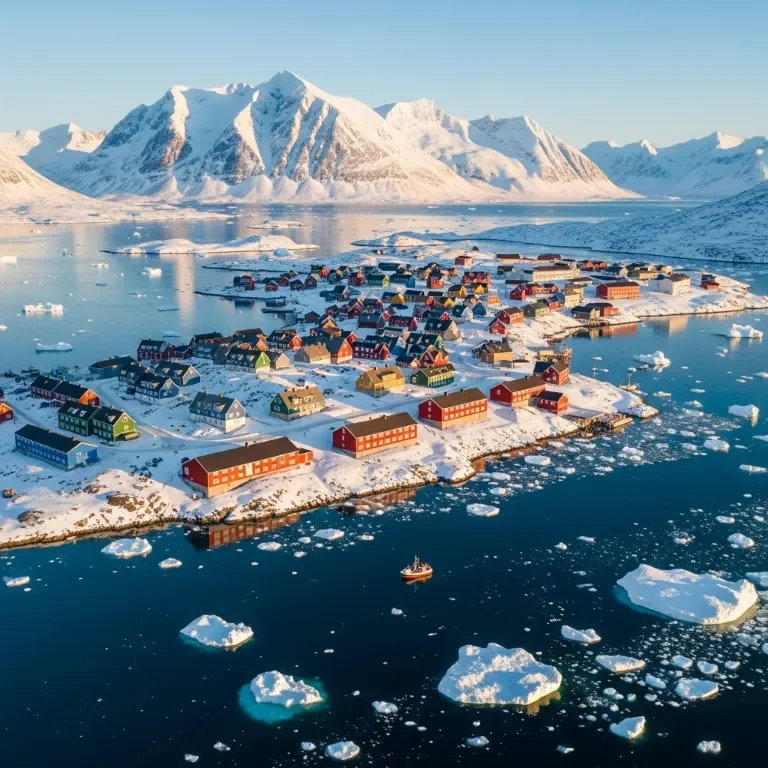
On December 22, 2025, Denmark summoned the U.S. ambassador to Copenhagen in formal diplomatic protest—a ritual reserved for extraordinary breaches. The provocation: President Trump’s appointment of Louisiana Governor Jeff Landry as special envoy to Greenland, with an explicit mandate to “make Greenland a part of the U.S.” For the Danish foreign ministry, this wasn’t just another Trump-era rhetorical flourish. It represented the latest escalation in a year-long campaign that has systematically eroded the quiet mechanisms of Arctic cooperation that have served American interests since 1951.
The irony cuts deep. The United States already possesses extensive military basing and access rights in Greenland through the 1951 Defense of Greenland Agreement, maintaining strategic installations including the Pituffik Space Base that hosts ballistic missile early-warning systems. American military personnel move freely between designated defense areas. The operational infrastructure Trump claims to need already exists—and has functioned without friction for three-quarters of a century. What the Greenland campaign actually achieves is something far more destructive: the conversion of a successful security arrangement into a diplomatic liability that accelerates precisely the geopolitical fragmentation Washington should fear most.
The Fiction of Strategic Necessity
Twenty-five of the thirty-four critical raw materials identified by the European Commission are found in Greenland, including rare earth elements essential for battery production, wind turbines, and defense systems. The Arctic holds an estimated 30 percent of the world’s undiscovered natural gas and 13 percent of undiscovered oil. These figures form the economic substrate of Trump’s national security rationale. Yet this framing collapses under minimal scrutiny. No American mining companies are currently banging on Denmark’s door for access. Private industry shows negligible interest in Greenlandic resource extraction, constrained by the territory’s remoteness, harsh climate, inadequate infrastructure, and Greenland’s own 2021 political decision to suspend new oil and gas exploration licenses due to environmental concerns.
The strategic location argument fares no better. Greenland offers the shortest route from North America to Europe and provides critical geography for ballistic missile early-warning systems. This matters enormously—which is precisely why the existing defense agreements address it comprehensively. The United States maintains permanent installations, hosts surveillance technology, and operates with freedom of movement in designated zones. If current arrangements prove inadequate, diplomatic channels exist to expand them. Trump spoke at a January 7 press conference as if existing agreements and the U.S. base in Greenland do not exist, a rhetorical erasure that reveals the campaign’s actual logic: territorial acquisition as political spectacle rather than security enhancement.
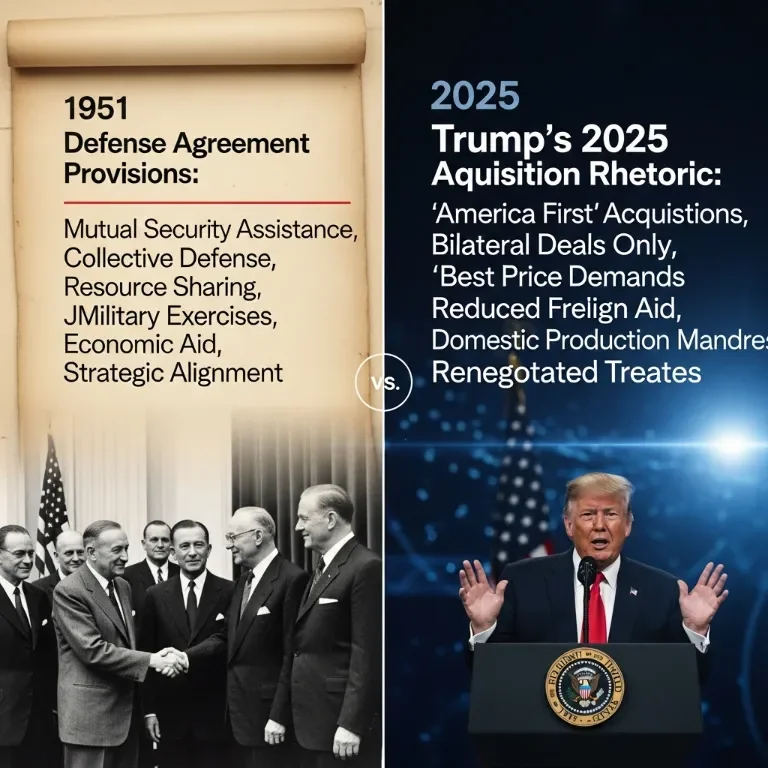
Consider the counterfactual. If Greenland became American territory tomorrow, the United States would inherit full administrative costs for an island larger than Alaska with minimal revenue-generating capacity. Greenland depends on a $500 million annual subsidy from Copenhagen, alongside comprehensive healthcare coverage for all Greenlanders. Denmark provides these benefits as part of the Kingdom’s constitutional framework. American acquisition would require matching or exceeding this support structure while integrating 56,000 predominantly Inuit residents into federal governance—a colonial-era burden that offers no security advantage over the status quo arrangement that costs Washington nothing.
The Real Accelerant: Independence Sentiment
The most consequential damage operates through second-order effects that undermine American strategic positioning. A 2025 poll revealed that 84 percent of Greenlanders want independence from Denmark, up from 67.7 percent in 2019. This surge correlates directly with Trump’s renewed acquisition rhetoric. Greenlandic Prime Minister Múte Egede has repeatedly stated the position with clarity: “We do not want to be Danish, we do not want to be American. We want to be Greenlandic.” What reads as simple self-determination becomes geopolitically complex when independence intersects with Greenland’s inability to achieve economic self-sufficiency.
An independent Greenland faces immediate vulnerability to external influence. A 2021 RAND Corporation study expressed concern that Greenland “could be seduced into Russia’s or China’s orbit” were it to attain independence from Denmark. This isn’t speculative anxiety. China has pursued Arctic engagement systematically, incorporating Russia’s Northern Sea Route into its Polar Silk Road initiative, investing in Arctic ports and mining infrastructure, and positioning itself as a “near-Arctic state” despite lacking any geographic claim to that designation. Using the Arctic route can reduce travel time for Chinese ships to Europe by up to 40 percent, creating powerful economic incentives for Beijing to cultivate relationships with Arctic territories contemplating independence.
The Trump campaign accelerates precisely this scenario. By publicly pressuring Denmark and Greenland toward a territorial transfer that neither government desires, American diplomacy converts a satisfied ally into a skeptical partner and pushes Greenlandic public opinion toward independence as the only path to autonomous decision-making. An independent Greenland would lose its association with Denmark, a wealthy EU member, along with the annual subsidies and economic support—creating a funding gap that China or Russia could exploit through resource extraction deals, infrastructure investment, or strategic partnerships that exclude NATO entirely.
NATO’s Northern Vulnerability
The alliance architecture dimension reveals the campaign’s most dangerous implications. An invasion of Greenland would imply a war between NATO members and would undermine any united front of support to Ukraine. While actual military action remains implausible, the threat of economic coercion—Trump has proposed “very high” tariffs on Denmark—functions as diplomatic violence that fractures alliance cohesion at a moment when Arctic security requires unprecedented coordination.
Russia has continued to invest heavily in building out its Arctic presence and revamping existing bases despite much of its resources being used for the war in Ukraine. Moscow sealed off large swathes of the Barents Sea for its Zapad-2025 exercises, practiced cruise missile launches over the Arctic, and maintains a Northern Fleet equipped with advanced Yasen-M class nuclear submarines. The strategic logic is transparent: Russia views the Arctic as central to its great power identity and has embedded the region’s militarization into foundational policy documents including the 2022 Maritime Doctrine and the Foreign Policy Concept extending to 2035.
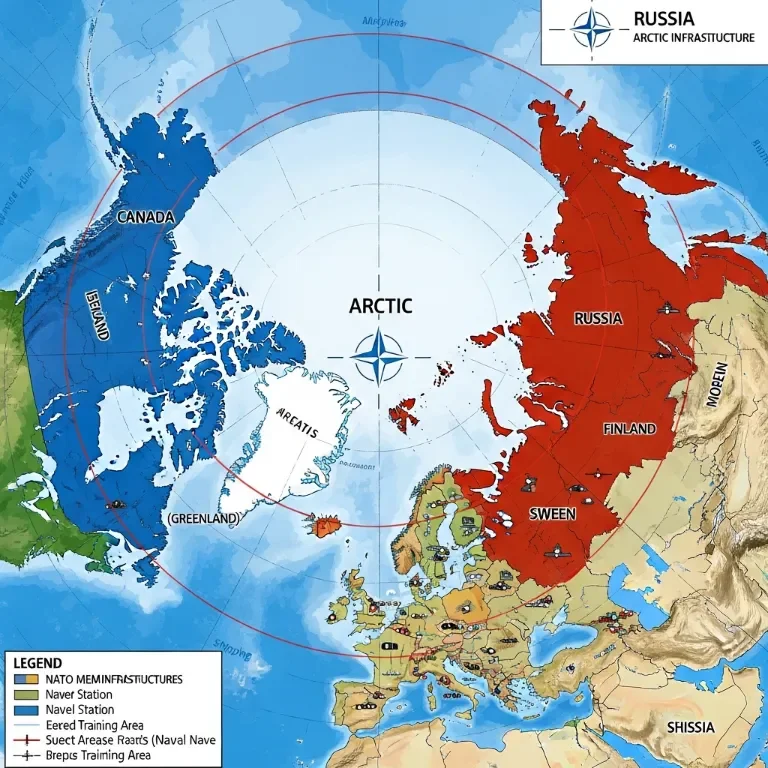
NATO’s counter-position depends on unity across its seven Arctic member states following Sweden and Finland’s accession. The alliance now encircles Russia’s Arctic territories—what Moscow describes as “hostile encirclement.” This geographic advantage becomes operationally meaningful only through coordinated surveillance, joint exercises, and integrated command structures. Trump’s Greenland campaign undermines this coordination by forcing Denmark to choose between its territorial integrity and its alliance obligations, creating precisely the kind of intra-NATO friction that Russian strategic planners exploit.
It must have been a great day in the Russian foreign ministry when Trump sounded off on the Greenland issue, setting NATO partners against one another and providing fuel to justify the violation of state borders. The parallel between Trump’s territorial rhetoric and Russian justifications for annexation creates an ideological vulnerability that extends beyond the Arctic. If changing borders through economic pressure becomes acceptable American doctrine, Washington loses moral authority to contest Russian territorial aggression—exactly the kind of normative erosion that weakens alliance structures more effectively than military confrontation.
The Compact Illusion and Strategic Alternatives
Some policy analysts have proposed a middle path: encouraging Greenlandic independence followed by a Compact of Free Association similar to arrangements the United States maintains with Pacific island nations like Palau and the Marshall Islands. These compacts grant Washington defense responsibilities and strategic access while preserving local sovereignty. The framework appears elegant—until examined against Greenlandic economic realities and regional dynamics.
Support for independence drops when coupled with the likelihood of a decline in Greenlanders’ standard of living, which is a likely result of severing ties with Denmark. A compact arrangement would require the United States to provide economic support approximating Denmark’s current subsidies while offering healthcare and social services that match Nordic standards. This fiscal burden—sustained indefinitely—offers no strategic advantage over simply updating the 1951 defense agreement to address contemporary security needs without triggering independence or acquisition debates.
The alternative pathway exists and requires no territorial dramatics. The United States and Denmark could update the 1951 agreement or conclude a new one that gives Washington the military access it needs and provides a basis for shared costs. Such an agreement could incorporate Greenlandic government participation, address infrastructure gaps for submarine bases or expanded surveillance systems, and include provisions ensuring continuity regardless of Greenland’s future political status. This approach preserves alliance unity, avoids new fiscal burdens, and maintains the security access that forms Trump’s stated objective.
Denmark has signaled explicit willingness to engage on these terms. The Danish government has expressed strong interest in working with the United States to “ensure legitimate American interests” in the Arctic. Copenhagen recently announced a $1.2 billion defense agreement investing in long-range drones, inspection ships, and enhanced Arctic patrol capabilities specifically designed to address NATO needs. The Danish foreign ministry has repeatedly stated that if American companies want resource access or infrastructure investment opportunities, Denmark would facilitate them. The material interests align. Only the territorial acquisition demand creates friction.
The Bargaining Hypothesis and Its Failures
One interpretation frames Trump’s maximalist rhetoric as negotiating theater—deliberately outrageous demands designed to extract concessions through implied threat. This reading suggests the real objective involves expanded base access, cost-sharing for Arctic infrastructure, or mineral extraction agreements, with territorial acquisition serving as the opening bid in a pressure campaign. The evidence undermines this generous interpretation.
Danish officials said the appointment of Jeff Landry as Greenland envoy contradicted other messages they’ve received from U.S. officials over the last several months and as recently as two weeks ago. American diplomatic personnel had been providing reassurances that bilateral cooperation would proceed normally, even as Trump publicly escalated acquisition rhetoric. This disconnect between professional diplomacy and presidential pronouncements suggests policy incoherence rather than sophisticated negotiation strategy. Effective pressure campaigns maintain consistent messaging across institutional channels. The Greenland approach features systematic contradictions that confuse allies without extracting concessions.
The appointment timing compounds this dysfunction. Landry’s designation came without prior notice to Denmark or apparent coordination with the State Department. It is not even clear whether the State Department knew about the appointment in advance of Trump’s announcement. This bureaucratic chaos signals that Greenland policy operates through presidential impulse rather than interagency coordination—exactly the kind of decision-making pathology that produces strategic liabilities rather than negotiated outcomes.
Moreover, if the objective involves extracting specific concessions, the campaign’s execution undermines its own goals. Denmark has responded to pressure by hardening its position, not softening it. King Frederik X appeared to rebuke Trump’s offers when he stated “We are all united and each of us committed for the kingdom of Denmark, from the Danish minority in South Schleswig all the way to Greenland”. Public pressure on territorial integrity issues forces democratic governments to demonstrate resolve rather than flexibility, converting negotiable security arrangements into politically untouchable matters of national sovereignty.
The China Vector and Strategic Misdirection
Arctic geopolitics involves a three-player dynamic that American policy consistently misreads. China’s Arctic engagement operates primarily through economic channels—infrastructure investment, resource extraction partnerships, and shipping route development. Moscow initially opposed China’s campaign to become an observer state in the Arctic Council and was reluctant to permit Chinese ships to navigate the Northern Sea Route independently. Russian-Chinese Arctic cooperation features persistent tension, with Moscow concerned about Beijing’s long-term intentions in what Russia considers its strategic backyard.
A 2025 New York Times report obtained an internal FSB planning document detailing Moscow’s concerns about Chinese intelligence agents carrying out espionage in the Arctic using mining firms and university research centers as cover. This mutual wariness creates opportunities for Western strategy. By strategically engaging China on limited Arctic cooperation—scientific research, environmental monitoring, commercial shipping protocols—Washington and Brussels could exploit Moscow-Beijing tensions and constrain Russian freedom of action in the region.
The Greenland campaign forecloses this option. By positioning the United States as the aggressive territorial revisionist, Trump’s approach pushes Russia and China into defensive alignment despite their competing interests. Denmark proved willing to seek European solidarity over the United States’ claims on Greenland, with French President Emmanuel Macron invited to deliver a speech in Nuuk affirming the support of Europe. When Chinese state media quoted Macron’s pledge for European unity uncritically—contrasting with Russia’s typical skepticism toward EU influence—the geopolitical realignment becomes visible. American territorial maximalism creates exactly the kind of external threat that overcomes Sino-Russian suspicions and solidifies their partnership.
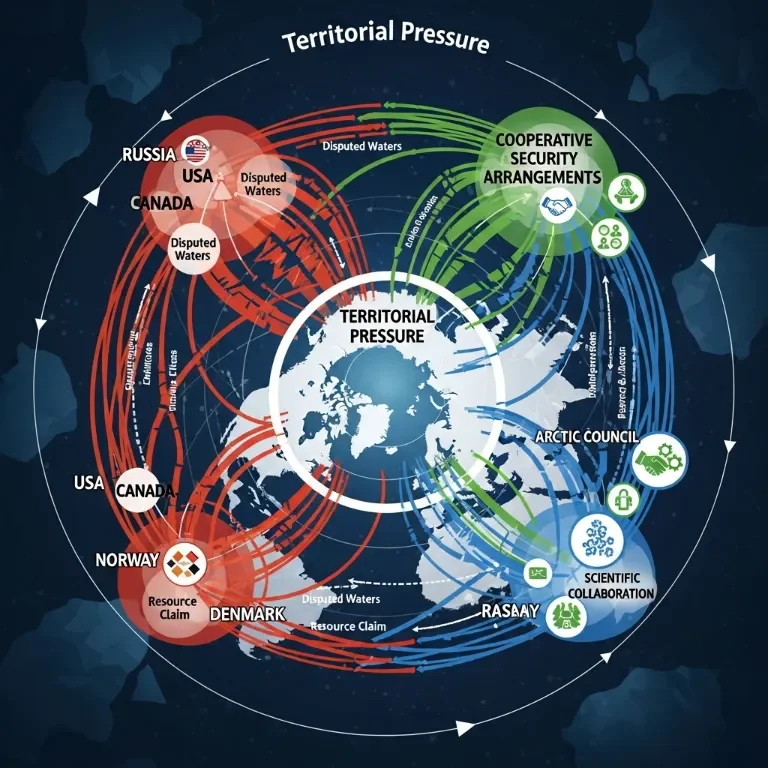
A coherent China strategy in the Arctic would accept Beijing’s observer status in regional governance while constraining its infrastructure footprint through competitive investment and alliance coordination. Western capital can outbid Chinese financing for Greenlandic mining projects if political will exists. NATO can integrate surveillance systems and patrol coordination that limits both Chinese and Russian naval freedom of action. These approaches require alliance unity and sustained diplomatic engagement—precisely what the acquisition campaign demolishes.
The Independence Wildcard and Succession Planning
Greenland’s trajectory toward independence appears overdetermined by demographic, cultural, and economic pressures that predate Trump’s intervention. Young people in Greenland share more of an affinity with Norway than metropolitan Copenhagen and Danish mores, and a younger generation is determined that Greenland’s relationship with Denmark will be decolonized. It was only recently that Greenlanders could complete their education on the island rather than being sent to Danish high schools. This cultural autonomy drive intersects with resource nationalism and indigenous rights movements to create powerful momentum toward separation.
American policy should prepare for this contingency rather than accelerating it through pressure. American ambassador to Denmark James P. Cain wrote in 2007 that Greenlandic independence was inevitable and the United States had the opportunity to influence the structure of a new nation by directly communicating with Greenland as the island gains autonomy. This prescient analysis suggested ongoing educational, cultural, and scientific programs that strengthen relationships while keeping alternative powers out—exactly the patient engagement strategy that builds long-term influence.
Trump’s approach does the opposite. By publicly advocating acquisition, American diplomacy converts itself into the colonial threat that Greenlandic independence movements explicitly reject. Greenland’s Prime Minister called the Vance visit and other U.S. official visits part of “very aggressive American pressure against the Greenlandic community”. When the independence coalition perceives Washington as the primary threat to self-determination, post-independence security arrangements become politically radioactive. An independent Greenland might well reject American base access entirely rather than appearing to validate the acquisition campaign through cooperative agreements.
The optimal strategy involves inverse logic: explicitly support Greenlandic self-determination while offering partnership frameworks that become more attractive than Chinese or Russian alternatives. This requires accepting that Greenland will eventually separate from Denmark and positioning American engagement as facilitative rather than coercive. NATO should provide Greenland with a path to eventual membership to strengthen the Arctic military alliance and preserve collective security frameworks. Simultaneously, Western economic investment in Greenlandic mining infrastructure, tourism development, and sustainable resource extraction ties the territory’s economic future to transatlantic markets rather than Asian capital.
Cost Structures and the Subsidy Trap
The fiscal implications receive insufficient attention in acquisition advocacy. Denmark provides Greenland with annual subsidies alongside comprehensive healthcare coverage—benefits the United States would need to match or exceed to avoid immediate economic collapse and political backlash. Greenland’s economy depends fundamentally on external support. Without Danish transfers, the territory lacks revenue streams sufficient to maintain current living standards or government operations.
American acquisition triggers immediate fiscal obligations. Constitutional integration would extend federal social programs, infrastructure maintenance responsibilities, and administrative costs to a territory with minimal tax base and challenging logistics. The Alaska precedent offers limited guidance—Alaska generates substantial oil revenue and possesses far more developed infrastructure than Greenland. A more accurate parallel involves Puerto Rico’s chronic fiscal dysfunction, where territorial status creates ambiguous federal obligations that produce neither statehood’s full benefits nor independence’s policy autonomy.
The rare earth minerals argument collapses against these realities. Economic feasibility of resource exploration has been hampered by remoteness, harsh weather, poor infrastructure, and a 2021 political decision to suspend new licenses for oil and gas exploration. Even as melting ice increases accessibility, the investment required for extraction infrastructure, processing facilities, and transportation systems far exceeds anticipated returns at current commodity prices. Private capital understands this arithmetic—which explains the absence of American corporate interest despite open Danish invitation for partnership.
The strategic calculus becomes clear: maintain existing defense access at essentially zero cost, or assume permanent fiscal obligations reaching billions annually for no additional security advantage. The status quo allows the United States to have its cake and eat it too—reaping security benefits while passing the bill to Denmark. This arrangement represents optimal efficiency from a national interest perspective. Only territorial acquisition as political theater justifies abandoning it.
Signal Degradation and Alliance Management
The diplomatic damage extends beyond immediate bilateral friction with Denmark. Alliance relationships depend on predictability—partner states must believe that security commitments remain stable across American political transitions and that diplomatic norms constrain behavior even when power asymmetries would permit unilateral action. Trump’s Greenland campaign systematically degrades these confidence foundations.
If Trump continued to ignore the wishes of Greenland and Denmark, it would signal the U.S. can no longer be trusted to be a reliable partner and hold international norms. European allies watching Washington pressure a NATO member for territorial concessions draw obvious conclusions about American reliability on other commitments. If alliance partnership provides insufficient protection against economic coercion or territorial demands, rational European strategy shifts toward hedging—developing autonomous defense capabilities, cultivating alternative security partnerships, and reducing dependencies on American guarantees.
This erosion operates subtly but cumulatively. Denmark’s summoning of the U.S. ambassador represents extraordinary diplomatic escalation. Summoning the U.S. charge d’affaires for formal protest is something Denmark only does in exceptional circumstances, and it signals just how seriously Copenhagen views the situation. When small allies adopt confrontational diplomatic postures against the United States—risking relationship deterioration despite profound power asymmetries—the signal indicates perceived existential threat. Denmark believes its territorial integrity faces genuine jeopardy from its primary security guarantor.
The Ukraine war context amplifies this dynamic. European capitals have invested enormous political capital in demonstrating unity against Russian territorial aggression. An invasion of Greenland would undermine any united front of support to Ukraine, as it would imply a war between NATO members. Even without actual military action, the rhetorical parallel between Russian annexation justifications and American acquisition demands creates normative confusion that benefits Moscow. If Washington accepts territorial revision through pressure as legitimate state behavior, the moral foundation for Ukrainian support weakens.
Conclusion: The Strategic Clarity That Wasn’t
Arctic security requires three interlocking capabilities: surveillance infrastructure that tracks naval movements and airspace penetration, alliance coordination that integrates Nordic and North American defense planning, and economic development that ties regional resources to Western markets rather than Chinese or Russian capital. The United States possesses the first through existing Greenland agreements, maintains the second through NATO’s expanded northern membership, and could develop the third through patient investment and diplomatic engagement.
Trump’s Greenland campaign undermines all three. It converts functional security arrangements into diplomatic liabilities, fractures NATO cohesion at the moment when Arctic cooperation becomes strategically essential, and accelerates Greenlandic independence sentiment that could open pathways for Chinese influence. The acquisition push achieves nothing that existing frameworks couldn’t provide while creating cascading risks that compound across alliance relationships, regional stability, and long-term strategic positioning.
The alternative requires abandoning territorial maximalism in favor of partnership models that align with Greenlandic aspirations and Danish interests. A new security agreement could provide military access, establish cost-sharing mechanisms, and include provisions ensuring continuity regardless of Greenland’s future political status. Combined with economic investment that reduces Greenland’s vulnerability to external influence and explicit support for self-determination processes, this approach builds the influence that coercion destroys.
What remains most striking about the Greenland episode isn’t the territorial ambition itself—great powers have always coveted strategic positions. It’s the method’s counterproductivity. The loudest security claims produce the weakest security outcomes. Alliance management succeeds through patient cultivation of shared interests, not through public pressure campaigns that force allies to demonstrate resolve against American demands. In an Arctic increasingly contested by revisionist powers, the United States needs Denmark and Greenland far more than Greenland needs American ownership. Recognition of this asymmetry would mark the beginning of strategic clarity. Its absence guarantees continued noise.
Tags
Related Articles
Sources
Analysis based on reporting from Reuters, Al Jazeera, Atlantic Council, RAND Corporation, Foreign Policy, CSIS, and Danish government statements