

Following the dramatic January 3 capture of Venezuelan President Nicolás Maduro, U.S. authorities confront an unprecedented challenge: locating and seizing what intelligence sources estimate could be $60-67 billion in Bitcoin, allegedly hidden across cold wallets controlled by a small circle of operatives designed to survive exactly this scenario.
In a pre-dawn operation on January 3, U.S. Delta Force operators extracted Venezuelan President Nicolás Maduro and his wife from their fortified Caracas compound, transporting them via helicopter to the USS Iwo Jima before flying them to New York to face narco-terrorism and drug-trafficking charges. The military strike, involving approximately 150 aircraft and dubbed “Operation Absolute Resolve,” represents the most significant U.S. intervention in Latin America since the 1989 Panama invasion.
But as Washington celebrates the capture, a more urgent question has emerged in intelligence circles: where is the money?

The Shadow Reserve
Intelligence reports indicate Venezuela may control between 600,000 and 660,000 Bitcoin—valued at $60-67 billion—making it potentially one of the largest cryptocurrency holders globally, rivaling institutional giants like MicroStrategy and BlackRock. If verified, this would represent approximately 3% of Bitcoin’s total circulating supply.
The accumulation allegedly began in 2018 through a combination of gold swaps, oil settlements in Tether (USDT), and domestic mining seizures. Venezuela exported 73.2 tons of gold in 2018 alone, worth roughly $2.7 billion at the time. If even a fraction was converted to Bitcoin when prices hovered between $3,000 and $10,000, and held through subsequent price appreciation, the returns would be staggering.
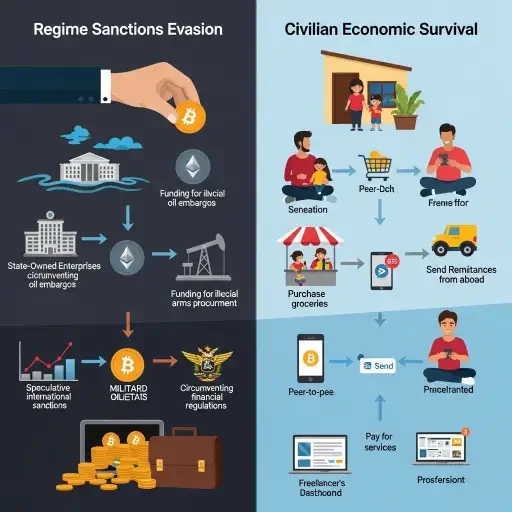
By December 2025, Venezuela was collecting approximately 80% of its oil revenue in USDT, according to investigative sources. The state oil company PDVSA increasingly required intermediaries to settle oil cargoes in Tether, routing payments through over-the-counter brokers and private digital wallets—a systematic effort to evade U.S. banking oversight.
The official Venezuelan position? The government publicly reports holding just 240 BTC, valued at approximately $21.45 million.
The Architect: Alex Saab
Central to this financial architecture is Alex Saab, a Colombian-born businessman who sources describe as holding the keys to Venezuela’s crypto fortune. Appointed by Maduro in January 2024 as head of Venezuela’s International Investment Center, Saab allegedly orchestrated the conversion of state resources into cryptocurrency through a network of Turkish and Emirati intermediaries.
The process, according to investigative reports, typically flowed through several stages: gold mining and export from Venezuela’s Orinoco Mining Arc, shipment to Turkey and the UAE for refining, conversion of proceeds into cryptocurrency via OTC brokers, processing through coin mixers to obscure origin, and finally storage in cold wallets distributed across multiple jurisdictions.
What makes Saab’s role particularly complex: court documents reveal he served as a DEA informant since 2016, even as he built Maduro’s shadow financial empire. In 2023, he was arrested in Cape Verde and extradited to the United States on money laundering charges. After cooperating with authorities, he received a presidential pardon and was returned to Venezuela in a prisoner exchange, where Maduro appointed him to a senior government position.
Now, with Maduro in U.S. custody, the question becomes: will Saab cooperate again?

The Technical Challenge
The immediate challenge facing U.S. authorities is technical: they do not possess the private keys to unlock the alleged Bitcoin hoard. Control is believed to reside with a small circle of operatives, potentially using a multi-signature mechanism designed by Swiss lawyers that distributes keys among trusted parties in different jurisdictions.
Sources familiar with the operation describe a sophisticated security architecture built to survive exactly this scenario—the capture of the regime’s leadership. The keys may be distributed across multiple people, in multiple countries, behind multiple layers of legal protection.
Tether has already taken action, freezing 41 wallets containing $119 million linked to Venezuela in coordination with U.S. law enforcement. But blockchain analysts note this represents only what authorities have been able to trace—likely a small fraction of the total holdings.
The Department of Justice’s strategy appears to focus on what insiders call “seed phrase diplomacy”—leveraging narco-terrorism charges against key figures like Saab to extract the cryptographic keys through plea deals. Without these keys, any disposition plan remains purely speculative.
Market Implications and Supply Shock
The cryptocurrency market has remained relatively stable despite the geopolitical shock. Bitcoin briefly dipped below $90,000 when news broke but quickly recovered, with traders viewing the event as headline risk rather than systemic shock.
However, the potential implications for Bitcoin supply dynamics are profound. If the U.S. succeeds in securing and freezing the assets, 2026 could witness an unprecedented realignment of supply, liquidity, and market sentiment. Two scenarios appear most probable:
A prolonged legal freeze lasting 5-10 years would effectively remove approximately 3% of circulating Bitcoin supply from the market, creating sustained upward pressure on prices. Alternatively, absorption into a U.S. Strategic Bitcoin Reserve would similarly lock up supply while potentially legitimizing sovereign Bitcoin holdings as a policy tool.
A mass liquidation—the scenario that concerns some market participants—appears increasingly unlikely given the current political and regulatory environment’s emphasis on strategic asset accumulation rather than immediate monetization.
For comparison, Germany’s sale of 50,000 BTC in 2024 triggered a 15-20% price correction. Venezuela’s rumored holdings are more than ten times that size.
The Human Cost
For ordinary Venezuelans, cryptocurrency—particularly stablecoins like USDT—has become essential financial infrastructure amid hyperinflation and collapsing traditional banking. An estimated 10% of all grocery transactions in Venezuela are now conducted in cryptocurrency.
Venezuela ranks approximately 17th globally in crypto adoption, with stablecoin remittances accounting for nearly 10% of hard currency inflows into the country, according to Chainalysis data.
But the intensified U.S. pressure creates collateral damage. In November 2025, crypto exchange Kontigo suspended U.S. bank services for Venezuelan customers, cutting off thousands who depend on the platform to store and move dollars. The San Francisco-based company cited orders from its U.S. bank account provider following the State Department’s designation of Maduro and key allies as members of a foreign terrorist organization.
The suspension illustrates a recurring pattern in sanctions enforcement: measures targeting regime assets create secondary effects that impact ordinary citizens using the same technologies for legitimate survival purposes.
What Happens Next
The coming weeks will likely determine whether Venezuela’s alleged Bitcoin hoard becomes a confirmed asset or remains a permanent mystery locked on the blockchain. U.S. authorities face three interconnected challenges:
First, legal pressure on key figures—particularly Alex Saab and others in Maduro’s inner circle—to obtain the cryptographic keys. This requires navigating complex international law, multiple jurisdictions, and the possibility that some key holders may have already disappeared.
Second, blockchain forensics to trace the flow of funds through mixers, OTC trades, and layered wallets. While Bitcoin transactions are public, sophisticated evasion techniques make tracing exceptionally difficult, especially when assets have been moved through privacy-enhancing services.
Third, policy decisions about asset disposition. If the Bitcoin is recovered, does it get liquidated to compensate victims of the regime? Added to a Strategic Bitcoin Reserve? Held in legal limbo during years of forfeiture proceedings?
The answers will set precedents not just for Venezuela but for how sovereign cryptocurrency holdings are treated in sanctions enforcement and regime change scenarios globally.
As one former Venezuelan prosecutor noted, Saab functions as “the guarantor of Maduro’s fortune.” Whether that fortune can be recovered—or whether it will vanish permanently into the blockchain, accessible only to those who hold the keys—may depend entirely on whether Saab decides to cooperate with U.S. authorities for a second time.
The military operation that extracted Maduro from Caracas lasted less than 30 minutes. The financial investigation to recover Venezuela’s hidden crypto wealth may take years—if it succeeds at all.
Continue reading


Sources
Reporting based on CNN, Al Jazeera, PBS NewsHour, TIME, Washington Post, Fox News coverage of Maduro's capture; blockchain intelligence from Chainalysis; investigative reporting on Alex Saab from Miami Herald and Reuters; Tether wallet freeze data from company statements; Venezuelan crypto adoption statistics from local exchanges and Chainalysis Global Crypto Adoption Index.


