

Washington sanctioned Iranian Hormuz insurers and eight shadow-fleet tankers while Tehran held stability calls with Saudi Arabia and Oman. The diplomacy sells reopening. The designations freeze dollar liquidity that shipping needs to clear, insure, and settle oil.
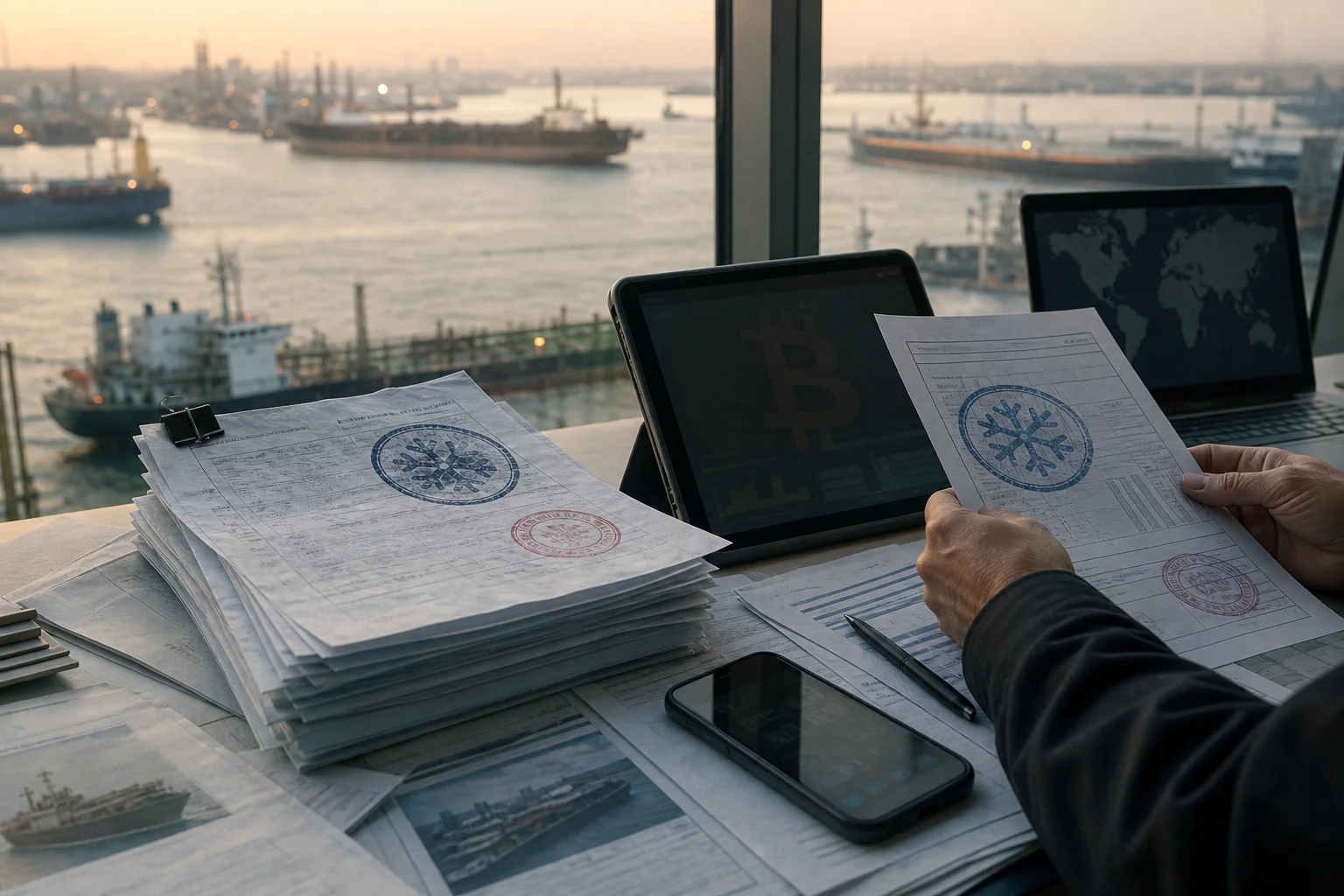
The week’s Hormuz story arrived as a split screen. On one channel, Tehran held separate calls with Riyadh and Muscat to “eliminate the insecurity” imposed on the strait, building on Oman’s proposal for a Malacca-style regional mechanism with voluntary fees. On the other, the U.S. Treasury blacklisted Persian Gulf Marine Insurance Company and HormuzSafe Marine Services Authority — the firms Washington says broker IRGC-approved transit insurance, sometimes settled in Bitcoin — plus eight shipping companies moving Iranian crude through the shadow fleet.
Treasury Secretary Scott Bessent framed the designations as cash warfare: with inflation in the triple digits, “the regime is desperate for cash,” and the United States “will not allow Iran to hold global commerce hostage.” That is not a talking point. It is a claim about who controls dollar liquidity at the choke where roughly a fifth of global oil consumption normally passes.
Diplomacy Speaks Stability; Designations Freeze Settlement
Stability talk without settlement plumbing is theater. Oman floated a joint regional fee mechanism; Tehran ruled it out Wednesday, insisting Iran and Oman manage their respective sides without outside powers. The IRGC Navy claimed it struck and stopped three tankers that ignored warnings. CENTCOM’s blockade language still treats the waterway as contested space.
This is the fracture Culled has tracked since markets priced peace that shipping never confirmed, and since the Iran MOU sent Brent toward $79 while Hormuz stayed half-closed. Communiqués move the tape. Correspondent banking moves the barrel.
The new sanctions land on the layer between those two. Insurance is not paperwork. It is the permission slip that lets a vessel clear dollar letters of credit, hire a Western P&I club, and settle freight against a bank that still wants to keep its U.S. correspondent. When Treasury blacklists the IRGC’s mandatory-insurance brokers, it does not merely punish Tehran. It raises the compliance cost of every transit that touches a dollar-denominated chain — including buyers of discounted Iranian crude in China and the UAE.
Dollar Liquidity Is the Quiet Binding Constraint
Oil markets still argue in barrels and Brent prints. The binding constraint this week is dollar liquidity under Executive Order 13902.
Shadow-fleet tankers can move crude. They cannot easily clear dollar settlements once the vessels and intermediaries sit on OFAC lists. Bitcoin was already the workaround Treasury named explicitly — digital rails for insurance premia designed to evade the dollar system. That workaround is now a designated activity. Traders who once treated Hormuz risk as a war-premium story must now treat it as a banking-access story: who can still receive dollars, who must route through third-country shell structures, and how long those shells survive the next designation round.
We have seen this architecture before. When P&I clubs cancelled Hormuz war-risk cover, the strait froze without a mine. When Swiss talks strained, oil jolted on process risk rather than physical closure. Sanctions are the third instrument: they convert a geographic chokepoint into a financial one. The accidental climate lever of disrupted Gulf flows remains secondary to the simpler fact that cargo without bankable insurance does not sail.
Watch the Clearing Path, Not the Call Log
Phone calls with Prince Faisal and Araqchi matter for regional optics. They do not reopen dollar clearing.
The actionable read is narrow. Watch whether war-risk insurers and Western banks treat the new designations as a reason to widen exclusion zones beyond the blacklisted names. Watch Chinese and Emirati buyers of Iranian barrels for settlement friction — longer letters of credit, more crypto-adjacent invoices, more vessels going dark. Watch Brent less for the next pause headline and more for whether tanker counts recover while dollar liquidity stays rationed.
State force still binds the outcome. Tehran can propose sovereignty over its half of the strait. Washington can freeze the firms that monetize that claim. Capital adapts only as far as correspondent banks allow. Until dollar liquidity returns to Hormuz transit, stability talks are a press release attached to a blocked wire.
Continue reading


Sources
U.S. Treasury designations via Iran International and New Kerala reporting; July 30 upfront on Hormuz Mechanism and insurance sanctions; CENTCOM and IRGC Navy claims; Oman joint-mechanism proposal coverage


