

Getty Images Holdings and certain subsidiaries filed voluntary Chapter 11 petitions in Delaware on October 21, 2026, to implement a prepackaged reorganization backed by up to $533 million from the Getty family and Koch Equity Development; the filing follows July's termination of Getty's $3.7 billion Shutterstock merger and arrives as users report that frontier chat models interrupt projects that clone paid software — with stronger documentary evidence on Anthropic's cyber safeguards than on any new OpenAI clone ban.
Tuesday, October 27 — Getty Images is not liquidating its archive. It is using the bankruptcy court as a filing cabinet.
On October 21, Getty Images Holdings and several U.S. subsidiaries filed voluntary Chapter 11 petitions in Delaware to implement a prepackaged reorganization already backed by lenders and equity sponsors, according to an SEC Form 8-K filed the same day. The plan contemplates up to $533 million of fresh equity from affiliates of the Getty family and Koch Equity Development, a sharp cut in funded debt, cancellation of existing public shares without a payout, and emergence as a private company by year-end. Chief executive Craig Peters framed the filing as a procedural step to fix the capital structure and certain non-operating legal liabilities while operations, contributors, and customers continue in the ordinary course.
That is independently confirmed: this is not rumor-board bankruptcy. It is a negotiated reset with a disclosed restructuring support agreement dated October 12 and vote solicitation underway before the petitions hit the docket.
Debt, a dead merger, and the substitute on the desktop
The timing is not mysterious. Getty walked away from a $3.7 billion merger with Shutterstock in July, after Britain’s Competition and Markets Authority cleared the deal only if Shutterstock’s editorial business was sold — a remedy Getty’s board declined to pursue. An SEC filing on June 30 recorded the unanimous decision to terminate the merger agreement after the extended end date passed July 6. The collapse left Getty with more than $1.3 billion of debt and, as CNBC and The Verge reported in the restructuring run-up, pressure from missed interest on unsecured notes.
Parallel to the balance-sheet story runs a pricing story Getty cannot litigate away in one filing. In its July 7 statement on the abandoned merger, the CMA noted that during its phase-two review it concluded competitive concerns in stock content had eased — partly because generative AI firms that do not sell pre-shot libraries were increasingly likely to compete with Getty and Shutterstock, alongside Adobe and Canva. Editorial photography still looked concentrated; generic stock did not. Getty sells both, plus its own Generative AI by Getty Images product, but the commission’s language captures what marketers already practice: when a prompt replaces a license fee, the substitute is not another photo agency — it is the model interface.
| Layer | What broke or bent |
|---|---|
| Capital structure | Heavy debt, failed scale play via Shutterstock, prepack Chapter 11 |
| Stock imagery demand | GenAI as price cap on commodity visuals (UK regulator’s finding) |
| Editorial moat | Still concentrated — merger remedy targeted news, not RF clips |
Getty’s bankruptcy papers list estimated assets and liabilities each in the $1 billion to $10 billion range — a wide bracket typical of large filers, not a precision solvency verdict. The economic headline is simpler: the licensed-image middleman model is being arbitraged by tools that ship pixels without clearing rights through a catalog.
The other guardrail: when the assistant will not build the rival
The mirror image showed up in developer forums last week, with a different inventory at risk — software, not photographs.
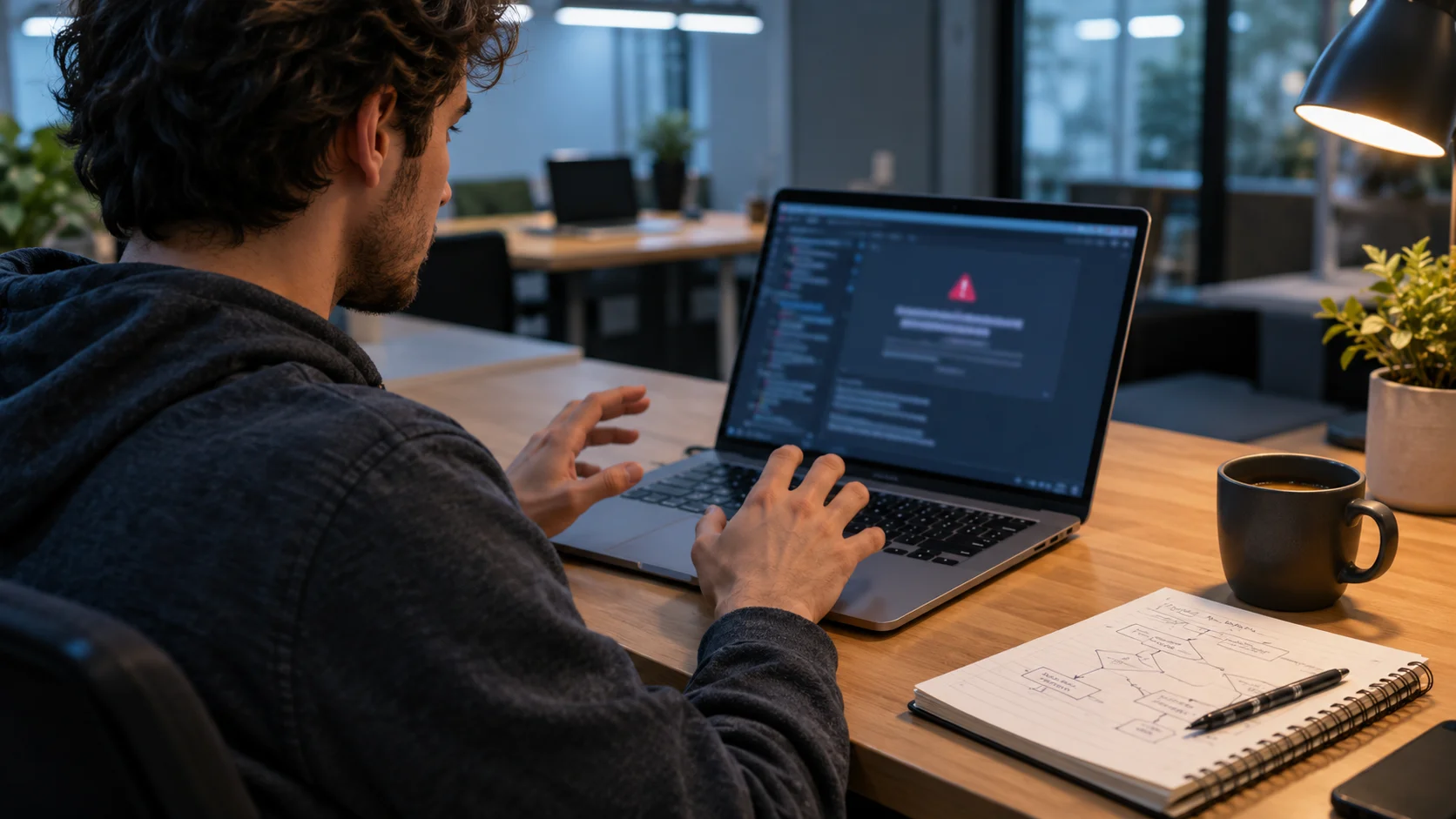
Users reported that Claude Opus 5.5 and Sonnet 5.5 increasingly interrupt workflows that touch reverse engineering, binary analysis, or stripping bloatware from consumer devices — including open tools such as Reverse Engineer Anything and TV-focused utilities discussed on Hacker News and XDA Developers. Anthropic has not announced a ban on those repositories by name. What is on the record is older: September launches that route high-risk cybersecurity tasks to prior model versions, and an October 6 statement that public models run conservative cyber safeguards that block much security-adjacent work unless a customer uses verified access programs. Claude Code documentation describes broad classifiers that can refuse even after fallback.
OpenAI’s published app submission guidelines separately bar misleading or copycat designs and require apps that go beyond native chat — a storefront rule, not a documented policy that ChatGPT will terminate paid accounts for building a competing SaaS UI. Social posts alleging permanent ChatGPT bans for clone prompts remain unverified; Culled could not find a matching OpenAI policy update. Treat that strand as signal, not statute.
Still, the pattern rhymes with Getty’s filing:
- Downstream, generative models replace licensed stock without asking the archive’s permission economics.
- Upstream, the same platforms refuse to help users reverse-engineer or clone other people’s paid products — and their terms already restrict using outputs to train competing models.
PLATFORM operators are defining acceptable substitution in both directions.
What is actually new
Three beats matter for readers sorting headline noise from structure:
- Getty’s Chapter 11 is real and documented in SEC filings and company statements — a sponsored prepack, not a surprise liquidation of the collection.
- GenAI as a stock-photo competitor is no longer activist rhetoric; it appears in a major antitrust regulator’s reasoning on the failed Shutterstock deal.
- Coding-assistant refusals on clone and RE workflows are user-reported and partially explained by Anthropic’s cyber routing; they are not yet a unified industry press release, and OpenAI’s consumer clone story lacks the same paper trail.
Contributors and agencies will watch whether DIP financing and the $533 million equity check actually fund product investment — or merely retire bonds. Developers will watch whether guardrails narrow to malware and DRM circumvention or swallow legitimate clean-room reimplementations.
What to watch
- Vote results on the prepackaged plan and Delaware court milestones through year-end 2026.
- Getty contributor economics — per-download rates and exclusivity — for early signs the reorganization touches the supply side despite “no impact” language.
- Anthropic changelog and Cyber Verification uptake if REA-style tooling becomes a test case for security classifiers versus IP lobbying.
- Shutterstock and Adobe Stock pricing moves as GenAI defaults inside creative suites.
The sharper economic picture is not “AI killed Getty” in one headline. It is that substitution moved onto platform terms — sometimes as a prompt, sometimes as a refusal — while the incumbent that once sold scarcity in a catalog files to reprice its debt.
Continue reading


Sources
Getty Images SEC Form 8-K (Oct. 21, 2026); Getty investor release and CNBC; UK CMA statement on abandoned Shutterstock merger (July 7, 2026); AP and The Verge on merger termination; Anthropic model documentation and Oct. 6 cyber-safeguard commentary; OpenAI app submission guidelines; user-reported clone blocks (secondary, unverified for OpenAI account sanctions).


