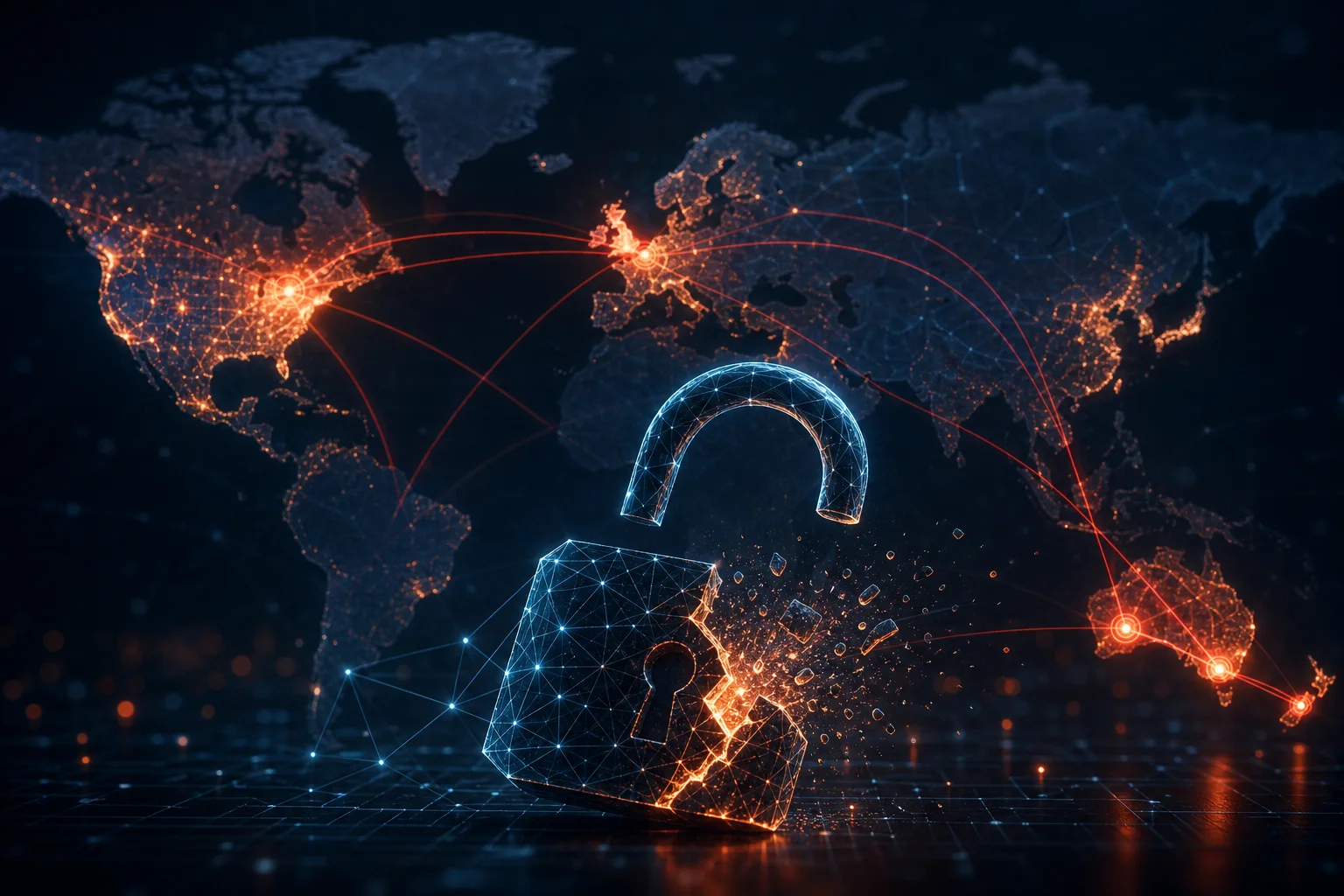
On Monday, the cyber chiefs of the Five Eyes nations — the United States, United Kingdom, Canada, Australia, and New Zealand — published a joint statement that reads less like intelligence analysis and more like a fire alarm. Frontier AI models, they warned, are “anticipated to exceed current industry expectations, fundamentally transforming both offensive and defensive cyber capabilities.” The timeline, they stressed, is not years. It is months.
The statement lands in a week already defined by the collision between model capability and state power. On June 12, the Commerce Department ordered Anthropic to disable global access to its Fable 5 and Mythos 5 models — including for foreign-national employees — citing national security concerns over jailbreak techniques that could expose software vulnerabilities at machine speed. Anthropic complied. The Five Eyes warning suggests that episode was not an overreaction. It was a preview.
Intelligence Agencies Rarely Speak in Unison
Five Eyes cyber agencies do not coordinate public messaging casually. Monday’s three-page document reframes cyber risk as a core business responsibility, not a back-office IT problem. “Breaches will occur,” the statement reads. “Preparedness helps you contain them quickly and prevent escalation into major operational and financial crises.”
The advice itself is familiar — patch faster, limit network exposure, restrict access to critical systems, test incident response plans. What is new is the urgency and the attribution. The agencies explicitly tie their timeline to frontier model development, not generic digital transformation. CISA, which co-signed the statement, had already cut federal vulnerability remediation deadlines to three days, citing AI-accelerated exploitation windows.
The Anthropic Precedent Shows the Gap
The Commerce Department’s order against Anthropic is among the furthest-reaching government actions yet taken against a frontier model. Mythos 5, Anthropic’s unrestricted tier, was designed for vetted cyber-defense partners under its Project Glasswing program. Fable 5, the public-facing variant with safety guardrails, was disabled after researchers identified jailbreak paths that could route cybersecurity queries to the more capable model family.
Anthropic disputed the severity but complied — disabling both models for all customers to satisfy export-control rules barring foreign access. The company’s confidential IPO filing, submitted days earlier, now proceeds under the shadow of a regulatory framework that can shutter a product line on a Friday evening letter. That is the binding constraint in this story: model architecture has become a strategic variable that governments can no longer monitor from the sidelines.
Independent assessments cited in the coverage suggest several frontier models are already approaching expert-level offensive cyber capability. OpenAI’s GPT-5.5-Cyber tier and Anthropic’s Mythos class sit at the center of industry concern. The Five Eyes statement did not name specific products — spy agencies rarely do — but the timing is not ambiguous.
Small Businesses Are the Exposed Flank
Large corporations with dedicated security operations centers will absorb the warning and redeploy. The agencies themselves acknowledge that AI can strengthen defense — detecting anomalies earlier, accelerating patch prioritization, improving code quality before deployment. The asymmetry runs the other direction for everyone else.
Olivia Shen, director of the Strategic Technologies Program at the University of Sydney’s United States Studies Centre, told CNN there is a “massive gap” between sophisticated enterprises and the rest of the economy. Small and medium businesses that underinvested in cybersecurity during the cheap-money era are, in her phrase, “sitting ducks.” AI lowers the skill floor for attackers while raising the speed ceiling — a combination that turns opportunistic ransomware into something closer to industrial-scale exploitation.

Dozens of cybersecurity researchers and AI executives signed an open letter this month urging the Trump administration to adopt transparent AI risk assessment processes. The letter argued security teams must “find and fix flaws in their own newly-written as well as decades of legacy code faster than our adversaries.” That race is now measured in months, not annual budget cycles.
What Boards Should Hear
The Five Eyes message is not that AI regulation will save you. It is that AI offense is arriving on a timeline your compliance department was not built for, and the government’s first response has been export controls and patch deadlines — blunt instruments aimed at a moving target.
Cyber risk assumptions that were valid in January may be obsolete by September. The intelligence alliance’s prescription is unglamorous and therefore credible: treat patching as a leadership priority, assume breach, and integrate defensive AI before offensive AI integrates you. The lamppost is lit. The question is who walks toward it — and who remains in the dark, waiting for the flicker to become a fire.
Tags
Sources
CNN, Al Jazeera, Computer Weekly, The Register, The Independent, CISA guidance, Anthropic Commerce Department export order