On January 20, 2025, President Donald Trump signed Executive Order 14160, declaring that children born in the United States would no longer automatically receive citizenship if their mother was unlawfully present or temporarily in the country, and their father was not a U.S. citizen or lawful permanent resident. An estimated 150,000 babies born each year would fall outside the new definition.
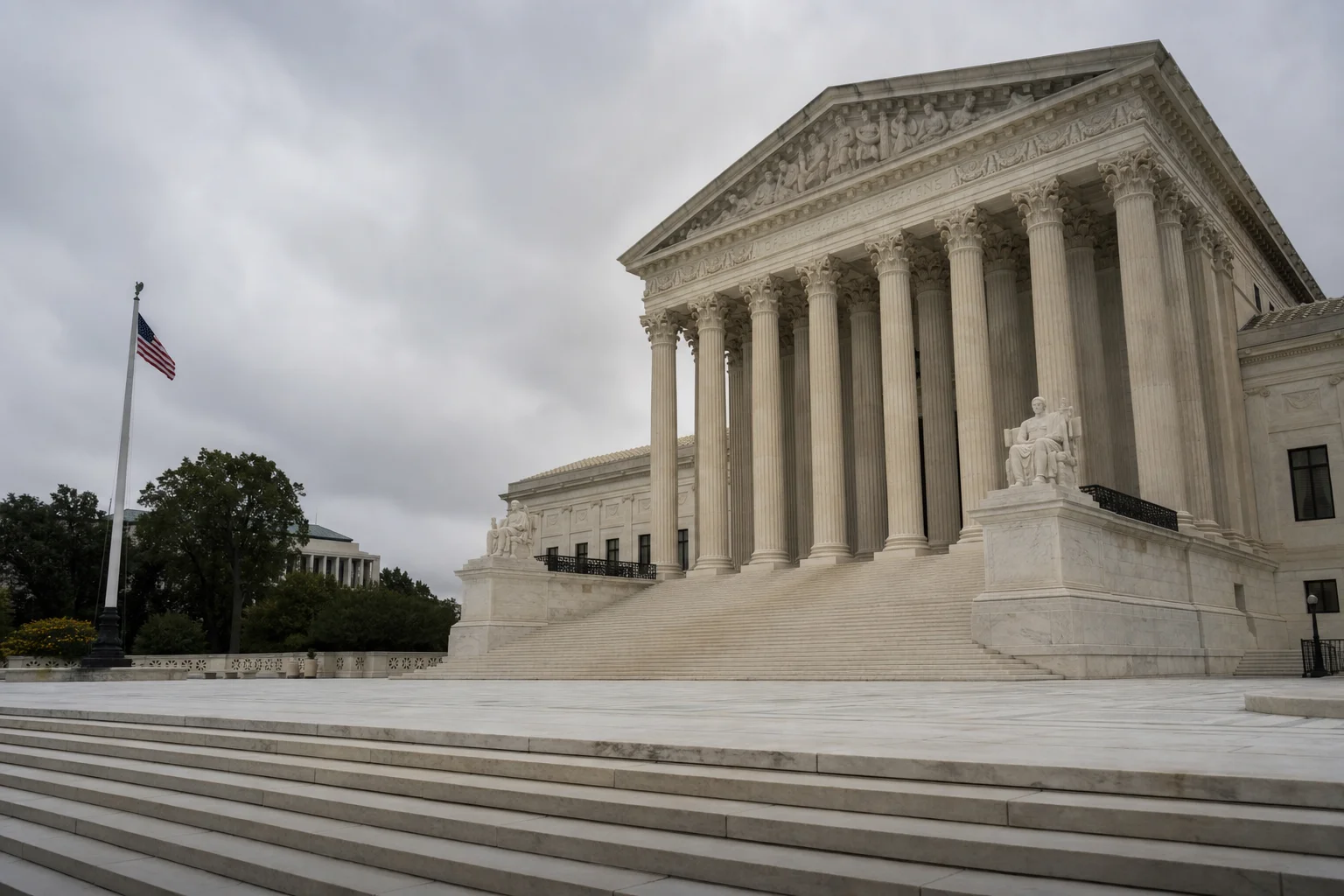
Every federal court that has reviewed the order has blocked it. On April 1, 2026, the Supreme Court heard oral arguments in Trump v. Barbara. A ruling is expected by early July. The legal question is whether the Fourteenth Amendment permits parentage-based exceptions. The physical question is simpler: what happens to the babies?
The Constitutional Question Is Also an Administrative One
The Trump administration argues that “subject to the jurisdiction thereof” excludes children of non-citizens without permanent status. Solicitor General D. John Sauer told the Court the 1898 precedent in United States v. Wong Kim Ark applies only to parents “domiciled” in the United States.
The challengers, led by ACLU attorney Cecillia Wang, argue the administration is asking for “nothing less than a remaking of our Nation’s constitutional foundations.” During two hours of argument, a majority of justices appeared skeptical, including several conservatives. Justice Neil Gorsuch pressed Sauer on enforcement: how would the government determine paternity? What if the parents are unmarried?
Justice Ketanji Brown Jackson asked whether parents would have any opportunity to prove eligibility before federal agencies denied their child a Social Security number — or whether that opportunity would exist only “after the fact.” Sauer assured the Court that for “the vast majority of birthing parents,” the system would “appear no different.” Families who have navigated newborn paperwork know otherwise.
What Happens in the Newborn Ward
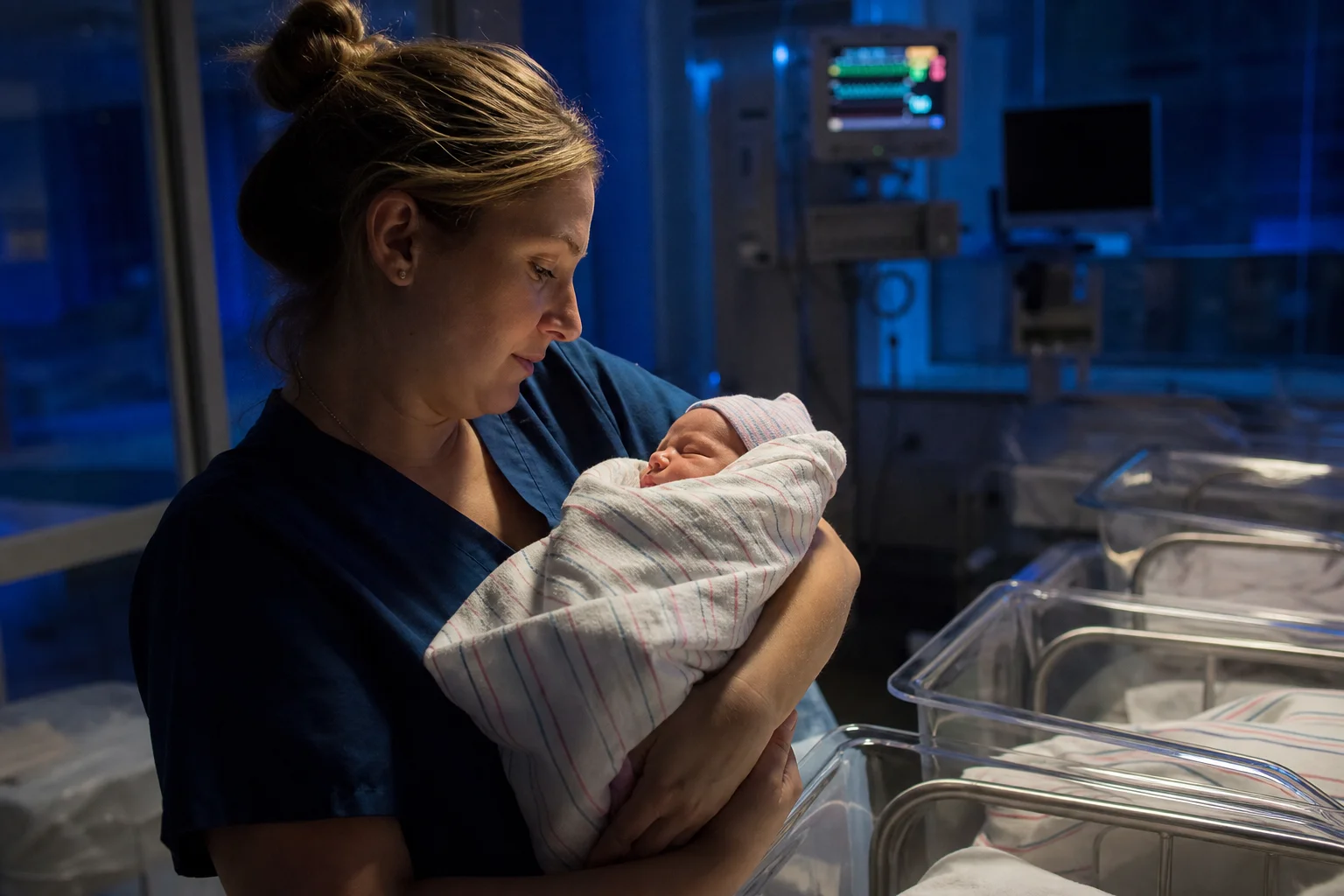
American hospitals run on an assumption so deeply embedded it is rarely articulated: birth on U.S. soil confers citizenship. That assumption powers a pipeline that begins in the delivery room.
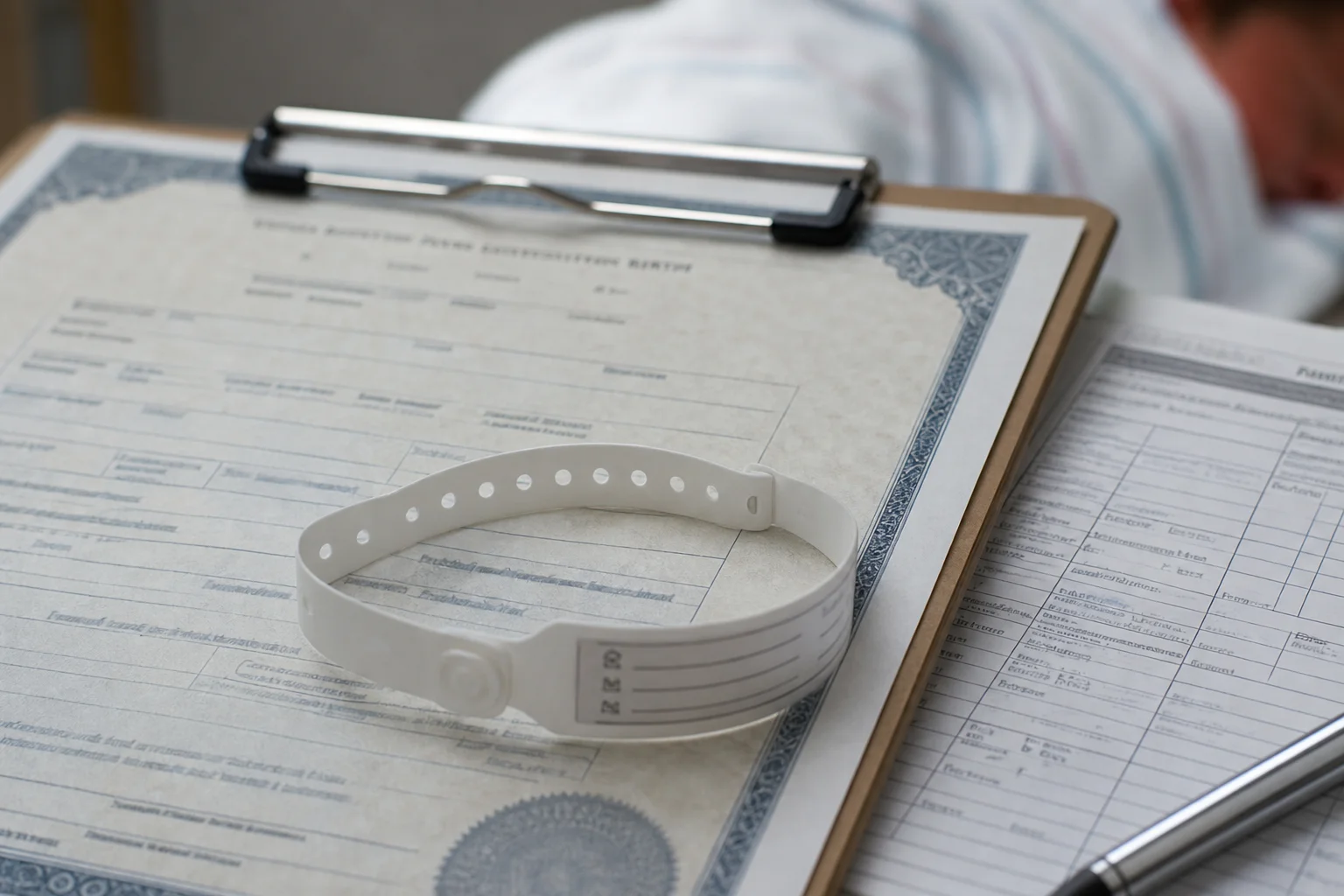
When a baby is born, hospital staff help parents complete paperwork for a birth certificate and Social Security number. Under the SSA’s Enumeration at Birth program, birth records link to state Medicaid agencies. For infants born to mothers enrolled in Medicaid — which pays for roughly 40% of all U.S. births — federal law since 1984 treats the child as a “deemed newborn,” automatically eligible for coverage through the first year without further verification.
The pediatrician visit, usually scheduled within one day of discharge, depends on this chain. For Medicaid families, a premature infant in the NICU, a jaundiced baby under phototherapy lamps, a child with congenital defects — all enter a system where coverage is presumed, not proven. Remove birthright citizenship and the presumption collapses.
The Medicaid Pipeline Was Built for Citizens
Under Executive Order 14160, affected children would be ineligible for Medicaid, CHIP, SNAP, and WIC. State plaintiffs — Washington, Arizona, Illinois, and Oregon — presented evidence that more than 1,100 infants born each month in those four states alone would be affected.
The deemed-newborn rule currently depends on the mother’s Medicaid enrollment, without reference to the father’s status. The executive order’s parentage test introduces the father — and SSA guidance permits delays in Social Security number issuance if either parent’s status cannot be verified. Without an SSN, Medicaid enrollment stalls. Without Medicaid, the NICU bill becomes a private-pay crisis.
Bruce Lesley of First Focus on Children described the timeline to ABC News: a mother on Medicaid delivers seamlessly, then must prove her child’s citizenship before the infant qualifies for coverage. “There’s a delay. Six months, nine months.” Approximately 10% of U.S. birth certificates list the father as unknown, creating verification problems even for citizen parents.
Expectant Mothers Are Already Living in the Gap
While judges have kept the order blocked, the uncertainty itself has consequences. Immigrant mothers interviewed by ABC News and the Chicago Sun-Times describe the same fear: what type of birth certificate will the hospital issue? Will their child be “a nobody”?
Yenifer, a Venezuelan immigrant in Chicago, worries her unborn daughter could be rendered stateless. Lily, a Ukrainian refugee whose son Ivan was born after fleeing Russian assault, waits for a ruling that could question her child’s nationality. Parents who gave birth after February 2025 have rushed to obtain passports, spending money they cannot spare on documentation that should have been automatic.
Illinois health officials say they have received no federal guidance on how vital records would change. Cody Wofsy of the ACLU says changes would occur at the SSA and State Department, not local hospitals — but hospitals are where consequences become visible: in delayed discharges, in parents unable to schedule pediatric follow-ups, in NICU social workers navigating insurance denials for infants whose citizenship is suddenly contested.
The Ruling That Reaches the Bassinet
Court watchers expect the justices to reject the executive order, preserving the bright-line rule that has governed American citizenship since Reconstruction. But even a narrow ruling — striking the order on statutory grounds while leaving the Fourteenth Amendment question open — would invite Congress to act.
The constitutional fight is about who defines membership in the American polity. The physical fight is about whether a baby leaving the hospital has health insurance, a Social Security number, and a country that recognizes her existence. Those two fights converge in the newborn ward — a place where, for now, being born here still means belonging here. Early July will determine whether that assumption survives.
Tags
Sources
SCOTUSblog, NPR, NBC News, ABC News, Georgetown Center for Children and Families, National Law Review, ACLU, CRS Legal Sidebar LSB11423, White House Executive Order 14160