

The Second Circuit vacated an NLRB dress-code order against Starbucks on September 2. Two days later the Fifth Circuit declined to enforce most of another Board ruling from Wichita, and plaintiffs filed a new Illinois biometric suit over Meta's Ray-Ban glasses. Labor and platform rules are being written on appeal.
On September 2, the Second Circuit decided Siren Retail Corp. d/b/a Starbucks Reserve Roastery v. NLRB, Nos. 24-3168 and 24-3298. Judge John M. Walker, Jr., writing for a panel with Judges Carney and Nardini, granted Starbucks’ petition, denied enforcement of a November 2024 Board order, and remanded the rest. The agency had applied its 2022 Tesla framework — a presumption that mandated uniforms limiting union insignia are unlawful unless narrowly tailored — to three Roastery dress-code rules: one union pin, no issue pins, no unapproved logo shirts. The court held that Tesla, Inc., 371 NLRB No. 131, fails to balance interests as Republic Aviation Corp. v. NLRB, 324 U.S. 793 (1945), requires, and told the Board to apply “a more evenly measured balancing test.” The one-pin rule, it added, was already foreclosed by NLRB v. Starbucks Corp., 679 F.3d 70 (2d Cir. 2012).
That order was a Democratic-majority product. The Board that will redo it is not. After the Senate confirmed James Macy on August 7, the NLRB sits 3–1 Republican. The remand hands a Trump-era Board a Second Circuit instruction to weigh brand image more heavily than Tesla allowed. The Fifth Circuit had already refused deference to Tesla as Supreme Court interpretation in Tesla, Inc. v. NLRB, 86 F.4th 640 (5th Cir. 2023). Manhattan just joined New Orleans. The Board is the party told to catch up.
The Wichita Case Shows the Venue, Not Just the Merits
Two days later, in Starbucks Corp. v. NLRB, No. 24-60653 (5th Cir. Sept. 4, 2026), a 2–0 panel led by Judge Stephen Higginson declined to enforce most of another Board package from a Wichita, Kansas café. Remarks about a closed hiring portal, reduced hours, and an “impression of surveillance” were not threats of reprisal under Section 8(c). One finding survived: a pregnant employee, Maia Cuellar-Serafini, could reasonably take maternity-leave comments as an economic threat if the store unionized.
Wichita sits in the Tenth Circuit. The petition was heard in the Fifth. OnLabor noted in May that Starbucks was already parking a cluster of adverse Board orders in the Fifth Circuit even where the stores were not there, and that the circuit had then decided two of those cases for the company. This week’s pair continues the pattern: the chain that turned Red Cup Day into a strike stage now treats appellate geography as labor strategy. Changing the Board’s party label has not ended the losses. The losses have moved upstairs.
The Board still writes the first order. The circuits write the law that survives.
That is the institutional failure, not a morality play about pins. An agency that flips with elections cannot supply a stable Section 7 rule if every significant order is a petition for review waiting to happen. Workers cannot price a campaign. Employers cannot price a handbook. The statute assumes the Board fills the gaps. This week the gaps are being filled in Foley Square and on Camp Street.
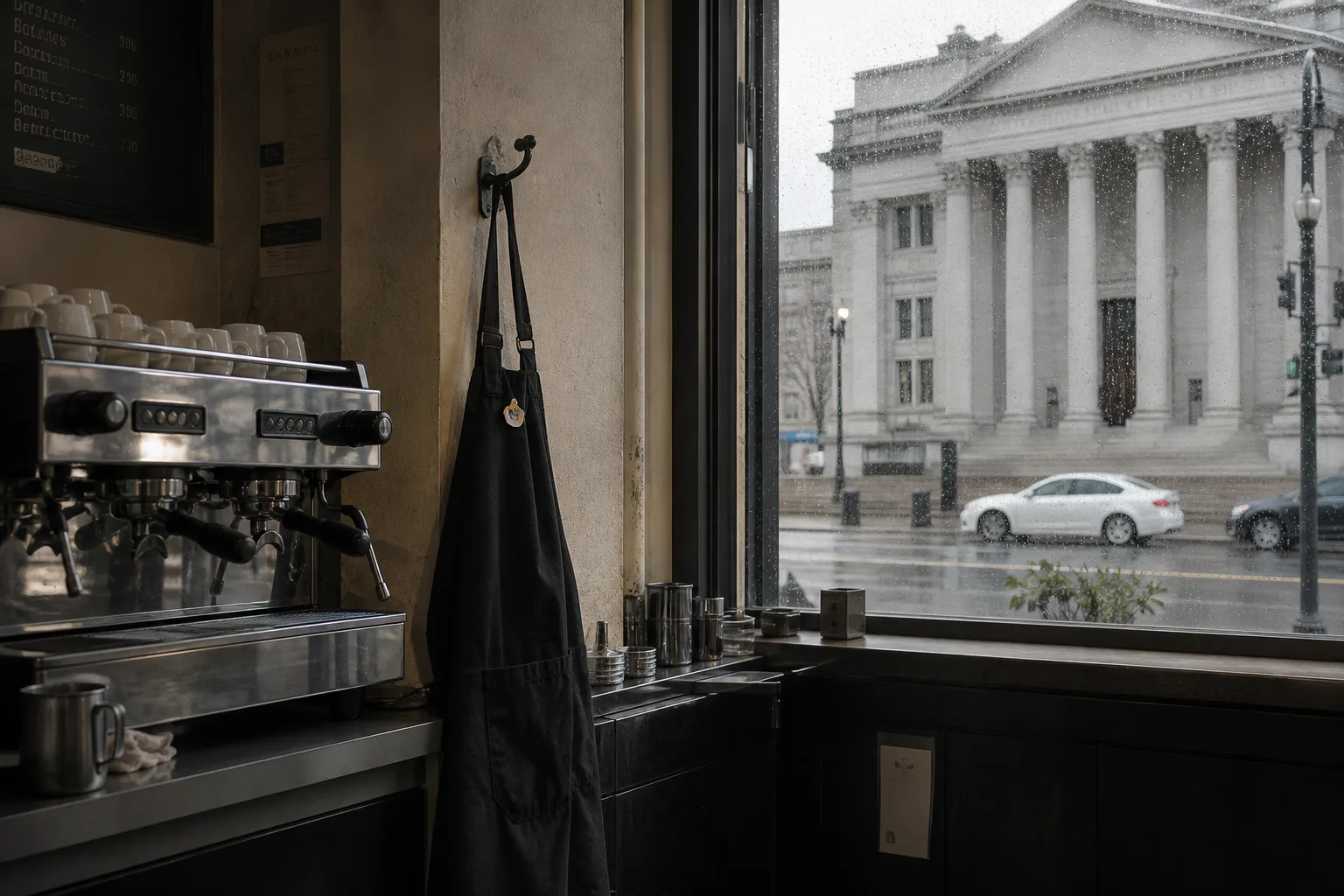
The Same Week, Platform Data Goes to the Same Kind of Docket
Friday, September 4, layered a platform docket onto the labor one. Bloomberg Law reported a proposed class action in the Northern District of Illinois alleging that Meta harvested Facebook and Instagram images without consent to train facial-recognition features in Ray-Ban and Oakley smart glasses, under the Illinois Biometric Information Privacy Act. That is a complaint, not a holding. It sits beside Bartone v. Meta Platforms, Inc., No. 3:26-cv-01897 (N.D. Cal., filed Mar. 4, 2026), already attacking the glasses’ privacy marketing and, this week, an expanded bystander class; beside a California BIPA voiceprint case still in discovery; and weeks after Meta agreed, before Judge Yvonne Gonzalez Rogers in Oakland, to pay up to $18 billion to settle multistate child-safety claims.
No Congress wrote a national biometric training rule this week. Illinois’ private right of action, California consumer claims, and settlement leverage are doing the work — the same way a Manhattan judge treated robots.txt as a suggestion rather than a lock. Platforms still outrun the statute. Courts mop up.
California’s WARN-and-AI clock, which we tracked when Astra’s computer-use pitch met prepaid desk cuts, is the labor twin: the state is still designing a reason code while circuits decide what a pin is. Child-safety design keeps arriving as litigation because the product shipped first.
Name the docket. Siren Retail and 24-60653 tell employers that Board doctrine is provisional until a circuit blesses it. The Illinois BIPA complaint tells platforms that training data will be priced in Cook County if Washington will not price it at all. Until the legislature writes a rule, the accidental policymakers wear robes, and they do not sit as a single court.
Continue reading


Sources
Siren Retail Corp. v. NLRB, Nos. 24-3168 & 24-3298 (2d Cir. Sept. 2, 2026); Starbucks Corp. v. NLRB, No. 24-60653 (5th Cir. Sept. 4, 2026); Bloomberg Law report of a Sept. 4 N.D. Ill. BIPA class action; Bartone v. Meta, No. 3:26-cv-01897 (N.D. Cal.); Reuters coverage of Meta's Aug. 26, 2026 child- safety settlement


