

Bermuda hosts its first Prestel & Partner family-office retreat on 16–17 October at The Loren, after a New York forum at the Harvard Club. Organisers claim forty-plus billionaires among roughly forty principals; no independent attendance list exists. Bank surveys show the deeper trade—family offices raising private-equity and direct stakes while becoming choosier about fund lockups.
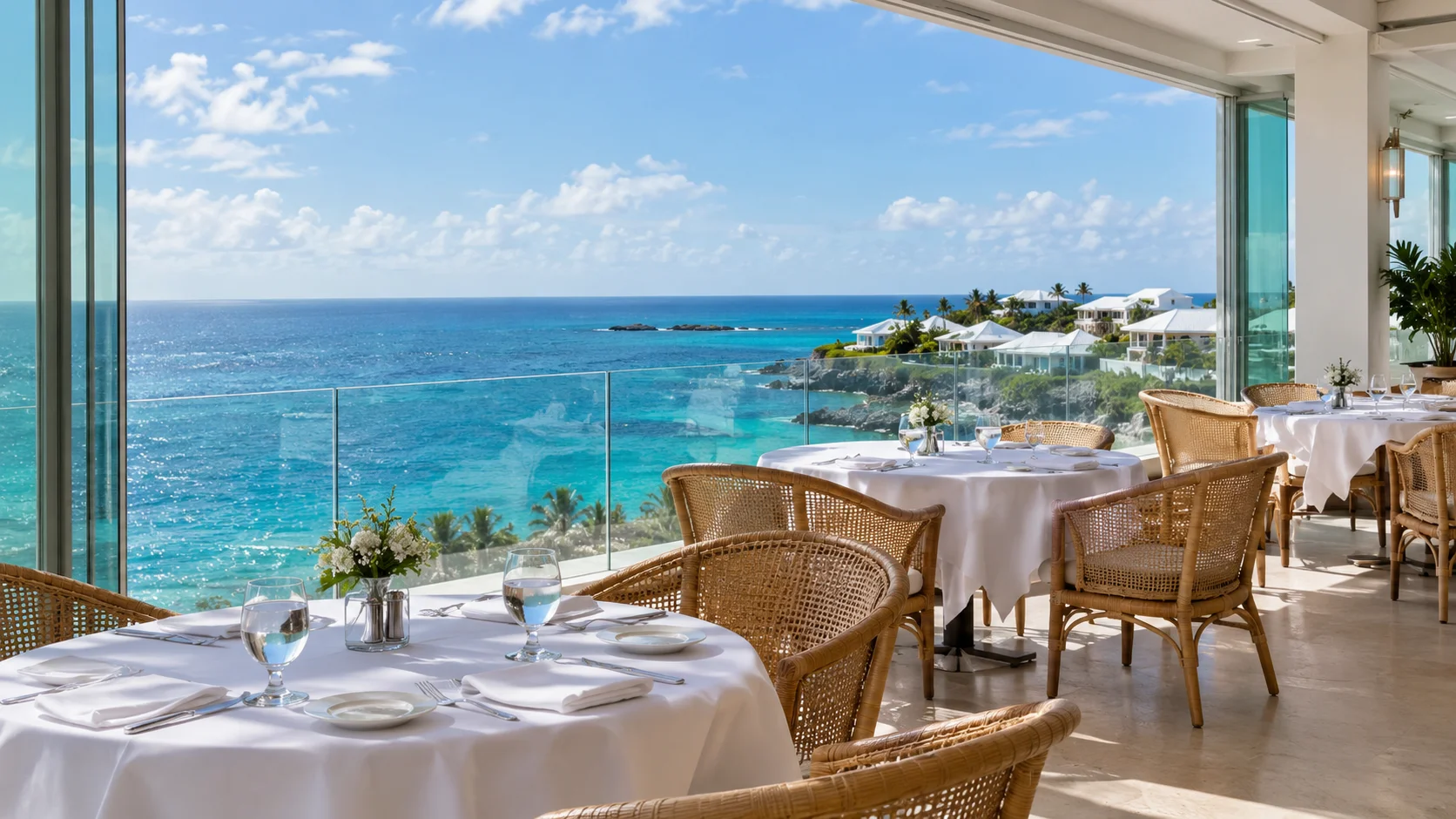
The inaugural Family Office Retreat Bermuda, produced by London-based Prestel & Partner and sponsored by Bermudian law firm Appleby, opens Thursday evening with a beach reception at The Loren at Pink Beach and runs through Saturday brunch on 17 October. It follows the organiser’s Family Office Forum New York at the Harvard Club on 13–14 October—a back-to-back schedule that moves the same audience from Midtown panels to an island setting themed “Finding Sanctuary.”
The Royal Gazette’s account describes an invitation-only gathering of single-family-office decision makers, family members and selected advisers discussing governance, investment strategy and generational transfer. That framing is cautious. Prestel’s own marketing is louder: it advertises “circa 40” principals and also claims the retreat “will host 40+ billionaires,” while offering free admission to wealth owners who manage at least $150 million and are not selling services to the room.
Those numbers do not reconcile without verification Prestel has not published. A $150 million asset floor does not imply billionaire status; forty principals does not guarantee forty billionaires. Until names or audited attendance are on the record, the billionaire headline is organiser copy—not reporting. What is on the record is the business model: a curated peer forum where a handful of sponsors (Appleby among them) buy proximity to principals, and paying delegates fill remaining seats.
Principals versus the room that sells to them
Prestel is not new to this choreography. It has run family-office forums and Cayman retreats for years, always stressing intimacy, application-only entry and “handpicked” experts. Appleby’s sponsorship announcement names partners Claire van Overdijk KC and Lalita Vaswani, who will lead a session on cross-border estate and trust risk—exactly the work Bermuda’s economy still sells to mobile capital.
The draft agenda clusters three conversations Prestel repeats worldwide: how to organise wealth, how to invest it, and how to keep families aligned. Van Overdijk’s listed topic—“plan for the best and prepare for the worst” when lives and assets span borders—maps to Bermuda’s functional role more honestly than any billionaire tally. The island remains a jurisdiction for trusts, captive insurance and holding structures that sit under the investment decisions made in New York, London or Dubai. Competing wealth hubs have already multiplied; Bermuda’s pitch is stability, Anglo-American legal plumbing and proximity to the United States.
Distinguishing a genuine principal conclave from a vendor convention matters because the investment story is real either way. Even if half the beach reception were advisers, the surveys describe what those advisers are being hired to execute.
When the client starts to look like the competitor
Family offices are no longer only outsourcing portfolios to brand-name banks. They are building in-house teams that source private equity, private credit, infrastructure, venture and control deals—then negotiate fees and co-invest rights the way a pension or endowment would.
Citi’s 2025 Global Family Office Report, covering hundreds of offices, found 70% engaged in direct investments, with 41% having increased that activity over the prior year. Its 2026 edition stresses a shift from passive participation toward execution and network-driven sourcing—language that mirrors private-equity firms, not traditional private banking.
J.P. Morgan Private Bank’s 2026 global survey reports 37% of offices plan to increase private-equity exposure over the next 12–18 months—the highest planned increase among asset classes—and 64% invest via direct minority positions, with 49% in direct majority control. Drawdown funds remain common (67%), but the footprint of direct ownership is now mainstream, not eccentric.
Campden Wealth’s North American family-office series, as summarized by CrossWork, shows how the mix is tilting: in 2026 respondents allocated 45% of private-markets exposure to direct routes versus 36% through funds, whereas funds led 48% to 33% a year earlier. The sample shifted toward larger fortunes—so the table is not a pure time series—but the direction matches what gatekeepers describe anecdotally: families want control, transparency and fee savings, even if it costs them headcount.
The binding constraint is no longer “can we access alternatives?” It is “can we diligence and hold them without becoming an unpaid subsidiary of a fund manager?”
That question shows up in liquidity preferences too. Citi’s 2025 data noted smaller offices (23%) more often reduced direct investing than larger peers (15%), citing illiquidity and macro shocks—evidence that the institutional model is not free, even for the rich. UBS’s 2026 report still places private equity (funds plus direct) near a fifth of typical portfolios, with private debt and real assets alongside—allocations that crowd the same deal tables as institutional limited partners navigating an exit backlog.
AI, succession and what Bermuda actually prices
Two threads likely dominate hallway talk at The Loren even if they are not on the printed agenda.
Artificial intelligence exposure is increasingly physical. Survey aggregators put roughly half of family offices targeting AI-related direct capital—not necessarily by buying listed Mag Seven shares, but by funding data centres, power, semiconductors or applied software where ticket sizes and illiquidity suit private balance sheets. That is competition with infrastructure funds and venture growth funds, not with a retail brokerage.
Generational transfer is the other clock. Prestel’s New York programme already foregrounds succession; Bermuda adds trust law and dispute risk when heirs hold different passports than the patriarch’s structures. Those are STATE-shaped constraints—tax transparency regimes, economic-substance rules, beneficial-ownership registers—but the response is capital allocation: who may control voting shares, who receives liquid versus encumbered assets, and how much risk the family office may take before a trust deed says stop.
None of that requires forty billionaires on the beach. It requires forty serious balance sheets comparing notes on whether the next vintage of private funds still deserves a blind commitment—or whether the family office should hire the deal team instead.
What would confirm the story
Reporting that would elevate this beyond conference copy is straightforward but unavailable from the organiser’s website alone: a published principal list (even first names and family-office initials), aggregate assets represented, and whether sponsors spoke on stage or only hosted dinners. Until then, treat the billionaire count as marketing and the retreat as a lens on a larger repositioning—wealth becoming its own asset-management industry, with offshore centres bidding to house the legal wrapper.
The Loren’s pink sand is the backdrop. The mechanism is capital that no longer waits in line at Wall Street’s window.
Continue reading


Sources
Prestel & Partner event pages and draft agenda; Royal Gazette and Bernews on the inaugural Bermuda retreat and Appleby sponsorship; Citi Global Family Office Report 2025–2026; UBS Global Family Office Report 2026; J.P. Morgan Private Bank 2026 Global Family Office Report; Campden Wealth North America Family Office Report 2025–2026 as summarized by CrossWork.


