

S&P/ASX 200 SPI futures pointed to a roughly 0.1 percent loss at Monday's open after Wall Street's tech-heavy selloff, yet Sydney desks framed the tape as relative strength. The Australian Financial Review argued the benchmark's thin direct AI weighting may insulate it from the Nasdaq's 5.5 percent weekly drop — its worst since April's tariff shock — while Brent crude near $110 kept energy and mining beta in the bid.
S&P/ASX 200 SPI futures implied a loss of roughly 0.1 percent at Monday’s cash open, The Sydney Morning Herald reported — a modest gap after a US session that again punished technology and AI-linked duration. The Nasdaq Composite fell about 2.1 percent on Friday alone and finished the week down roughly 5.5 percent, its worst weekly performance since April’s tariff shock, according to session wraps cited in The Australian Financial Review’s pre-market note.
That magnitude would normally drag Sydney harder. It did not, at least on the futures board. The AFR argued that the ASX’s thin direct AI weighting — few local listings that trade purely as US hyperscaler or neocloud beta — may insulate the headline index from the worst of the Nasdaq’s drawdown even as global investors question AI returns and financing stress. The point is compositional, not complacent: when chip-led repricing and CoreWeave bond yields are moving credit markets, Sydney still feels the shock through banks, wealth platforms, and any name tied to offshore tech holdings. Monday’s opening message is that the benchmark is barbelled, not blind.
Oil on One Sleeve, AI on the Other
Brent crude remained elevated near $110 a barrel as Middle East supply risk stayed in the price, the same backdrop Culled mapped in its week-ahead trading brief for 19–23 October. For the ASX, that is not an abstract macro input. It is index arithmetic: large miners, LNG exporters, and integrated energy names still carry meaningful weight in a market that also holds four major banks and a deep materials complex.
When US investors sell Nasdaq duration, Australian futures can still slip — SPI was not pointing to a rally. But the relative story is that commodity beta and financials can absorb part of the shock that Seoul and Tokyo take through memory and chip concentration, the same foreign-flow dynamic Goldman’s prime-broker de-risking note described for crowded AI trades elsewhere in Asia. Sydney is not immune to the AI earnings test arriving Wednesday in New York; it simply starts the week with a different hedge embedded in the index.
A 0.1% futures dip after a 5.5% Nasdaq week is not strength. It is a reminder that Australia’s headline index still prices barrels and bank spreads before it prices GPU narratives.
Domestic labour data from last week still matters for the rate path. September’s 4.7 percent unemployment print and mixed full-time versus part-time composition left the Reserve Bank of Australia in the same bind Culled described when jobs shock met imported CPI: slack at home, tightening pressure from the US. Monday’s open does not resolve that tension; it layers a third variable — energy revenues versus AI sentiment — on top of it.
Cash Logistics Beside the Calendar
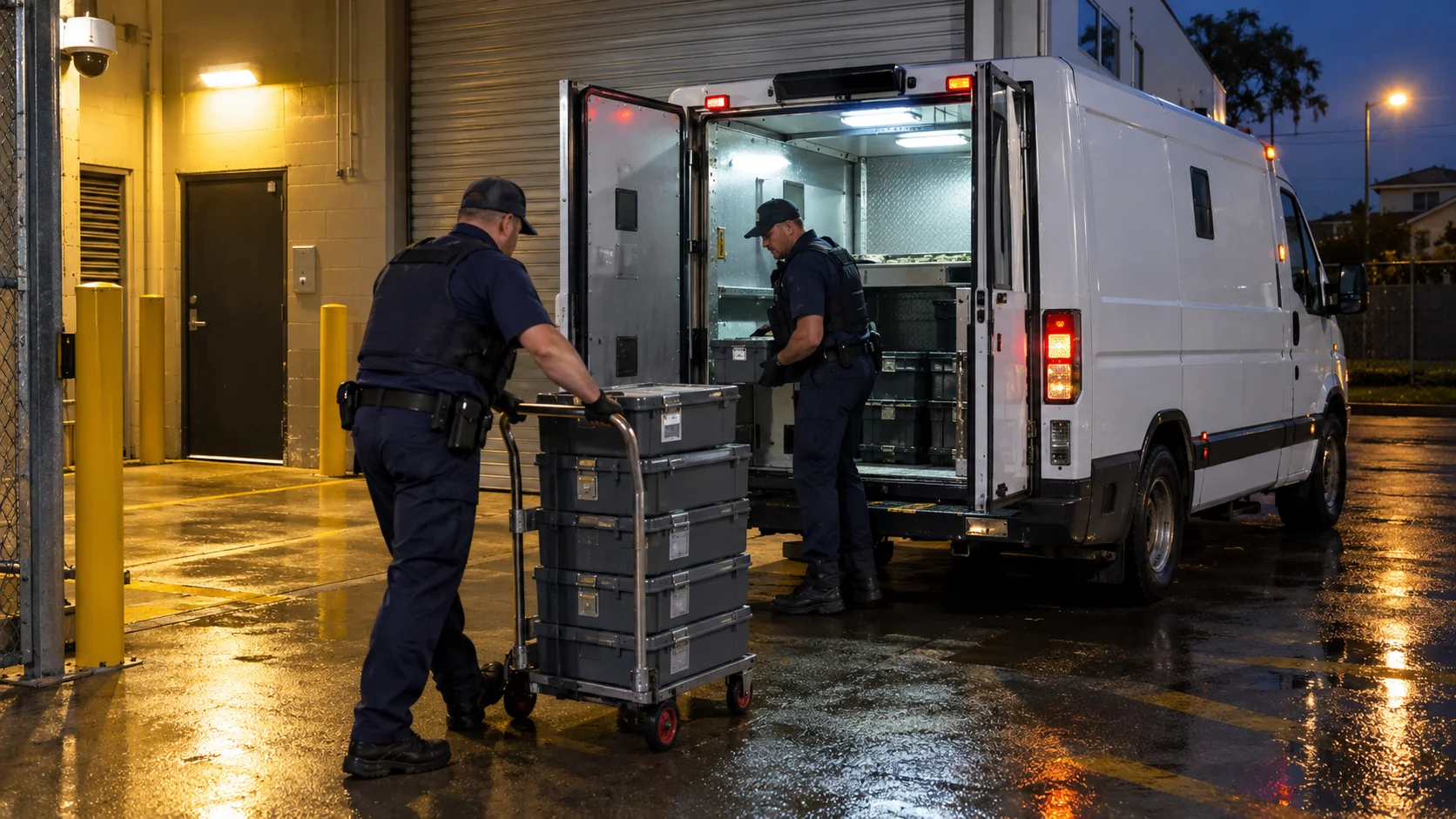
Beneath the index, an operational fight over physical money is back on the desk. The AFR reported that an interim pricing deal between Armaguard and the major banks had broken down, with lenders asking the Australian Competition and Consumer Commission to block terms they warn could disrupt national cash supply. The Australian Banking Association has framed the dispute as a supply-chain risk, not a routine fee negotiation.
That story sits beside the earnings calendar rather than inside it. It matters to banks’ cost lines and to any retailer still dependent on branch and ATM replenishment, but it will not print on the SPI tick at 10:00 a.m. It does explain why “barbell” is the right metaphor for this Monday: oil and iron ore on one side, bank operations and regulation on the other, with US megacap results — Meta, Tesla, and the semiconductor complex — waiting midweek to test whether the global AI trade can stabilise without dragging every Pacific benchmark through the same hole the Nasdaq dug last week.
What Would Break the Relative-Strength Read
Three moves would turn Monday’s calm futures print into a genuine risk-off session for Sydney.
If Brent breaks higher on a fresh Gulf disruption while SPI opens flat, energy names may outperform but import-cost inflation and airline fuel lines would pressure the broader index — the same stagflation worry that kept US yields volatile all week.
If US futures extend Friday’s tech slide into Monday’s Asia session and foreign investors accelerate selling of Australian financials — the channel that usually transmits US rate and equity stress — the thin-AI-weight argument stops helping; banks become the transmission belt.
If the ACCC process around Armaguard escalates into public warnings about cash-in-transit continuity, operational risk could spill into bank equities even without a macro shock.
Until one of those arrives, Sydney’s open is best read as relative strength through composition: less Nasdaq, more Brent, and a domestic cash fight that reminds allocators that not every Monday risk arrives as a futures tick on a US chip name.
Continue reading


Sources
AFR and SMH Oct. 19, 2026 pre-open reporting on SPI futures and US tech weakness; AFR on thin ASX AI exposure versus Nasdaq; AFR on Armaguard interim pricing breakdown and bank requests to ACCC; Stockhead Monday open wrap; Culled week-ahead coverage on Brent near $110, Nasdaq weekly returns, and CoreWeave credit stress.


