

airBaltic’s fuel shock has reached the bankruptcy court. The carrier now has interim access to €140 million of a €350 million superpriority loan, with part of the first draw being used to buy aircraft and engines out of finance leases and turn them into collateral for the restructuring.
airBaltic’s fuel bill has become a bankruptcy-court problem.
The Latvian flag carrier filed for Chapter 11 on September 14 after years of losses, delayed equity financing, engine problems and another rise in jet-fuel costs. On Wednesday, the Southern District of New York gave airBaltic interim access to €140 million of a committed €350 million debtor-in-possession facility.
The Rescue Money Buys Priority, Not Just Time
The DIP facility is an all-new-money, superpriority senior secured loan arranged by Strategic Value Partners and funded by SVP, Barclays, Hayfin and Oaktree entities. It is priced at 12-month Term SOFR plus eight percentage points — roughly 12% at filing — with 5% backstop, 5% upfront and 5% exit fees calculated on the full €350 million commitment.
Those three fees alone total €52.5 million before interest.
That is expensive capital because it is buying a privileged position. DIP lenders sit ahead of ordinary unsecured creditors and, after further court approval, can prime collateral already pledged to airBaltic’s 2029 bondholders. The airline entered Chapter 11 with about €503 million of funded debt, most of it secured.
This is the point where a fuel shock stops looking like an energy-market story. Qantas could absorb a large fuel hit inside a profitable group. airBaltic is using a federal court to decide which claims get paid first.
The First Draw Turns Leases Into Collateral
The first tranche is more mechanical than the phrase “operating liquidity” suggests.
About €71.7 million of initial proceeds is earmarked to pay off Export Development Canada and Axiom financing. Doing so lets airBaltic exercise purchase options on finance-leased aircraft, engines and a flight simulator. The company says that transaction unlocks roughly €170 million of previously encumbered value.
In other words, the DIP lenders are helping airBaltic buy assets out of one financing structure so those assets can support another.
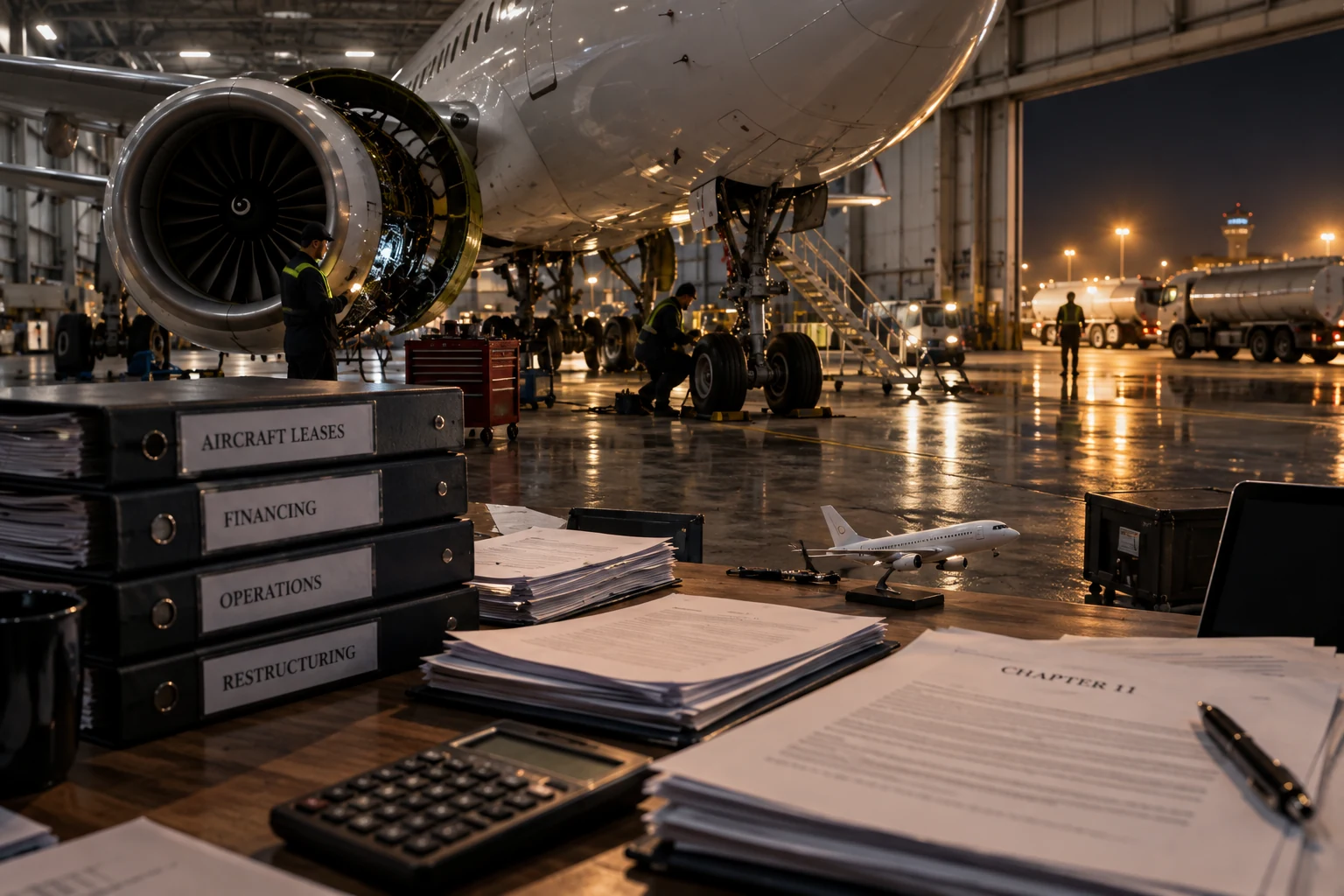
airBaltic operates an all-Airbus A220 fleet, but only a minority are owned outright. The restructuring plan contemplates cutting the fleet from about 54 aircraft to 36 and returning roughly 20 surplus jets while renegotiating other leases.
Culled has already seen how aviation risk follows the legal entity attached to the aircraft rather than the logo painted on it: Amazon’s air network sits across operators, lessors and certificates. In Chapter 11, that same fragmentation becomes a creditor map.
The €350 million is not a pot of cash beside the airline. It is a new senior layer laid across aircraft, leases, cash and future restructuring proceeds.
Fuel Was the Accelerant, Not the Whole Fire
airBaltic did not arrive in court because Brent crossed one particular price. The airline lost roughly €455 million from 2020 through 2022, postponed an IPO, took a €30 million Latvian state loan in April, and had already negotiated covenant relief from bondholders before the late-summer fuel spike.
Its A220 fleet also carries Pratt & Whitney engine exposure; Pratt is listed as the largest unsecured creditor with a claim of about $66.5 million.
Fuel made an already thin liquidity position harder to finance. The company says that after jet prices rose again, an earlier bondholder financing package no longer looked large enough. That is when it went looking for approximately €350 million of bankruptcy financing instead.
The distillate shortage that kept diesel elevated even as crude eased matters to airlines for the same reason: jet fuel is a refined-product cost, and the cash drain can persist after the crude headline softens.
The Loan Has a Clock Attached
The lenders are not funding an open-ended rescue.
The facility matures at the earlier of roughly nine months after filing or 250 days after the first funding, absent a short extension. Later tranches require a final financing order, minimum cash levels and a sequence of restructuring milestones.
Within 100 days, airBaltic is expected to have binding term sheets covering revised lease terms for 75% of the fleet and agreements with Pratt & Whitney, Airbus and Lufthansa. Within 120 days, it must secure equity and exit-financing commitments. A confirmation order is targeted within 210 days.
That makes the real question clearer than the original €350 million headline.
The financing is enough to keep the airline moving only if it bridges to a smaller fleet, negotiated leases, new equity and cheaper permanent capital. If those pieces arrive, Chapter 11 has converted an operating shock into a balance-sheet reset.
If they do not, the court has merely moved the fuel bill to the front of a much more expensive queue.
Sources
- U.S. Bankruptcy Court, Southern District of New York, In re Air Baltic Corporation AS, No. 26-12188.
- airBaltic, first-day relief and interim DIP financing approval, Sept. 16, 2026.
- DIP term sheet and financing motion summarized from court filings: €350 million superpriority facility; €140 million interim availability; Term SOFR + 8%; collateral and restructuring milestones.
- Reuters, Sept. 14, 2026, on the Chapter 11 filing and operating continuity.
- Wall Street Journal and Bloomberg Law, Sept. 14–16, 2026, on debt, fuel pressure, fleet reduction and restructuring.
More in Governance


Sources
SDNY Chapter 11 docket and DIP terms; interim DIP approval; airBaltic disclosures; reporting from Reuters, WSJ and Bloomberg Law.
