

In 2026 the KOSPI has tripped its circuit breaker about as often as the prior quarter-century combined. The failsafes are not failing—they are revealing a market whose structure, products, and investor culture now manufacture eight-percent moves as ordinary weather.
Emergency Brakes Were Never Meant to Be Interior Design
A market failsafe is supposed to feel like a fire alarm: rare, unpleasant, and socially clarifying. Through most of the Korea Exchange’s history, that was roughly true. Since the circuit-breaker regime matured after the late-1990s crisis architecture, Level‑1 halts—an eight‑percent drop sustained for a minute, then a twenty‑minute freeze—arrived during wars, pandemics, and bona fide systemic shocks. As of mid‑July 2026, roughly half of all KOSPI circuit-breaker firings on record have crowded into a single calendar year. Sidecars, the gentler cousin that pauses program trading when KOSPI 200 futures whip five percent for a minute, have already eclipsed the full‑year tally of 2008. The emergency brake has become furniture. That is the story that needs explaining.
The index itself telegraphs the regime change. KOSPI closed 2025 near 4,200, ripped to an intraday peak above 9,300 in June, then slumped back toward the 7,000s within weeks. A move of that amplitude does not merely “correct.” It trains investors, brokers, and the exchange’s own failsafe calendar to treat eight‑percent days as weather—unpleasant, frequent, and only occasionally apocalyptic.
Structure First: Two Wafers Hold Up the Sky
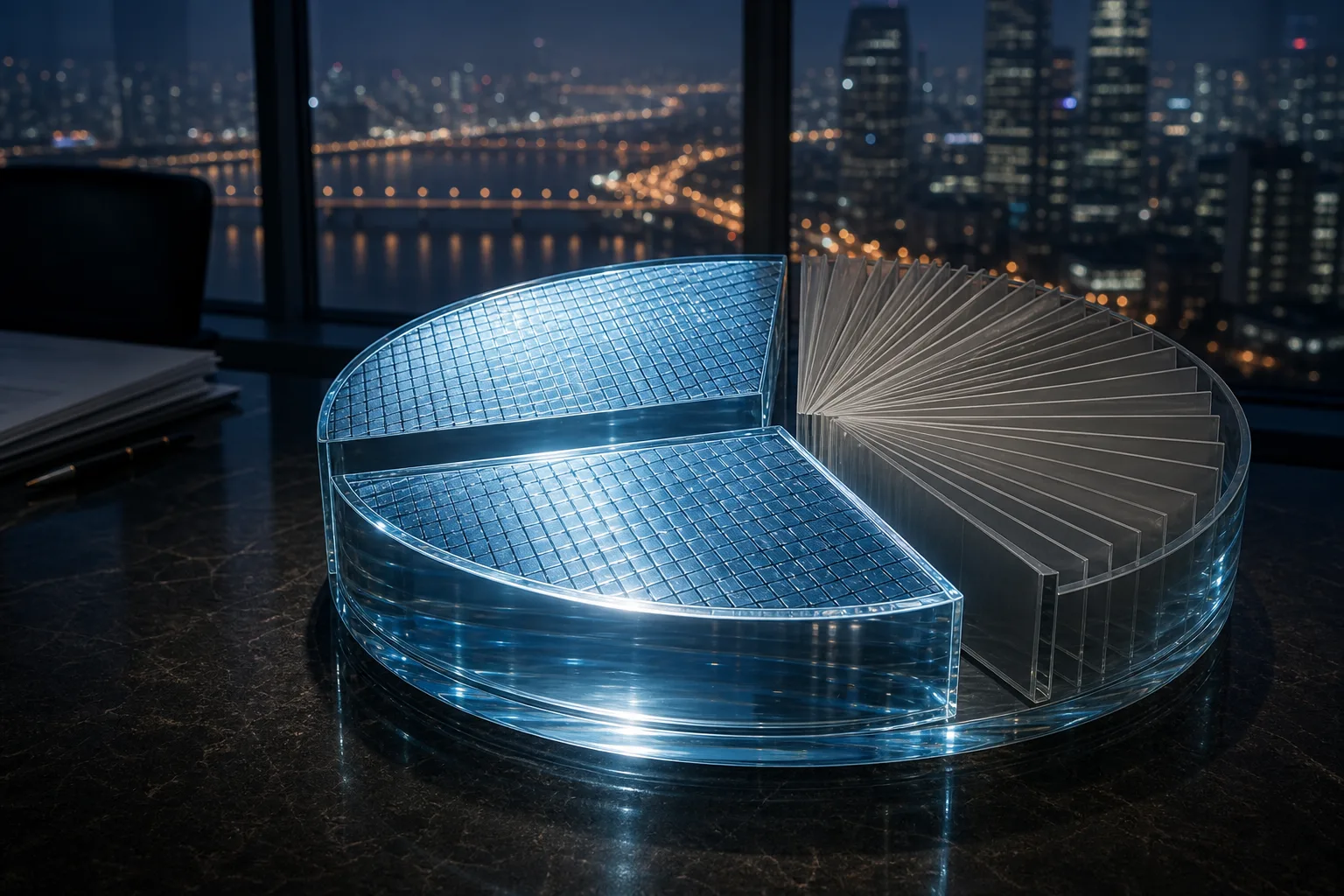
Start with the index, not the psychology. Samsung Electronics and SK Hynix have been estimated near half of KOSPI’s market capitalization at peak enthusiasm, with daily turnover similarly concentrated. Roughly three‑quarters of the year’s gains have been traced to those two names. On the session the index printed its all‑time high, only a thin slice of constituents made new 52‑week highs while nearly a third sat at 52‑week lows. This is not a broad economy priced as a market. It is a memory‑chip vehicle with a national ticker symbol.
Concentration is not merely an analytical inconvenience; it is mechanical leverage on every narrative. An overnight AI “peak earnings” whisper in New York becomes a domestic cascade by Seoul’s lunch break because the benchmark cannot diversify the shock. Futures-linked program flows then reinforce the spot selloff; when those flows breach sidecar thresholds, the pause arrives not as crisis theater but as scheduling. The failsafe is working as designed. The portfolio underneath the failsafe is not.
Product Architecture: Leverage as National Infrastructure
Then add the product stack that Korea’s retail-heavy market loves and that regulators now publicly regret. Single-stock leveraged vehicles that target twice the daily move in Samsung or Hynix have, by exchange data and local press tallies, roughly doubled the frequency of three‑percent KOSPI days relative to the prior year. First‑half intraday volatility near 3.3 percent—worst since 1998—is not a mood. It is an engineered outcome of daily rebalancing in products that must amplify winners into larger positions and losers into forced contraction.
Margin loan balances hitting records near the mid‑30‑trillion‑won range, ultra‑short brokerage receivables in the trillions, and forced liquidations spiking into the 140‑billion‑won daily band complete the feedback loop. When the chips slip, leveraged products decay faster; margin desks liquidate; futures swing; sidecars fire; and if the selloff deepens through eight percent, the full halt arrives. FSS leadership has already said aloud what the tape implies: some of these products “should have been blocked from listing.” That sentence is not culture war. It is admission that the market’s plumbing manufactures its own seismic spikes.
Culture: The Ant Army and the Post‑Property Hunger
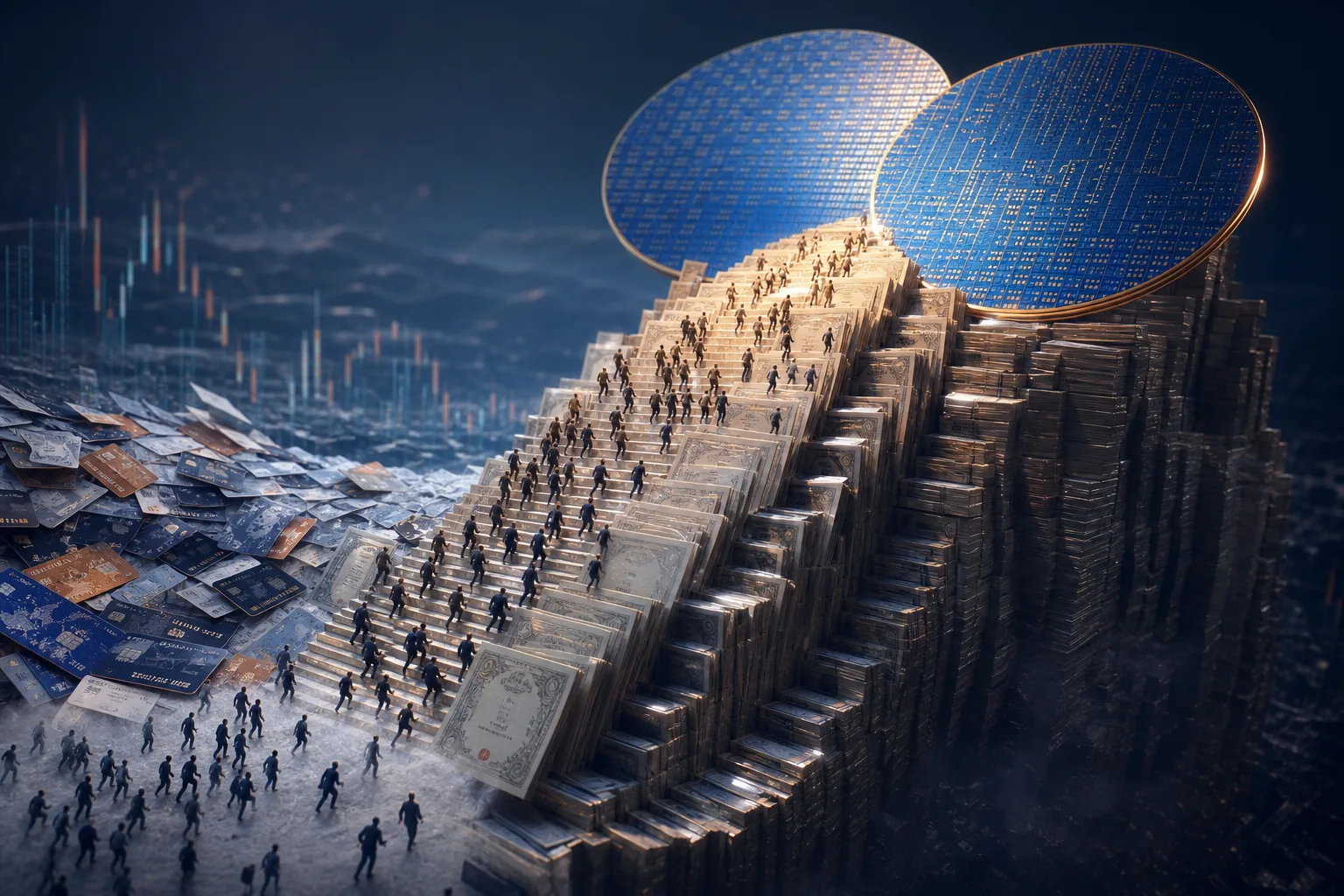
None of this architecture matters without the social energy that funds it. Korea’s “ant army”—the dense, online, margin‑comfortable retail cohort—has absorbed tens of billions of dollars in foreign selling this year, turning a geopolitical capital‑outflow story into a domestic leverage story. Credit once directed at apartments migrated toward equities and, increasingly, toward two‑times chip bets small enough in ticket size to feel like snacks and large enough in aggregate to move Yeouido.
This is cultural as much as financial. Equity participation became a civic vernacular after years when housing felt gated and overseas tech narratives felt closer than chaebol dividends. The same social denseness that once produced coordinated buying now produces synchronized risk reduction: group chats, brokerage push alerts, and night sessions watching Micron and Nvidia become morning cascades. Foreigners can exit. The National Pension can rebalance. The ants, piled into the same two wafers with borrowed money, cannot all leave through the same door without ringing the alarm.
Geopolitics as Oscillator, Not Sole Cause
March’s US–Iran shock and oil spike still matter: they remind anyone romanticizing “fundamentals only” that Korea prices both chips and energy on a short fuse. But July’s halt-on-profit-taking sessions matter more for diagnosis. When circuit breakers fire on semiconductor peak‑out chatter rather than wars and pandemics, the binding constraint is not the news. It is the market’s amplification ratio. Historically, post‑halt sessions often rebounded; lately several have not, or only barely—evidence that liquidation chains and inventory of leveraged losses can outlast the twenty‑minute pause.
The actionable principle is narrow: treat KOSPI volatility as a product‑and‑concentration risk first and a macro narrative second. Until the index broadens, leverage products shrink, or retail borrowing cools, the failsafe will keep sounding—not because Korea is continuously on fire, but because the building was wired to short out whenever two furnaces overheat.
Continue reading


Sources
Korea Exchange trigger rules and tallies reported by Herald Business, Seoul Economic Daily, Chosun, CNA, and Korea Times; margin and leveraged-product data from Korea Financial Investment Association and Financial Supervisory Service commentary through July 2026.


