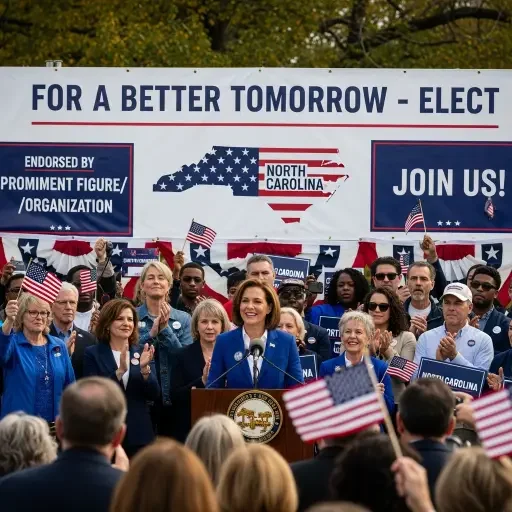
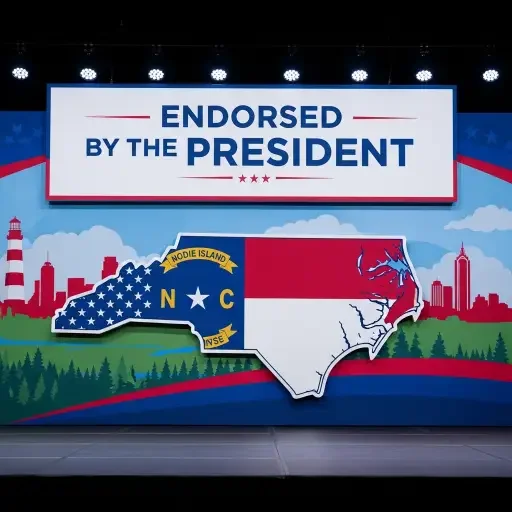
The Endorsement as Policy Signal
In the hush before a midterm’s crescendo, a single endorsement can recalibrate more than just yard signs and talking points. On a bright winter morning in North Carolina, a name re-enters the policy air: Donald Trump. His support for a local candidate exists, at first glance, as a typical political talisman—a signal for voters and donors alike. Yet the timing and framing embed a longer-term wager on how federal-style pressure points might ripple into state-level drug-pricing debates, rebates, and patient access.

Policy Velocity and Reform Ambition
The surrounding calculus is worth unpacking with the surgeon’s precision that high-stakes policy requires. First, the endorsement is less about a single race than about the velocity of a broader program: a tenor of reform in prescription drug pricing that blends bipartisan anxieties about costs with a deep investor interest in predictability. In a market hungry for clarity, the message—echoed in campaign contributions, donor strategy memos, and policy briefings—projects a future where price transparency, negotiation leverage, and stepped-value rebates might be standardized more aggressively.
This is not a sermon on ideology, though. It is a ledger entry in a larger balance sheet of governance. The NC candidate, positioned as a reform-oriented conservative with a track record of condensing policy questions into implementable steps, becomes a focal point for what policymakers call “policy velocity.” If endorsed, the candidate could align with a national mood that prefers tangible price concessions—caps on annual drug-price increases, mandatory disclosure of net prices in pharmaceutical supply chains, and expanded Medicare/Medicaid negotiation authorities—without dismantling a broader market economy.
The Mechanics of Influence
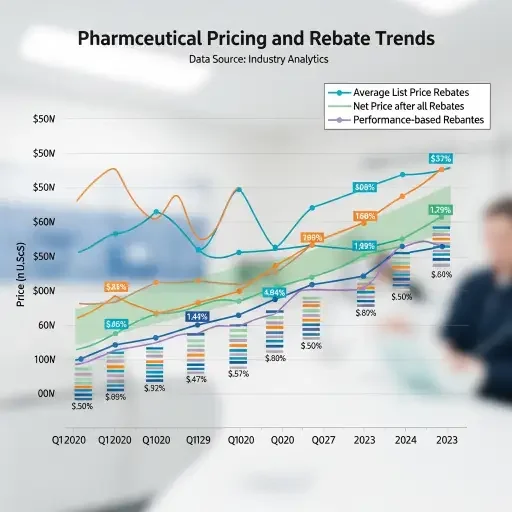
For observers, the deeper inquiry concerns the mechanics of influence. Endorsements can tilt committees, shape fundraising baselines, and skew the interpretive frame around a policy agenda. In this North Carolina microcosm, donors will watch not just the candidate’s rhetoric but the actual policy proposals that survive committee markup or executive action. The financial markets, too, parse these signals with needlepoint care: equity analysts sketch scenarios in which state-level rules either accelerate or impede a wave of price reforms that could reverberate through drug manufacturers, wholesalers, and patient assistance programs.
Yet policy is rarely linear. The North Carolina scene offers a reminder that statutory change travels through a mosaic of interests: payer organizations seeking predictability, patient groups pressing for relief, and industry players balancing innovation incentives with cost containment. The endorsement, thus, sits at a seam where political signaling meets practical reform. If the candidate’s platform tightens the screws on drug-price volatility, it might unlock a more predictable revenue environment for some biopharma investors, while constraining margins for others that rely on high list prices and opaque rebates.
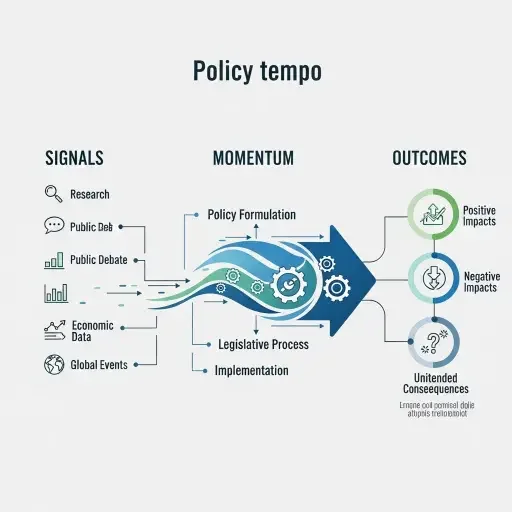
In such moments, the most durable story is often behavioral as much as it is legislative. Voters respond to visible action, but lawmakers respond to a measured calculus of risk, reward, and timing. The Trump endorsement adds a layer of credibility to a policy tempo that some blocs expect to accelerate. It signals that the political coalition envisions an aggressive posture on pricing—whether through new negotiation authorities, expanded reference pricing, or more stringent price-transparency rules.
Balancing Reform and Innovation
From a policy design perspective, the NC scenario frames a crucial test: can reform be engineered to minimize unintended consequences while maximizing patient access? The answer will hinge on guardrails: sunset clauses, cost containment safeguards, and clear definitions of price benchmarks that avoid stifling innovation. The investor-class eyeing this arena will demand a plan that threads these guardrails with fiscal clarity—balancing short-term relief for patients against long-term incentives to deliver breakthrough therapies.
The rhetorical arc of endorsements typically travels quickly from rally rhetoric to real-world outcomes. In this arc, the NC race becomes a micro-lab for how political capital translates into policy velocity. If the endorsement translates into faster committee action or more durable budget language, its impact may extend beyond this cycle, shaping the cadence of state-level reforms for the next several years. Conversely, if the political wind shifts, the policy push could stall, with advocates recalibrating their expectations to focus on incremental gains rather than sweeping change.
In the end, the central tension remains: how to align political legitimacy with policy efficiency. The Trump endorsement of a North Carolina candidate in the shadow of a drug-pricing push crystallizes that tension into a story with both human texture and numeric gravity. It suggests a future where price signals meet political momentum, and where investors, patients, and policymakers navigate a shared horizon shaped by a single, consequential choice.

As observers, we watch not just for what is promised, but for what is proven—how quickly proposals move from language to legislation, and how those laws stabilize prices without muting innovation. The NC moment might become a bellwether: a case study in how endorsements act as accelerants for policy experiments, and how the resulting uncertainty is absorbed by markets and voters alike. For now, the signal is clear enough to read in the margins: momentum exists, and the question is whether it will be steered with care or allowed to drift into partisan fog. The rest is data in waiting—the numbers, the votes, the patient stories—ready to converge into a policy outcome that will shape the price of life itself.
Tags
Related Articles
Sources
Based on campaign filings, policy briefs from the NC General Assembly, statements from Trump’s team, and interviews with healthcare economists.