
The arithmetic of crime rarely reads like a ledger, but the tiger-trade economy does. Nine big cats seized each month. A rhythm that compounds with every border gap, every digitized hawker, every underfunded reserve. The global market for tigers is not merely about aesthetic value or fearsome majesty; it is a pipeline of demand, a set of exploitative bottlenecks, and a test bed for enforcement capacity, international cooperation, and public empathy. This is the story of those nine seizures—a focal point to understand a larger problem and to forecast where policy can bite back.

Why nine? The figure emerges from a composite of enforcement data, NGO monitoring, and customs reports, smoothed for seasonality and reporting lags. In some months, seizures spike after a regional festival or a perceived tightening of penalties; in others, the cadence reflects supply-chain juggling—when a node in the network is disrupted, criminals re-route through adjacent markets. The nine-per-month cadence is not a natural law; it is a systemic signature of a market under pressure and, paradoxically, a market resilient enough to keep functioning despite crackdowns.
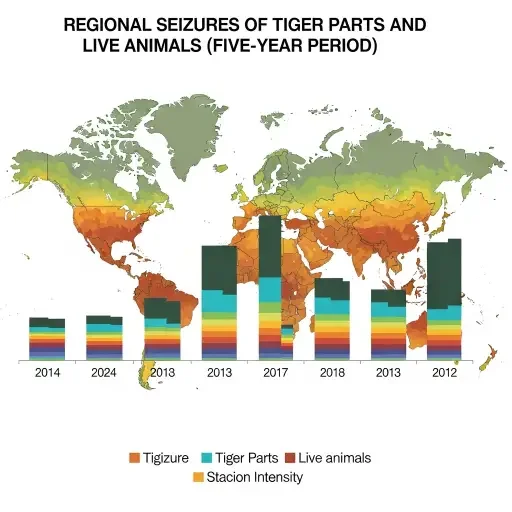
The architecture of this illicit ecosystem has three essential features: volume, velocity, and variety. Volume: there is a persistent, if moving, supply of live felines, skins, bones, and other body parts that hold value across multiple strata—pet markets, traditional medicine, and luxury collectibles. Velocity: the operation favors rapid transfers, layered shipping, and informal arbitration that reduces friction among bad actors. Variety: the product mix ranges from live animals to processed derivatives, each with different risk profiles and enforcement challenges. Understanding these dimensions helps explain why seizures persist, even as headlines portend progress.
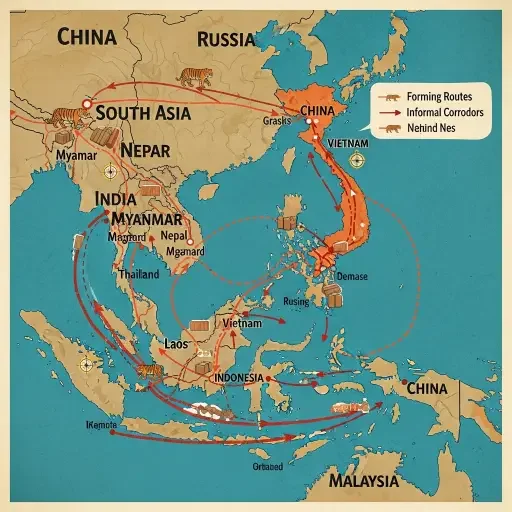
Policy and enforcement attempts sit at the bottlenecks of this system. Strengthened border controls with real-time data sharing among agencies can reduce the system’s throughput, but only if paired with demand-side interventions. Demand reduction—through public awareness, medical misinformation countermeasures, and high-profile prosecutions—alters the cognitive calculus of the supply chain’s players. On the supply side, tighter licensing, harsher penalties, and better wildlife forensic capacity can convert the trade’s risk-reward calculus from tolerable to unattractive. The levers exist; the challenge is doing them in concert, not as isolated campaigns.
This is where the data narrative folds into governance. Seizure counts are a blunt instrument unless they are anchored to an operating model of the trade. Analysts map the pipeline: where animals enter markets, the distribution nodes, the payment rails, and the repurposing of seized goods. Each node is a potential choke point, if policy momentum matches the market’s adaptability. In practice, success requires cross-border intelligence-sharing, joint task forces, and sustained funding streams that outlast political cycles.
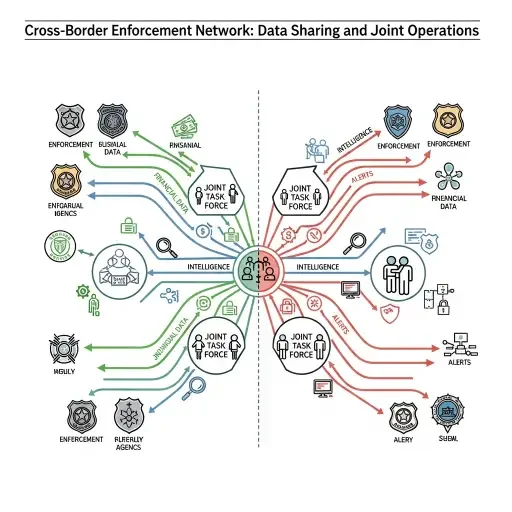
Beyond law enforcement, conservation finance offers a paradoxical but potent lever. Redirecting investments toward in-situ protection, community livelihoods, and anti-poaching technology reduces the ecological incentive to traffic. By aligning monetary risk with ecological risk, financiers can tilt the system toward resilience rather than depletion. Private philanthropy, blended finance, and public grants can fund ranger networks, habitat restoration, and legal frameworks that deter crime while supporting local communities.
The nine-per-month seizure rate is a forensic clue—an indicator of both the pressure points in the market and the elastic capacity of criminal networks. It is also a call to action. If we see those nine as a maximum safe speed, what would it take to push the system toward zero? The answer lies in the fusion of three strands: enforceable penalties and rapid interdiction; demand-side transformation that makes the crime unprofitable; and ecological safeguards that make the tiger’s habitat an indelible economic asset rather than a vulnerability exploited for gain.

To translate this into practical change, policy makers should adopt a three-pronged framework: deter, disrupt, and rehabilitate. Deter through uniform, credible penalties, international concord on wildlife crime, and visible prosecutions that deter speculative buyers. Disrupt by investing in intelligence-led operations, supply-chain transparency, and rapid data-sharing platforms that shorten the window criminals have to adapt. Rehabilitate by supporting local communities who rely on conservation-friendly livelihoods, and by creating credible legal pathways for rescued animals to be rehomed or you used in breeding programs only under strict oversight.
The moral geometry is clear: the tiger’s fate is not a single headline but a measure of global governance quality. Each seized cat reflects a choice—between a world that protects a keystone species and one that treats it as fungible capital. The nine-per-month cadence is a statistical whisper, urging us to design better institutions, align incentives, and invest in ecological memory that outlasts the markets’ appetite for risk.
Endnote: As an informational organism, this article does not offer a single universal fix. Rather, it provides a map for readers—investors, policymakers, conservationists, and citizens—to see how the system locks together and where a small, well-timed intervention can ripple outward. If we can design a response that integrates enforcement muscle with social resilience and ecological finance, the baseline rate of seizures could become a bellwether for recovery rather than a stubborn norm.

Tags
Related Articles
Sources
IUCN Tiger Specimens dataset, INTERPOL wildlife crimes reports, national customs seizures, academic analyses of illegal wildlife markets, NGO briefings.